
Muchkund Dubey
A review of India’s external relations by a former Foreign Secretary always makes for a good read as it has elements of an insider’s view not just from a ringside seat, but as a key player. Muchkund Dubey’s treatise is a scholarly work that looks at India’s place and aspirations in a changing world.
Nihar Nayak
It is common ground that the concept of national security is not limited any longer to external and internal threats to the integrity of a nation.

Antonio Giustozzi
The title of the book is doubly provocative. The first part of Antonio Giustozzi’s stimulating volume paraphrases Machiavelli’s work, The Art of War. The second part is a play on primitive accumulation, a term widely used in understanding the evolution of capitalism but rarely employed in analysing the evolution of state structures.
Alice Lyman Miller and Richard Wich
Alice Lyman Miller and Richard Wich both of whom have been lecturing for several years on Asian international relations at various American universities have done yeoman’s service to the field of international relations by publishing this masterly account of Asia since the Second World War.
Kanak Mani Dixit
Twenty-two choice articles of a chronicle. A chronicle of times and spaces—of minds—of one fifth of humanity. A confection on the remarkable journey of a mountain magazine published over the past twenty-five years as a first and foremost regional publication.
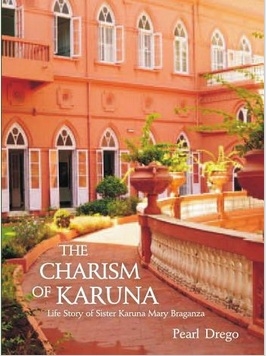
Pearl Drego
Different sects and denominations of the Christian faith came to India at different points of time from different parts of the world.
Seema Mustafa
Seema Mustafa’s personal-political memoir, Azadi’s Daughter is a welcome addition to semi-autobiographical writings by women journalists of India that have recently got published.
Diane D'Souza
Diane D’Souza has presented a rich and fascinating insight into the devotional life of Shia Ithna Ashari (Twelver) Muslim women of Hyderabad in India.
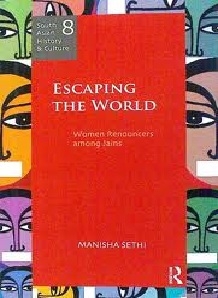
Manisha Sethi
‘….how does one explain the numerical preponderance of nuns over monks? What is it that drives women—increasingly young and unmarried—to a life of itinerant mendicancy?’ (p. 8)?
Sanjukta Dasgupta
The book narrates the changing socio-cultural landscape of India, particularly, in the era of globalization and its implications from the vantage point of media representations of popular culture and gender.

Jinee Lokaneeta
Modern liberal democracies see laws based on coercion as a feature of the ancient-medieval barbaric regimes of the past or the uncivilized ‘other’.
Aditya Mukherjee
This massive volume is a great disappointment. Of the nineteen chapters, one is outstanding, four or five others are well done and generally informative. Apart from these few exceptions, there is little new information provided and the articles offer few if any insights into this critical period in modern Indian history.
Bishakha Datta
Poetry must be raw, like a side of beef, should drip blood, remind you of sweat and dusty slaughter and the epidermal crunch and the sudden bullet to the head. —Mona Zote
Gopal Guru
When was the last time that one has come across a co-authored book that takes the form of an explicit debate? Among the qualities that make this book so stimulating, its genuinely dialogical structure must come first.
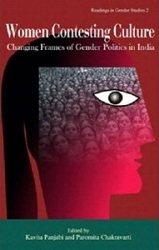
Kavita Panjabi
Women’s Studies (WS) in India emerged in the wake of the women’s movement of the 1970s and shared its transformative goals.

Steve Inskeep
A city is not an onion that can be unpeeled to reveal its layers. It is a breathing organism shaped by the ideologies that create it.
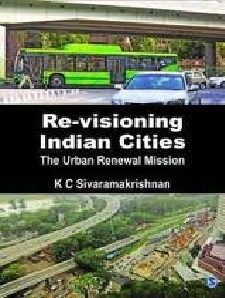
K.C. Sivaramakrishnan
With the surging idea of civic participation in affairs of governance in India, there cannot be a more opportune time for K.C. Sivaramakrishnan’s book which presents an informative and detailed background of the early efforts made in the area of urban development in the country.
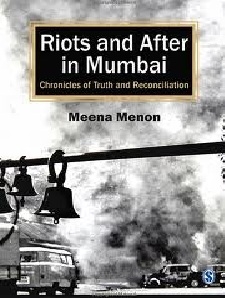
Meena Menon
Last year marked twenty years of the demolition of Babri Masjid, followed by a series of large-scale communal violence, clashes and riots in different parts of India, especially in the Bombay then and now Mumbai.
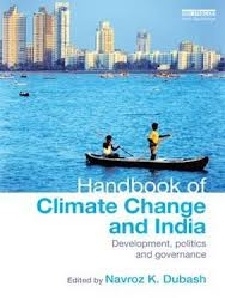
Navroz K. Dubash
Climate change as a political issue has usually been on the backburner in India, coming forth for intense public discussion only around the time when Indian representatives are off to attend yet another round of negotiations.

Ashok Rudra
Professor Rudra’s book, meant more for postgraduate students than for the layman, is an excellent survey of one approach to planned development in India. It deals with the use of ‘formal’ models of economic relationships—‘formal’ in the sense that these relationships are encapsulated in mathematical equations involving exactly specified variables…