
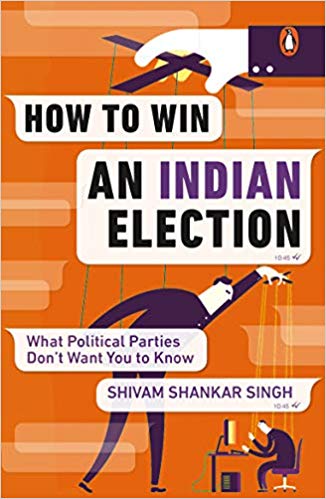
Shivam Shankar Singh
Shivam Shankar Singh’s How to Win an Indian Election is an insider’s candid narrative of how political parties leverage voters’ data and digital technologies for political campaigning. Singh headed data analytics and campaigns for the Bharatiya Janata Party (BJP) for the Manipur and Tripura Legislative Assembly elections under the guidance of the party’s National General Secretary, Ram Madhav.
Jamie Susskind
Alibaba co-founder Jack Ma and Tesla CEO Elon Musk shared the World AI Conference stage in Shanghai earlier this year. It was one of the most interesting dialogues on the future of humans and the power of digital technologies like AI. At one point in the discussion Elon Musk says, ‘If you think of technology and technology awareness, if there was a topological map of technology awareness, it’s mostly flat with a few short buildings, and then some very tall spires.
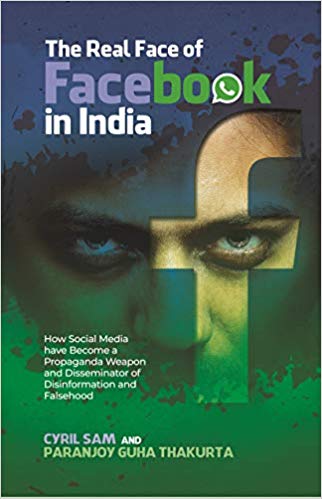
Jamie Susskind
Given the importance that social media platforms (especially Facebook and WhatsApp) have acquired in our lives, the book under review has every reason to grab our attention, and rightly so. The subject acquires further importance because in recent years, social media platforms have become a vehicle for spreading hate and misinformation across India.
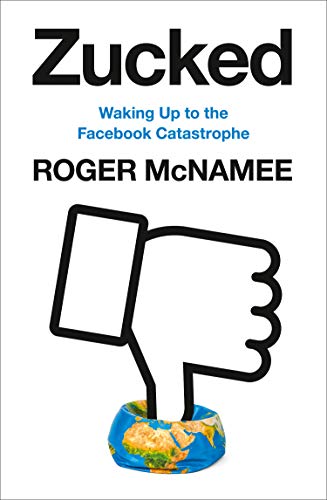
Roger McNamee
‘Move Fast & Break Things’ used to be Facebook’s motto till April 2014; and break plenty it certainly did. In 2019, so much appears to be broken or breaking—social harmony, democracy, various freedoms and more. There is sufficient evidence to believe that Facebook along with other Big Tech companies has played a significant role in getting us here.
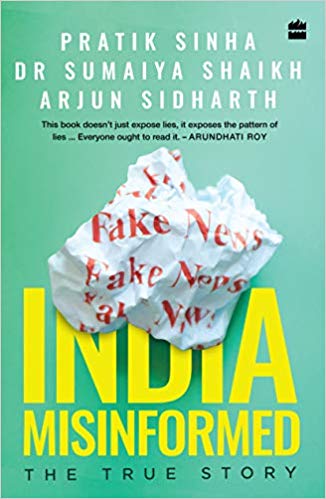
Pratik Sinha
Last year, a promotional video produced in Pakistan for the purpose of spreading awareness to the general public against rampant kidnapping of children from the street, which shows dramatization of a child getting picked up from a street by kidnappers on a motorcycle, was doctored in such a way that it looked like a CCTV footage of an actual kidnapping taking place.
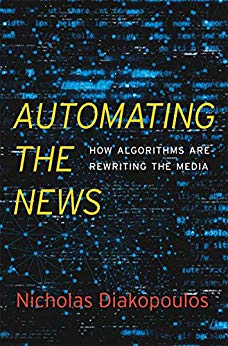
Nicholas Diakopoulos
Social media occupies enormous mind space but it is only one relatively shallow manifestation of human-computer interaction. Using Artificial Intelligence in the news industry as well as for multiple data collection applications in society is going to be the way forward.
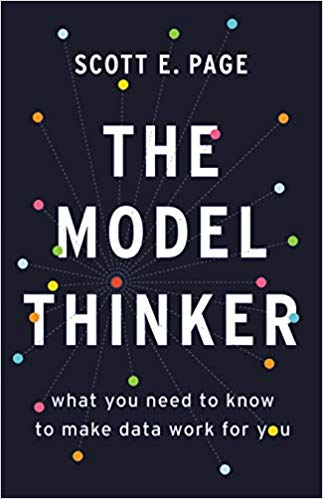
Scott. E. Page
The Model Thinker is a book about models. Models are not words, but formal mathematical representations that are put together to help us understand the world. This book looks at how people can apply a many-model thinking approach to understand these complex systems to find solutions. We live in an era of big data; from our phones, to online shopping, to our social media pages, data is everywhere.

Emmy J. Favilla
The great ‘Talk revolution’ which gripped India and the world with the mobile phone in the nineties threatened to destroy reading and writing. It was assumed that if writing had defined how our heads were wired when it was invented, the mobile phone would unspool that. But technology is always tough to anticipate, so with text messages and then the smartphone, suddenly written text was right back into our lives.
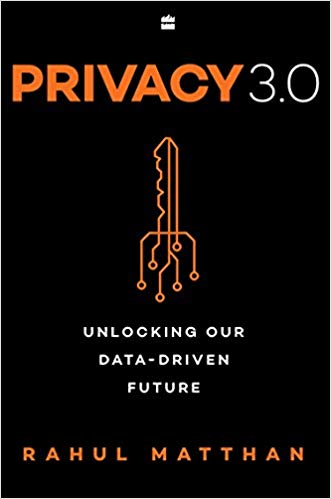
Rahul Matthan
This seminal book begins by pointing out that ancient societies did not formally acknowledge the concept of privacy. The idea of privacy evolved as human civilization progressed and individual rights became important. Gradually as time passed and cultures grew in complexity, privacy became an integral part of our moral system and legal systems evolved to protect such privacy.
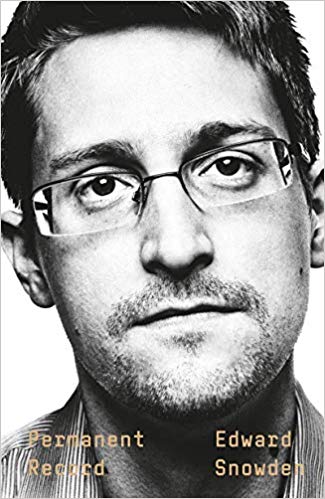
Edward Snowden
2019
In the contemporary world, information technology can be argued to be the major source of power and privilege. The weaponization of information in the 21st century is a remarkable achievement given the short span within which the change has occurred, and with it state power seems to be growing in leaps and bounds. Unlike the industrial age, however, no equivalent change is visible in the structure of society and words like ‘disruption’…
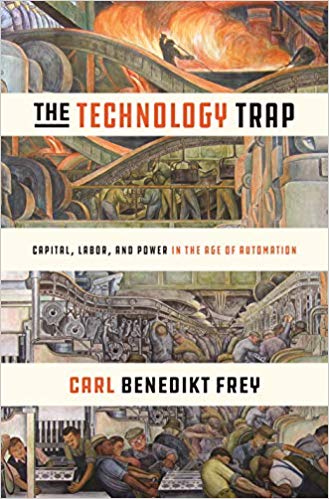
Carl Benedikt Frey
We are now well into the ‘Fourth Industrial Revolution’ which is bringing astonishing advances in many fields—information technology, life-sciences, materials, intelligent machines and a fusion of machines, information and biological systems. With gene editing, we now even have the ability to modify or even engineer new life forms.
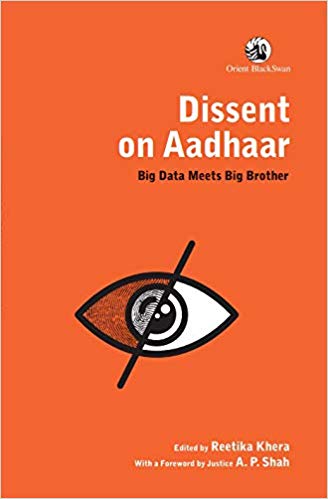
Reetika Khera
These are politically charged times and even in polarized scenarios such as this, there are few issues that have stimulated more polarized conversations than the Unique Identity (UID) project, better known by the epithet of Aadhaar. On the one side is a seasoned army of technocrats led by Nandan Nilekani, a doyen of the IT industry, and on the other side, is an equally revered constellation of social scientists, legal experts and policy thinkers.
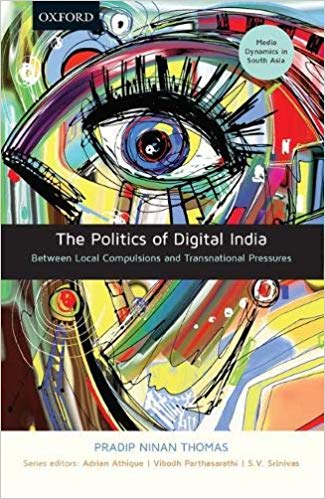
Pradip Ninan Thomas
Any sincere academic work on India’s digital eco-system faces two major risks: first, the digital landscape changes faster than you can deploy your research tools, and secondly, your observations and conclusions are outdated by the time your hard work hits the book stores.
Kartik Hosanagar
Kartik Hosanagar’s book A Human Guide to Machine Intelligence explores an important dimension of technology in recent times. Hosanagar is a Professor of Technology and Digital Business Studies who critically engages to fathom the rise of Artificial Intelligence (AI) based on algorithms.
Mala Bhargava
More than at any time before in history, we are questioning the impact of technology on our lives, society, and even human existence itself. Technology is changing life as we know it at such a breakneck speed that it leaves us reeling from the disruption and need to understand what each new advancement will mean for our future: there is a surfeit of predictions but of course no one knows for certain.
Richard Baldwin
While the term Industry 4.0 did arguably emerge by way of a High-Tech strategy report developed under the aegis of the German Government in 2013, it came into the general parlance only when Professor Klaus Schwab, founder of the World Economic Forum, published his seminal book The Fourth Industrial Revolution in 2016.
Amy Webb
In an eye-opening and timely analysis of the world’s two divergent technological paths, the renowned futurist Amy Webb in The Big Nine: How the Tech Titans & Their Thinking Machines Could Warp Humanity charts out the potential scenarios for an Artificial Intelligence future, pitting the United States and China in direct opposition to each other.
Atul Jalan
Atul Jalan’s book, with the intriguing title Where Will Man Take Us? is a thought-provoking exploration of where technology could take us. It raises the perennial question of, ‘Who’ are ‘We’? And, what makes humans ‘human’, and distinct from machines. It shows how man can degenerate into technology if advances in AI are not regulated.
John Browne
Browne urges the reader to believe in a better future at the beginning of his work. His lens of looking at engineering and technology allows one to have hope that technology will solve more problems rather than create bigger challenges, and the only determinant is pragmatism. He reiterates that we do not need to fall into binaries of pessimism and optimism, but believe that we can set up institutions which promote accountability and account for consequences.

Jemma Jose
Which child doesn’t love to play? One of the first memories that came to my mind on seeing the title was about my childhood where I used to play hide-and-seek with my siblings. Games are one of the best mediums to connect with children.