
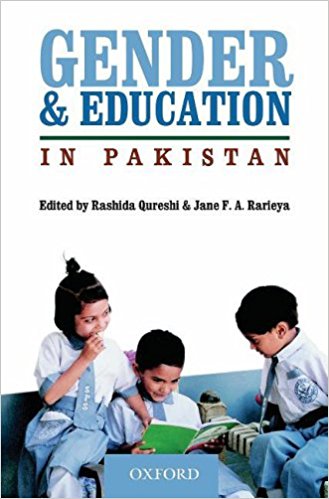
Rashida Qureshi and Jane F.A. Rarieya
Education of women is accepted today as a basic human right and a crucial input for national development. Apart from its intrinsic worth, women’s education has powerful instrumental value for bringing about economic growth and social change.
Swaran Singh
The relationship between China and Pakistan, as the editor of China-Pakistan Strategic Cooperation: Indian Perspectives quite aptly states at the very beginning of his Preface, remains one of the most serious challenges for Indian policy makers.
Arun Prosad Mukherjee
Maoist Spring Thunder is a detailed account and analysis of the momentous events, which made not only the West Bengal Administration but also the whole country sit up and think about the ruthless manner in which violent means were resorted to get the demands for land reforms and distribution of land among the have-nots in West Bengal.

Mohan Guruswamy, Ronald Joseph Abraham and Uma Natarajan
Mohan Guruswamy and his group of scholars are to be complimented for this new approach to analysing security in a region, based essentially on examination of socio-economic data.
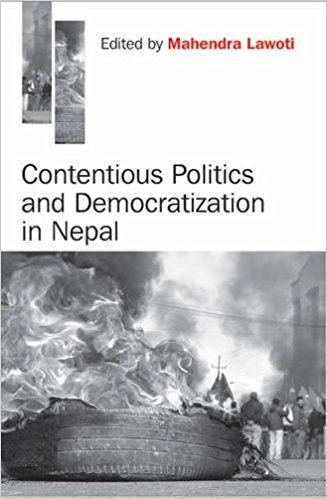
Mahendra Lawoti
We have here a book of essays put together by Mahendra Lawoti, who teaches Political Science in Western Michigan University, and is President of the Association for Nepal and Himalayan Studies in the United States.
The Centre for Policy Dialogue
Rehman Sobhan is among the best known and respected figures in Bangladesh, some may say a keeper of the nation’s economic conscience. The three volumes of his collected works total an impressive 1448 pages comprising 188 articles and speeches.
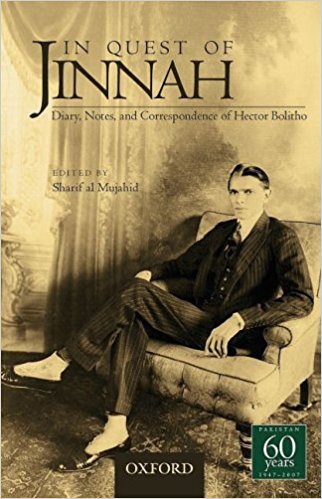
Sharif al Mujahid
Muhammad Ali Jinnah was the father of Pakistan and had become a cult figure for most Pakistanis and therefore, it was no easy job for anyone to write an objective biography. This was illustrated by the ban imposed in the eighties on the biography, Jinnah of Pakistan, written by Stanley Wolpert in 1984 which did not conform to the official image.
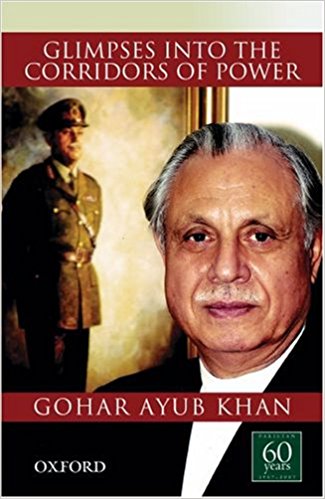
Gohar Ayub Khan
It must surely be a most difficult undertaking to be the son of the founder of a state and to try and describe yourself and your life. For Field Marshall Mohammed Ayub Khan was as much the founder of the state of Pakistan as Mohammed Ali Jinnah was the founder of the nation.
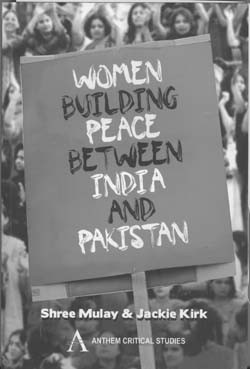
Shree Muley and Jackie Kirk
Official spokespersons of both the Pakistan and Indian Governments have recently stated that ever since the partition of these countries, the relations between India and Pakistan have never been as good as they currently are.
Adrian Levy and Catherine Scott-Clark
2008
Two decades ago, at the height of the Brasstacks exercise close to the Indo-Pak border by the Indian military, Pakistan decided that it would make public its possession of nuclear weapons. The intention of the military rulers who then ruled Pakistan was to put India on notice that Pakistan had acquired a nuclear deterrent that rendered India’s conventional superiority impotent.
Amitabh Mattoo, Kapil Kak and Happymon Jacob
J&K is very much the flavour of the day and there have been many publications on this theme in recent years. This compendium of 21 essays, put together by the Centre for Strategic and Regional Studies of Jammu University,
E.Sridharan
It is interesting to see where Pakistan is today, where the India-Pakistan relationship is headed and compare reality with what the authors have said would happen to the nuclear relationship. This is particularly so since the book attempts for the first time to link deterrence calculations with IR theory.
P.R. Chari
The very title of this book recalls to one’s mind the four articles of the eminent Pakistani journalist, the late Altaf Gauhar published during September-October 1999 in the Pakistani paper Nation under the heading ‘Four Wars, one assumption.’
N. Manoharan
N. Manoharan prefaces his book with the lament that not one study links ethnic violence and human rights in the Sri Lankan context. This is exactly what he then sets out to do. The relationship between escalating (or de-escalating) ethnic violence and levels of human rights protection is both an obvious and challenging subject of study. In and of themselves,
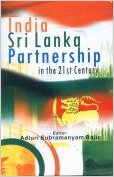
Adluri Subramanyam Raju
India-Sri Lanka relations have witnessed a paradigm shift especially since the mid-1990s. The shift has taken place fundamentally in two key areas: politico-strategic and economic. Absence of Cold War hangovers, nonexistence of diplomatic irritants on the ethnic issue, and phenomenal growth in trade and investment ties were the principal reasons for improved bilateral relations.
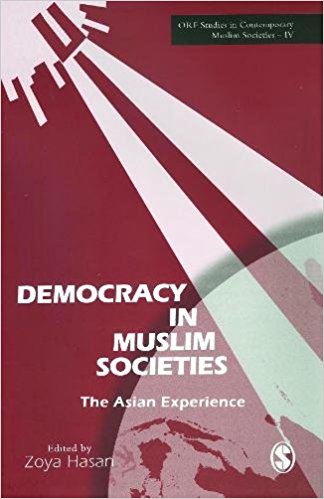
Zoya Hasan
This book is about empirically testing the ‘incompatibility thesis’ on democracy and Islam or Muslim societies, through the study of non-Arab, Muslim-majority, Asian countries of Indonesia, Bangladesh, Pakistan, Iran, Turkey and Malaysia.
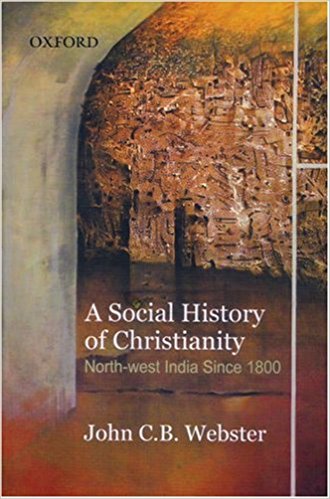
John C.B. Webster
Webster has written a valuable and outstanding supplement to his earlier The Christian Community and Change in Nineteenth Century North India (1976). The study of Christian communities in India, their history, culture and social structure has recently acquired an independent identity within the academia.
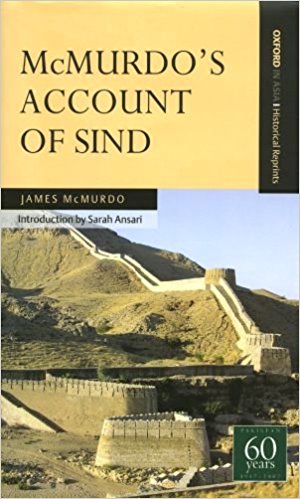
James McMurdo
India’s colonial connection is paradoxical—on the one hand, we celebrate the severance of this tricentennial relationship and on the other we perpetually savour its overwhelming nostalgia. Reams of publications in Modern Indian history castigate the colonial interlude as one of a massacre of a glorious tradition,
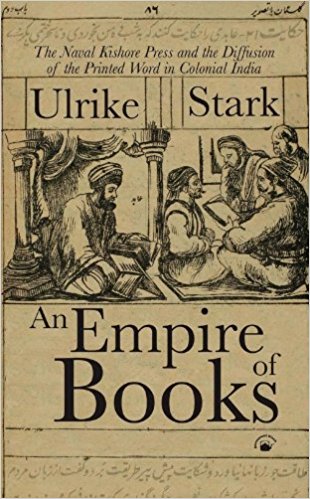
Ulrike Stark
2008
Given the general state of our archives and the scant respect awarded to the preservation of books and manuscripts, it takes both courage and perseverance to accost and overcome the formidable obstacles put in the way of the scholar. If the scholar is seeking to look at the book itself as the object of research, her path is likely to be very thorny indeed.
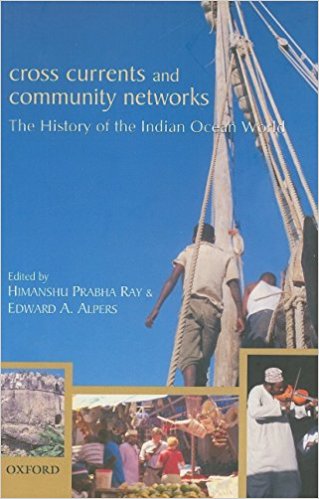
Himanshu Prabha Ray and Edward A. Alpers
In the hills of south India where I live there is a profusion of plants from temperate climates brought over by British (and European) expatriates, in order to recreate a familiar ambience of remembered colours and scents.