
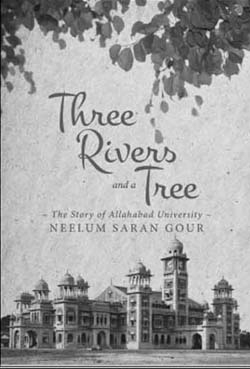
Neelum Saran Gaur
The known academic culture of India also harbours within it another unknown culture made up of provincial universities rooted in the spirit of the area.
Manisha Priyam
At the core of the spread of mass schooling in democratic nations has been a set of ideas and beliefs. It is a widely held, if not universally accepted, view that not only does schooling provide individuals with important competencies; it is an important tool of social engineering and overall progress of a nation. A democratic nation has, therefore, important stakes in educating every child for as many years as possible regardless of social origin, geographic locations and economic circumstances.

Meenakshi Thapan
Beginning in the 1970s, sociology of education in India has been marked more by debates and theories than field work. Ethnographies of Schooling in Contemporary India is an important contribution to this context. The essays presented in the volume under review are based on the study of everyday processes in different types of schools.
Rahul Mukherji
Part of the Oxford Series of short introductions Political Economy of Reforms in India by Rahul Mukherji runs over 200 pages. The book’s four compact chapters addressing the major themes of economic reforms and social change in a chaotic democracy delineates both the success of India’s growth model in the post-liberalization period as well as the predicaments of poor infrastructure, inefficient public delivery system and low literacy levels that it produces.
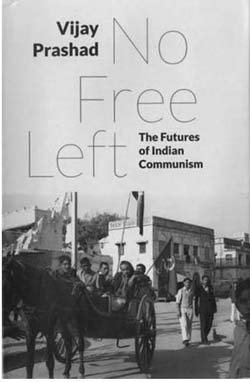
Vijay Prashad
The recent right turn in Indian politics has left the Left parties in a lurch. The 2014 Lok Sabha election electorally devastated the entire Left, particularly the Communist Party of India-Marxist. Vijay Prashad’s No Free Left: The Futures of Indian Communism examines the existential crisis faced by the Left parties in India given the formidable challenge from the Right, especially from the dizzying electoral success of the Bharatiya Janata Party in the 2014 Lok Sabha polls.
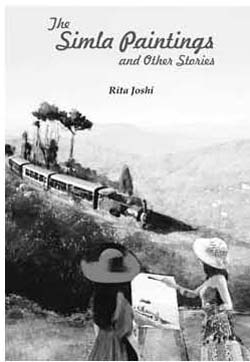
Rita Joshi
wo young women in creative collaboration, looking at a train winding its way through the hills and immortalizing this moment on canvas—all the symbols on this cover—the blue sky, the hills in the distance, the misty horizon, the train, the sparse vegetation, the canvas and brush and the two female figures—signal the literary intention of the writer. She has set out, in the six short stories in this collection, to decode the lives of women as they negotiate their lives and search for meaning and identity.
Mala Dayal
Having been close to Khushwant and hearing countless stories firsthand, reading the book made me feel as though I am sitting by him, listening to him recount his impression of ideas, people and places. He remains the best raconteur I knew, and will probably never meet anyone better.
Omar Shahid Hamid Pan
The Spinner’s Tale is a confusing title for this book. The Making of a Jehadi would have been a more apt title for it. It begins with an improbable scene.
Malashri Lal
Walt Whitman, the American poet, essayist and humanist, had famously declared, ‘Do I contradict myself? Very well, then I contradict myself, I am large, I contain multitudes.
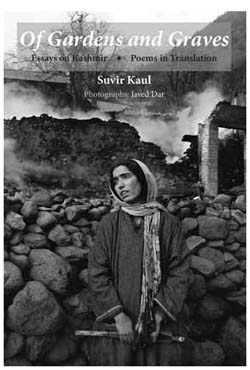
Suvir Kaul
In 1989–90, an Islamist insurgency broke out in the Kashmir Valley. This was a time when much else was happening around the world. The mighty Soviet Russia had taken a beating in Afghanistan.
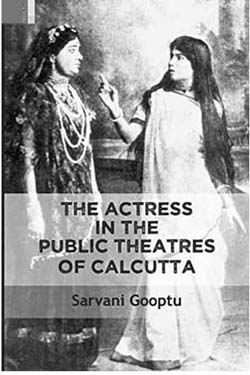
Saravani Gooptu
Books on actresses working in the public theatres in India are a rarity and in that sense Sarvani Gooptu’s The Actress in the Public Theatres of Calcutta is a bit of a novelty. It begins with a premise of tracing the journey of women and their engagement with early theatrical practices in Calcutta.
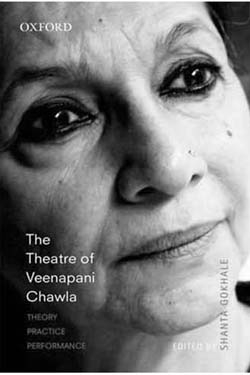
Shanta Gokhale
The Theatre of Veenapani Chawla: Theory Practice Performance is a timely book in more ways than one. It is tragically timely in that it appeared just a few months before Veenapani’s sudden death shocked us all in late 2014. Veenapani Chawla’s practice has, it seems to me, remained almost neglected.
Madhuparna Roychowdhury
Madhuparna Roychowdhury’s work is a significant addition to the historiography on museums and art history in India. In recent years, one of the major as well as the deeply thought-provoking interventions in this field has been Tapati GuhaThakurta’s Monuments, Objects, Histories. Guha-Thakurta has convincingly argued how the history of museums…
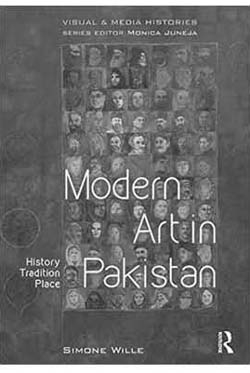
Monica Juneja
The author accepts as a logical base Hindu India and Muslim Pakistan to read the genesis of modern art in the Indian subcontinent, in the book under review.
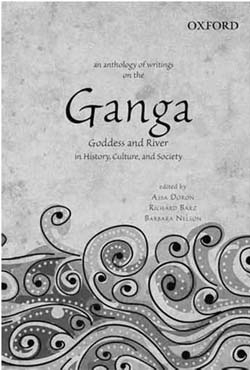
Assa Doron
An anthology is like an Indian thali—it serves small portions of different things, a couple of staples, and by providing a representative sample it facilitates further explorations. Like a thali too, it has something that appeals to everyone, but it is equally true that inclusion and exclusions usually fail to satisfy everyone who partakes of it.
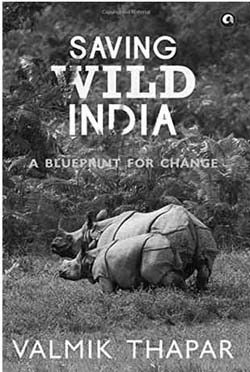
Valmik Thapar
Wildlife, forests and natural resources in India have never before been under such a concerted threat of obliteration, as they are now, under a regime that is as keen on overexploiting them as they are cavalier towards the intrinsic value of the environment to human survival.
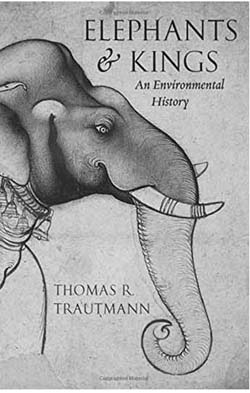
Thomas R. Trautmann
Elephants and Kings is a thorough survey of where war elephants came from, where they went, and where they did not go. It clearly and competently addresses major reasons why war elephants were trained and why they were adopted by some kingdoms and not others. Given its topical coverage and wide chronological and geographical scope, it is a natural companion to Thomas T. Allsen’s Royal Hunt in Eurasian History…
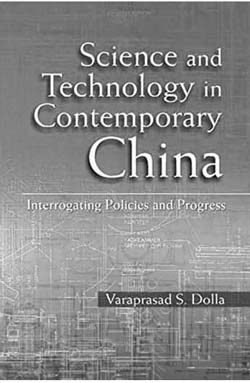
Varaprasad S. Dolla
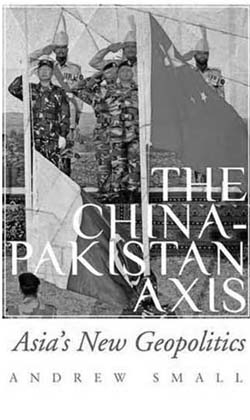
Today, in the middle of the second decade of the 21st century, it is nearly impossible to not hear something or the other about China every day. To realize that China was just a sleeping country with secondary if not tertiary impact on the world economy just three decades back is beyond belief for the new generation.
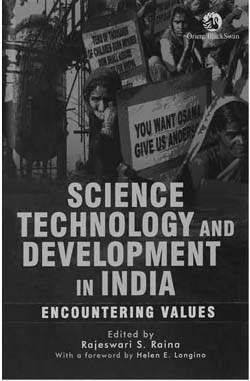
Rajeswari S. Raina
Science and technology are often understood as socially disembodied and outside the cultural domain of values, although this view has been criticized by scholars working in the field of Science, Technology and Society (STS) Studies since the 1970s, and the scholarly endeavours resonated well with the civil society critique of the epistemology of modern science and the moral universe S&T was embedded in.
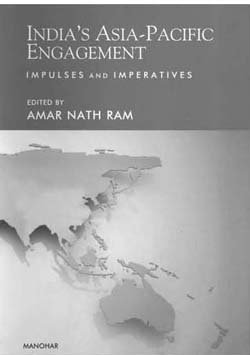
Amar Nath Ram
2015
Thanks, perhaps to the Himalayas, India has largely had a westwards ori-entation. Or to be a bit more accurate, the West has always looked towards India, from the time of Alexander the Great. Neither statement is fully true but it does tell us how India’s links with the East have never been quite as deep as with the region to the West of India. Historically the only link that India had with the East was through Buddhism. In a large measure, conquest has been the reason for this orientation.