
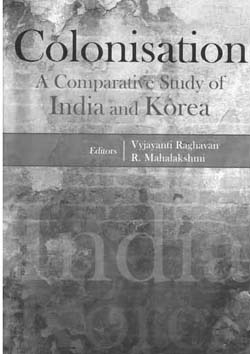
Vyjayanti Raghavan
Colonisation: A Comparative Study of India and Korea edited by eminent scholars Vyjayanti Raghavan and R. Mahalakshmi is a timely study of the colonial experiences of the Indian subcontinent and the Korean Peninsula.
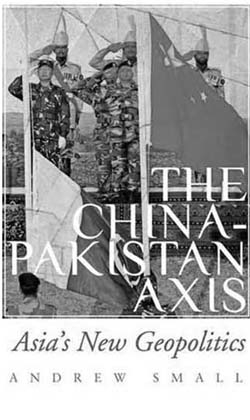
Andrew Small
The visit by the Chinese President Xi Jinping to Pakistan in April 2015 saw repeated references to some clichéd phrases describing Sino-Pak relationship, like ‘all weather friendship’. Some new linguistic coinage emerged, such as, ‘visiting brother’s home’ and, ‘security for one as stability for the other’.

Ian Barnes
For an accurate, quick, synoptic as well as visual history of Russia, there could not have been a better book than Ian Barnes’s Historical Atlas of Russia. Barnes explains the diversity and complexity of Russia from the origins of Russian statehood to the contemporary Russian Federation under the Putin regime with all its pluralities and enigmas. Critics might question such a work for being unable to do justice to such a long period.
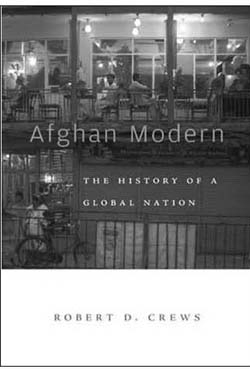
Robert D. Crews
Robert Crews of Stanford University’s Department of History has penned an unusual narrative about Afghanistan, dispelling the negative portrayals of it—as an anachronistic, unchanging, primitive, and ethnically divided ‘graveyard of empires.’ From a rugged, variegated transit territory, it was cobbled into a country two and a half centuries ago.
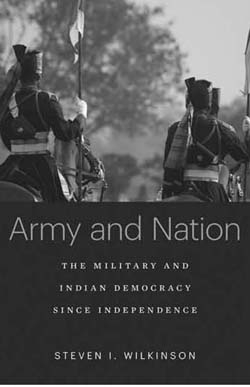
Steven I. Wilkinson
The very divergent political evolution of the Indian and Pakistani armed forces has long puzzled political analysts. Why has the Indian Army turned its back on domestic politics, while the Pakistan Army has directly ruled the country for extended periods and controls its national security policy? Why do the two Armies, cut from the same cloth, behave so differently?
Maidul Islam
While I was in the midst of reading this book, repetition of a gruesome incident in neighbouring country, Bangladesh, shook me up.
Paul Staniland
Insurgencies, by definition, signify organized violence waged for a specific political end. Insurgencies are waged within a defined territory, aspire to represent a social base, and portray themselves as enjoying legitimacy from their host population.

Shimon Shetreet
The book Uniform Civil Code for India by Shimon Shetreet and Hiram E. Chodosh provides a comprehensive blueprint for alternative frameworks and courses of action, based on lessons from a comparative context of three nations.
Pongsak Hoontrakul
Asian economic transformation has been underway despite the hiccups of the 2008 crisis that nearly brought the world economy to a standstill. Asia, at least that part of Asia spanning from India to Japan, now has dynamic leaders in Xi Jinping, Shinzo Abe and Narendra Modi, who are highly nationalist on one hand but also fairly pragmatic as seen in the last couple of years.
R. Srivatsan
R. Srivatsan’s theoretical intervention through his recent book, Seva, Saviour and State: Caste Politics, Tribal Welfare and Capitalist Development is about the politics articulated within the concept and practice of seva—politics of caste, politics of Hindutva, politics of secularism, politics of nationalism and politics of development.
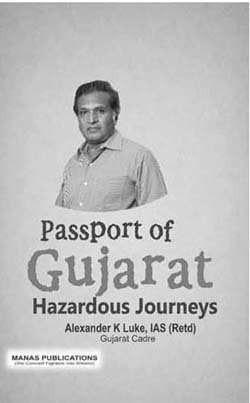
Alexander K. Luke
Books can often be likened to cricket matches. A T20 game is light and frothy. The results come in a single setting. A test match is leisurely. You need to invest both time and energy, but at the end, more often than not, it is far more pleasurable as your sense of participation and involvement is far greater.
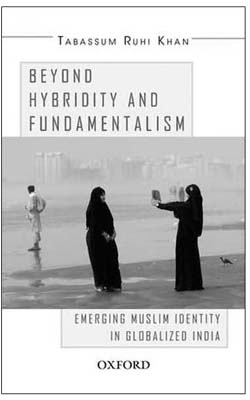
Tabassum Ruhi Khan
This is an interesting and timely book on the Muslim dominated area of Jamia Nagar that has mushroomed around the Jamia Millia Islamia University campus. The author Tabassum Ruhi Khan has been closely associated with the Jamia University as a student of the University’s well-known Mass Communications Research Centre (MCRC).
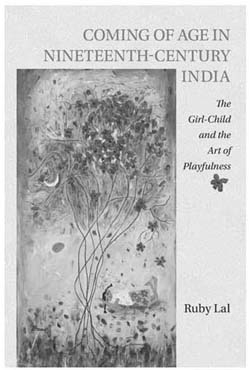
Ruby Lal
In her remarkable work, Secluded Scholars: Women’s Education and Muslim Social Reform in Colonial India (Oxford University Press, 1999), Gail Minault speaks of the ‘daughters of reform’ who contributed in multiple ways to the social and political movements in India, more than most acknowledged earlier.
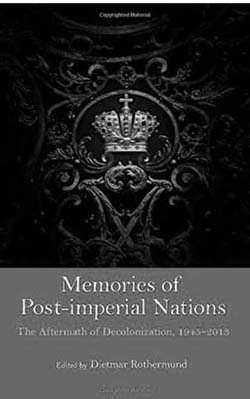
Dietmar Rothermund
‘How does a former colonial power deal with its colonial past, generations after the loss of empire?’ The opening line of Gert Oostindie’s piece in this book sums up the underlying theme of this work which is essentially a comparative study on the aftermath of Decolonization in the West, the way decolonization was memorialized and the subtle shifts in memorializing.

Jonathan Gil Harris
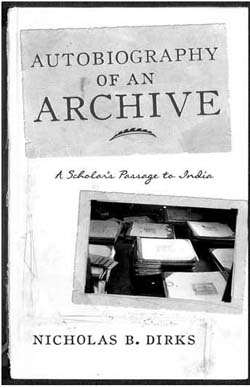
This archives’ role in the subsequent writings on Indian history and historiography are valuable. In another essay, ‘The Policing of Tradition’, Dirks shows how the category of ‘brahman’ was defined by a variety of interventions by colonial authorities. His work is also valuable as a comment by a serious historian on the historiography of India as well.
Nicholas B. Dirks
In the past year there have been two interesting events that made me recall the seminal work of Nicholas B. Dirks: Castes of Mind: Colonialism and the Making of Modern India (Princeton, 2001). The first event was the social and educational survey conducted in Karnataka in April 2015 that recorded caste.
Archibald B. Spens
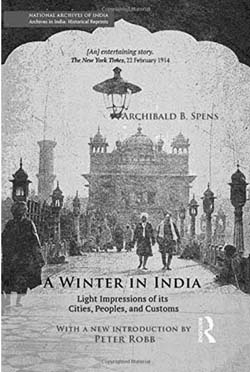
This is a reprint of a work originally published a century ago (Stanley Paul, London, 1913; Dodd, Mead, New York, 1914). Although it has been published as part of the National Archives of India (NAI) series ‘Archives in India: Historical Reprints’, it does not seem to have had any direct or indirect connection with the NAI.
Alf Gunvald Nilsen
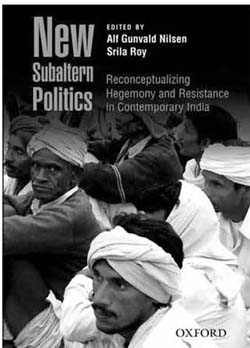
The book under review is the published product of a series of Conference panels and workshops that were organized between 2011 and 2013 in Honolulu, Nottingham, and Bergen. The introduction ‘Reconceptualizing Subaltern Politics in Contemporary India’ begins with a section called ‘What is Subaltern Politics?’ Nilsen and Roy’s definition of ‘subaltern politics’ as ‘the political activity of social groups who are adversely incorporated into determinate power relations’ broadens the term ‘subaltern’.
Gita Dharampal-Frick
The present volume calls to mind A Dictionary of Modern Indian History: 1707–1947 by Parshotam Mehra, also published by the Oxford University Press in 1985 (revised edition in 1987), a book that some of us would have profitably consulted as students.
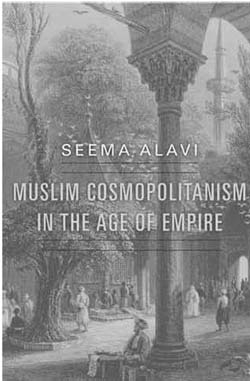
Seema Alavi
A feature of scholarship on Muslims and Islam in South Asia until recently was that it tended not to explore their connections beyond the subcontinent. The British as historians, though not as rulers, established this tendency.