
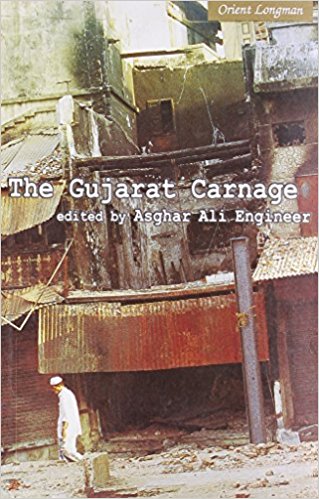
Asgar Ali Engineer
A serious enquiry into the psychology of communal violence, this anthology brings together essays, editorials, surveys, articles, opinions, documents and reports. The book transcends its stated goal of providing the future generations with a great deal of information and its usefulness to policy makers to question the contentious issues of ‘secularism’, ‘nation’, ‘identity,’ and ‘community’ through a polyphony of voices.
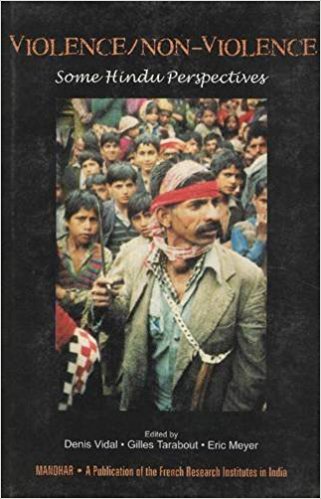
Edited by Denis Vidal , Gilles Tarabout and Eric Meyer
Religion is not about love and compassion only. It is also about exclusion, hatred and violence. Being a total narrative, religion gives meaning to existential and societal concerns of the believers.
Paul Brass
Paul Brass stands next only to the late Myron Weiner and the Rudolphs (Lloyd and Susan) in the pantheon of American political scientists who have made it their lifelong business to understand Indian democracy.
Ursula Rao
Those of us who regularly pursue the contents of Religion may recall the sparkling essay that appeared roughly two years back from the author of this monograph on broadly the same theme.
Abhijit Gupta and Swapan Chakravorty
The history of the book, or book history, as it is beginning to be called now, has for long been the preserve of bibliographers and antiquarians. This has been especially so in India. Looking at books from a narrow and often bibliophilic, if not bibliomaniac, perspective they were more often than not most concerned with debates no more exciting than who printed the first book, which press came first, the role of Christian missionaries, who contributed more to such-and-such language printing, etc.
Chandrika Kaul
The British established their Indian Raj by various means including the sword but undoubtedly they secured it with modern means of communication. Ruling India from distant London was a difficult and complex affair in which the press came to play a critical role specially from the mid-nineteenth century.
Himanshu Prabha Ray
Himanshu Prabha Ray’s The Archaeology of Seafaring in Ancient South Asia makes a convincing case for the need to abandon an insular view of ancient India. Viewing the subcontinent within the larger world of the Indian Ocean, it replaces the usual episodic view of trade by a nuanced long-term narrative that stretches from the third millennium BC to the fifth century AD.
Michael Gottlob
Thank God for Michael Gottlob, who has put together a book we have felt the lack of for many years, and done nothing about. Here is two hundred years (1786-1993) of ‘the development of historical consciousness in South Asia’—from William Jones to Ramachandra Guha. This is the translation of what was part of an 8-volume series, in German, on “historical thinking in intercultural comparison”.
Jackie Assayag and Véronique Bénéï
For the best part of the decades after World War II, the social sciences and the humanities have been marked by debates that can be best described as mediations on the ‘encounter’ between the West and the non-West, the First and Third Worlds, of which Franz Fanon’s 1960’s writings were but the beginning. Since then the writings of Edward Said, and the refractions through poststructuralism and postcolonialism have produced a large body of writing in the academia. There are scholars from the West who have complicated this discourse.
Judith M. Brown
As the fifth generation of the Nehru-Gandhis prepares to test his (and the family’s) popularity in the marketplace of the great Indian elections, attention will turn, once again, to the legacy of the dynasty and, more specifically, its most famous representative, Jawaharlal Nehru.
Janet and Sayeed Rizvi
Sayeed and Janet seem to be an unlikely couple to write a cook book. Sayeed is a thinking administrator and Janet is a genuine intellectual who has written seminal books on Ladakh. At the same time Sayeed is a gourmet and Janet is the type of cook whom gourmets dream of and the lucky ones marry. On second thought, therefore, this book is no surprise.

Major General D.K. Palit
Old soldiers like Monty Palit do not fade away. They become prolific writers and lead active lives, both physically and mentally, after retirement. Several of Palit’s books like Essentials of Military Knowledge have sold well, and I believe that his War in High Himalaya: The Indian Army in Crisis, 1962 is probably the best book written about the Sino-Indian border conflict.
Leila Seth
Autobiography and memoir—are they the same? In the subtitle the book is an autobiography, in the author’s preface it is “a memoir”. If you go by the COD, an autobiography is the story writing of one’s own life. But a memoir is just a record of events or history written from personal knowledge or special sources of information. It is only memoirs that become synonymous with (auto) biography.

Asha Rani Mathur
These two well illustrated slim books on the living cultural heritage of India are easy to handle and priced modestly. Asha Rani Mathur writes with felicity. In her book on the Indian Shawls she covers some of the major shawl making areas.

Heta Pandit
Goa is a seductive place—it offers each what they are looking for. The young come for sun, fun and the sea while others enjoy the idle amongst the lush green and magnificent buildings. This little conclave was ruled by the Portuguese from the 16th century until it was occupied by Indian forces in 1961.
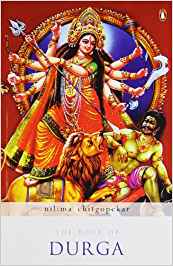
Nilima Chitgopekar
This set of three volumes aims to cover the salient features of God and God-alike appearing in different religions, Hindu, Muslim and Sikh. The contributors have given a comprehensive bird’s eyeview of their origins along with anecdotes that manifest their awesome personality. The cultural settings of the three religious heads vary considerably.
Johanan Grinshpon
This scholarly and imaginative study of the Upanishads makes a significant point: It argues that the Upanishadic texts have been traditionally viewed as consisting of two distinct and separable parts—“metaphysics” and “story”.
Rana Nayar
It’s one of those unsettling questions endlessly asked: what makes immigrants stay on in their land of adoption (generally western) if they end up unhappy, can’t strike roots, feel alien, homesick or abused; if the culture shock is hard, if memories of the motherland wring the soul…
Tapan Basu
Translating Caste is a significant addition to the literature of caste now available in English. The first English-language anthologies of dalit literature, such as Barbara Joshi’s Untouchable! Voices of dalit Literature (1986), Arjun Dangle’s Poisoned Bread (1992), and the Anthology of Dalit Literature by Mulk Raj Anand and Eleanor Zelliot (1992) have served very well as windows on Dalit writing, especially the radical literature of protest that appeared in Marathi and other languages from the 1960s.
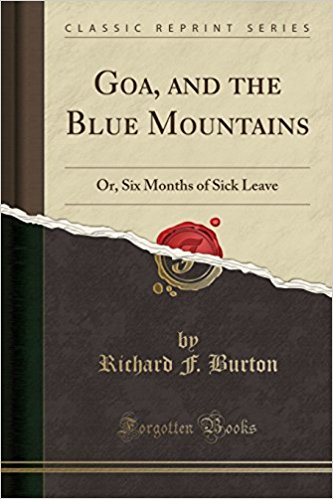
Richard F. Burton
Benjamin Disraeli could well have had Sir Richard Francis Burton in mind when he remarked in his novel Tancred that the East is a career. Following his expulsion from Oxford for unruly behaviour, the young Burton headed East under the auspices of the East India Company, to become at various points of time an explorer, diplomat, soldier, translator, poet, writer, linguist, Sufi mystic and a most remarkable Victorian.