
Vijay Nambisan
In the wake of numerous little publishing houses opening up to cater to a vast English market, translations on the one hand and creative takes on contemporary concerns, usually in the format of essays have become the prime products of these houses.
Arundhati Roy
Arundhati Roy has a long history of evoking extreme reactions from those who have read her, and even more extreme reactions from those who haven’t. People either hate Roy or love her. While this isn’t necessarily a bad thing for a writer, it makes almost impossible any pretensions to objectivity on the part of the reviewer.
Mariam Karim
2004
My Little Boat is a promising first novel that offers a delightful read. Set in contemporary India, it is primarily concerned with its female protagonist’s search for selfhood and subjectivity.

Sanjay Nigam
The Transplanted Man of the title is the Union Health Minister of India who has so many transplanted organs in his body he can proudly say he truly represents India. Once he was very corrupt but having often been close to death he has begun to actually feel the pain of the mother of a dying child and is determined to do some good for his country before he dies, except that he is not sure he will survive his latest illness.

K.S. Jawatkar
Sir Olaf Caroe, the former British civil servant in India, was not much off-centre when (in the mid-1940s) he pro¬pounded the doctrine of ‘Wells of Power’. He emphasized West Asian oil which was absolutely essential for the Western powers and hence should be shielded from the Communist Bear, This, coupl¬ed with the fact that the Indian Ocean does not, like its bigger counterparts, the Pacific and the Atlantic Oceans, extend northwards into the cold cli¬matic regions, saddles it with paramount strategic signi¬ficance.
A.N. Leontyev and Lada Aidarova
When I was asked if I would review some Russian books on Psychology and Child Deve-lopment, I agreed immediately since I had not read much literature emanating from Eastern Europe in recent years. Familiarity with the English language predisposes one to keep largely to books coming out of the USA and England, and to translations of French and German writings.
Krishna Chaitanya
Chaitanya’s new volume, edged in a glossy royal blue, is the fourth in a series of five which venture to span Indian painting—beginning from pre-historic rock paintings to the ‘modern temper’ of the Tagores, of Shergil and Jamini Roy. The author’s credentials need no elaboration and his erudition rides high despite the modesty of the blurb on the dust jacket—perhaps to popularize the sale of a scholar’s work:
K. Ishwaran
The sociological study of contemporary Hindu society has suffered from many con¬straints, some of which—most notably, borrowed para¬digms of social order and social change—have been by now widely recognized; others have received less attention. Thus the implica¬tions of the fact that most sociologists and social anthro¬pologists of the last fifty years have been high caste Hindus of middle or upper-middle class urban background have not been examined.
G.T. Kurien
What does development imply? It implies, according to conventional economic theory, growth as measured in terms of gross national product and in terms of per capita income. Economic growth should also be accompanied by certain structural changes. While the primary sector including agri¬culture may register growth, its growth is overtaken by that of the secondary sector consisting of manufacturing indus¬tries and later by the growth of the tertiary sector consisting of transport and other services.
Rajendra Prasad
Interest in the character and fate of the former Hydera¬bad state is still widespread-and likely to endure. It is almost as great as in the evo¬lution of the former state of Jammu and Kashmir. This is surprising as the latter basi¬cally is still alive and kicking, while Hyderabad state has been scrambled in such a way that it has lost its identity almost completely.
Milton Israel and N.K. Wagle
Professor Aziz Ahmad (1913-1978) wrote extensively on Indian Islam in the nine¬teenth and twentieth centuries. His two major works—Islamic Culture in the Indian Environ¬ment and Islamic Modernism in India and Pakistan—are excellent examples of his scholarship and depth of understanding. While the for¬mer surveyed various trends in Indian Islam from around the ninth century onwards, the latter closely identified the landmarks of religious and political thought from 1857 to the mid-1970s.
D C Wadhwa
It is a pleasure to review this book, for several reasons. In the first place, it is precise and well-written and shows a can¬dour of purpose not often met with in present days. Secondly, it deals with a subject of considerable theoretical and practical importance. There is one more reason which intro¬duces an element of novelty into this particular work.
T. J. Nossiter
Parliamentary social¬ism, as a form of politics seeking to achieve a restruc¬turing of society and a partial transfer of power from the ruling classes to the working classes by peaceful means, has its intellectual roots in the works of Marx and Engels. In advanced capitalist countries, social democracy emerged as a variant of the nineteenth century political alternatives of conservatism and liberalism, its energies fuelled by the ris¬ing class consciousness of the Working class and its trade union organizations.
Tariq Ali
Pakistan shares with Israel the dubious distinction of be¬ing one of the two confessional states in the world today, states whose survival was^ re¬garded as unlikely even before their birth. Both Pakistan and Israel were built on the viola¬tion of every principle of nationhood, both were erected on the basis of the displace¬ment of large bodies of people in their fount-head territories
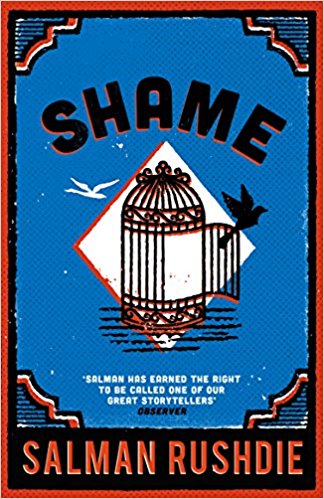
Salman Rushdie
1984
If, as Salman Rushdie once said, to conquer English is to make ourselves free, then in Shame he has certainly shed all awkwardness, archaism and colonial constraint, and deser¬ves to inhabit the airy realm of freedom. Though it is witty, satirical, innovative, eminently readable, the novel is shackled by an inadequate political vision and brittle, insufficient fabulation that scarcely lives up to his own aspirations. For it would not be fair to ask it of Rushdie (how could we, in this age of dreary Indo-Anglian fiction) unless he seemed to be asking it of himself.
Kishori Charan Das
When the title of a book sounds so obviously limiting as the volume under review, one approaches it with hesi¬tation. What monsters of esotericism will one find here? And so it is a relief to discover that this book not only has a comprehensive introduction but also brief notes introdu¬cing each author which imme¬diately sets things in perspective.
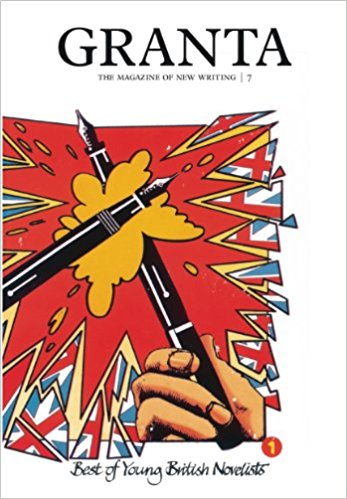
Bill Buford
George Steiner’s des¬cription of Granta as ‘a maga¬zine absolutely charged with life and risk’ —quoted on the inside cover—certainly fits this special issue. Devoted to recent fiction, this volume brings together twenty young British writers (all below forty), some of whom are already quite well known (Martin Amis, Shiva Naipaul, Salman Rushdie), and quite a few others who ought to be. Six of these twenty writers are women, five are born outside Britain (Ghana, Nigeria, Japan, India, Trinidad), and almost all are products of British universities.
J.M. Coetzee
The very title of Coetzee’s new book establishes it as an allegory within a certain tra¬dition and therefore raises certain expectations which are, however, quickly belied: Life and Times of Michael K has the strength of its own moral convictions and does not need to rely on Kafka for autho¬rity. The reference to K is therefore entirely gratuitous and one that Coetzee could have done without.
Jonathan Culler
1984
If for the moment we eschew the larger questions, Jonathan Culler’s critical biography of Barthes ought to be exemplary. Culler moves through the awk¬ward restrictions on style and length imposed by the Modern Masters Series with an ease all the more remarkable given a subject as mobile, contempo¬raneous, still warm as it were, from the fires of several con-troversies as Roland Barthes. Piquant summaries of the major projects provide a clearly signposted route for a quick journey through Barthesian country.
David McLellan
Authors are usually care¬fully revived from collective forgetfulness for ritual anniver¬saries. In that sense it is ironi¬cal to commemorate Marx, for he has never been forgotten in the first place. It is exactly a hundred years since Marx died—as good a time as any to see how his doctrine has done in the face of history.