
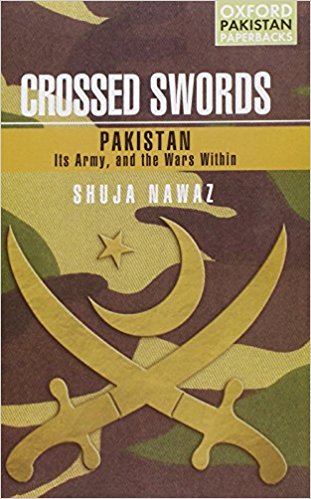
Shuja Nawaz
A large theme requires a large book to explore its several dimensions. Scholars never tire of making invidious comparisons between the divergent roles played by the military establishments of India and Pakistan in their internal polity.
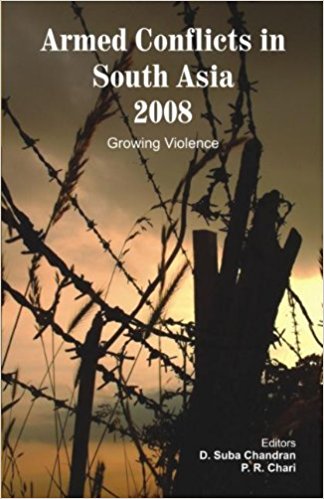
D. Suba Chandran and P.R. Chari
This book is the second in the series of annual publications which will cover conflicts in South Asia. This is an admirable effort and as things stand the series is likely to continue for years to come.

V.R. Raghavan and Lawrence Prabhakar
To see a book on maritime security produced outside Delhi, in the coastal city of Chennai, is a happy occurrence. Produced by the Centre for Security Analyses (CSA) it is the product of a seminar conducted in Chennai with funding from the Hans Seidel Foundation, Munich.
V.R. Raghavan
This book is a result of a seminar organized by the Delhi Policy Group in November 22-23, 2007 in New Delhi. In January 2007 the Delhi Policy Group initiated a research project titled, ‘Asian Security Dynamics’ to study the dynamics of the strategic relations between Japan and the United States in the changing environment in Asia mainly due to the ‘rise’ of China and India.
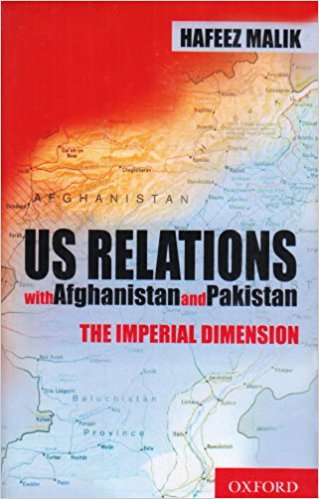
Hafeez Malik
In August 2008, Pervez Musharraf resigned as the President of Pakistan. The US reaction has been one of muted praise for his role in the war against terrorism, even as it could do little to shore up his failing acceptability in the Pakistani polity.
Parag Khanna
Khanna’s ambitious volume, freighted with a 23-page bibliography and 64 pages of substantive notes is, at first glance, highly ambitious. Endearingly, it also contains a very lengthy list of exceptionally enthusiastic acknowledgments—not all of them recognizing only the prominent and world-famous.
Lloyd I. Rudolph and Susanne Hoeber Rudolph
The three volumes, Explaining Indian Democracy, bring together the research publications of Lloyd Rudolph and Susanne Rudolph over a period of fifty years. These essays are the product of a highly fruitful intellectual collaboration between two prominent scholars who are also wife and husband, which is rare in any profession.
Vishwa Ballabh
In the current discussion on water sector reforms one can discern a wide and growing consensus on key issues. It is generally agreed that water is a finite commodity; it has to be looked at in a holistic manner; it has the characteristics of being a social as well as an economic good; the need to conserve water is as important as the desirability of containing demand, etc.
Sushil Kumar Dash
Human induced climate change is arguably the first environmental issue to successfully puncture the comfortable assumption that environment and development are separate and separable.
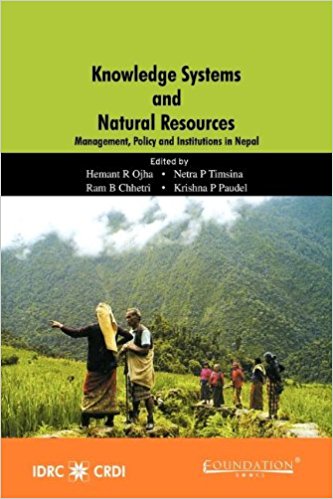
Hemant R. Ojha, Netra P. Timsina, Ram B. Chhetri and Krishna P. Paudel
Finding ways to better manage natural resources is critical, and increasingly so. From forests to fisheries, and from water to agricultural systems, a range of natural resources are increasingly becoming scarce, with their sustainability both essential, and in question.
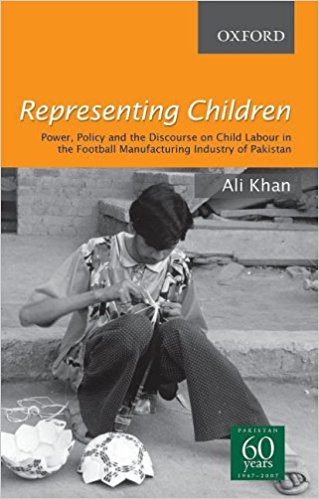
Ali Khan
The rapid growth in global wealth has failed to eliminate the scourge of child labour. Millions of children between 5 to 17 years of age continue to be engaged in hazardous occupations, agriculture, daily wage work and are victims of trafficking,
Joseph Stiglitz
In the intellectual debates and discourses in the social sciences, for almost three decades now, ‘globalization’ has been a much talked about and bitterly contested theme. It has both been praised and pilloried in substantial measure, and there is little reason to believe that the dust will settle in the foreseeable future.
Carolyn M. Elliott
The title is misleading because much of the book is about the adverse consequences of globalization and neoliberal policy. These days the phrase ‘neoliberal’ is bandied about without explaining what it is and how it has come about—was a liberal state something that just preceded it or was it replaced by another political system which is not named?
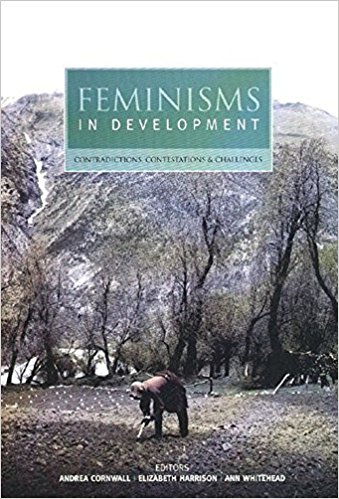
Andrea Cornwall, Elizabeth Harrison and Ann Whitehead
The book under review actually has two titles, both of which are equally apt and arresting. Titled Feminisms in Development: Contradictions, Contestations & Challenges it has its origins in a workshop ‘Gender Myths and Feminist Fables: Repositioning Gender in Development Policy and Practice’ organized by the Institute of Development Studies and the University of Sussex at Brighton in July 2003.
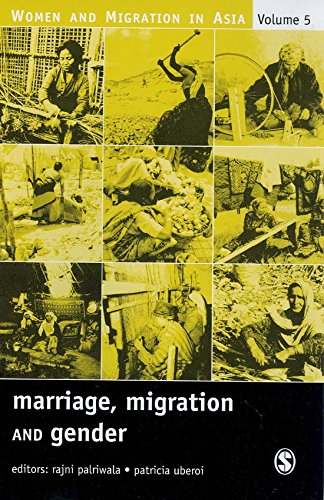
Rajni Palriwala and Patricia Oberoi
Female migration is still largely due to marriage migration, though other forms of migration are gaining importance in recent times. Though marriage migration appears as a simple, linear phenomenon, of late the complexities of such movement have been a subject of concern in the discourses on migration.
Sabiha Hussain
Sabiha Hussain’s attempt to critically and empirically examine myths associated with Islam and demographic questions relating to fertility and increasing size of Muslim population is not only timely but a welcome addition to knowledge on a subject.
Kamlesh Mohan
Using historical sources, including official and nonofficial, published and unpublished in combination with oral tradition and other sources, Kamlesh Mohan attempts an exploration of the varied formulations of culture and their interplay with economic forces from the colonial period to contemporary India.
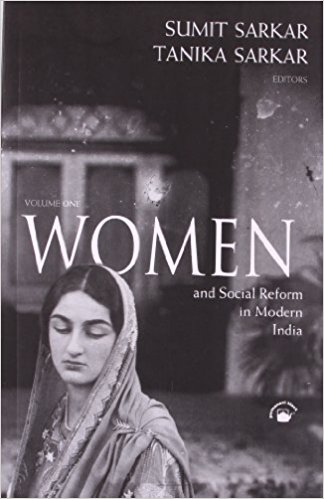
Sumit Ganguli and S. Paul Kapur
This useful volume brings together a number of important essays on the history of social reform in different parts of India. The two volumes promise to offer more comprehensive coverage with essays from the southern and north-eastern parts of the country.
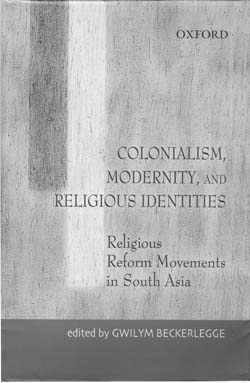
Gwilym Beckerlegge
The work under review is the third of a series of works focusing on religious reform in South Asia. The two preceding volumes in the same series, both edited by Antony Copley, were titled Gurus and Their Followers and Hinduism in Public and Private and brought out in the years 2000 and 2003 respectively.
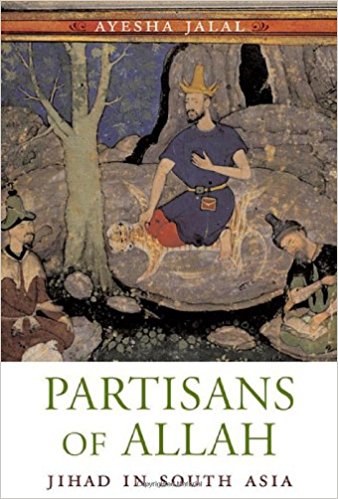
Ayesha Jalal
2008
Through her sophisticated intellectual history of Islam in South Asia, Professor Jalal attempts to ‘restore’ what she determines to be the core meaning of jihad: ‘an ethical struggle to be human’ (pp. 19, 300).