
Politics
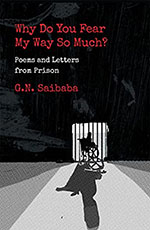
G.N. Saibaba
Having perused GN Saibaba’s recent collection, Why Do You Fear My Way So Much?: Poems and Letters from Prison over the last few days, I’m filled with grief and sadness. The UAPA (Unlawful Activities [Prevention] Act), under which GN Saibaba has been arrested, is a draconian colonial law, and will hopefully be revoked in the years to come, but one cannot overlook the damage it has caused in present times. I am thinking of fellow dissenting voices, scholars (Anand Teltumbde, Umar Khalid), Professors (Shoma Sen, Hany Babu), poet (Varavara Rao), and human rights activists (among others, Rona Wilson, Gautam Navlakha, Sudha Bharadwaj, deceased Stan Swamy), who have been incarcerated.
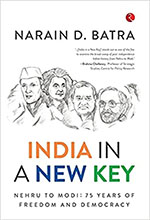
Narain D. Batra
India in a New Key—Nehru to Modi: 75 Years of Freedom and Democracy, targeted at a global audience, takes the reader on a journey through the history of India from Independence to the present times. The author, Narain D Batra is puzzled as to why the new-found freedom did not break this huge and diverse country called India and nudge it towards authoritarianism, as was the case with so many other newly independent countries of Asia and Africa. To unpack the mystery of India’s resilience and evolution as a constitutional democracy, he looks in depth into important developments and issues during the tenures of all Prime Ministers from Nehru to Modi.
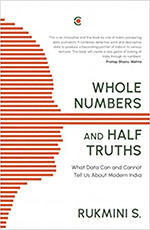
Rukmini S.
Given the general fear of numbers, a book on numbers is unlikely to excite many. However, in Whole Numbers and Half Truths: What Data Can and Cannot Tell Us About Modern India, Rukmini S makes sure the numbers do not hit you in the face but instead speak to you and encourage you to ask questions. With the so-called data explosion and the fact that everybody claims to be relying on data, Whole Numbers is essential reading for both data presenters as well as its consumers.
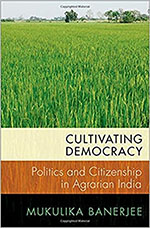
Mukulika Banerjee
The book under review presents a fascinating ethnographic study of the relationship between formal political institutions and the everyday experiences of the citizens of rural India. It presents a study of two villages in West Bengal, Madanpur and Chishti, and covers the period of fifteen years (from 1998 to 2013) to understand the changing dynamics of political life and the cultivation of active citizenship in both villages. Banerjee explores the reason behind the faith of common villagers, like the residents of Madanpur and Chishti, in the democratic processes, which they have been expressing through high voter turnout in consecutive elections.
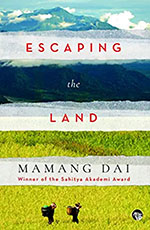
Mamang Dai
Mamang Dai, the Sahitya Akademi Award winning author is one of the most prolific voices from Arunachal Pradesh as well as the region of the North East. Her works have delved deeply into the transitions that the State of Arunachal Pradesh has gone through from time to time, including the administrative changes which first treated the region as a ‘frontier’ in the wilderness and then a resourceful unexplored area waiting to be ‘harnessed’.
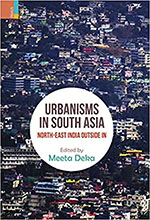
Meeta Deka
Emerging scholarship on urban studies in South Asia poses a critique of the application of Eurocentric models to capture urban processes in the global South. South Asian scholars, while arguing that urbanization is not uniform, argue for a contextual understanding of urban shifts. In addition to examining urban patterns concerning colonial history, and the roles of the state and the market, studies on urban processes also bring under their purview other categories such as gender, caste, kinship, ethnicity and culture.
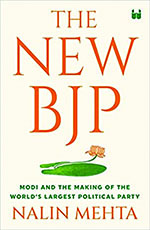
Nalin Mehta
The BJP’s meteoric rise to the top of Indian politics has been variously and copiously recorded by several book-length attempts at authenticity. While The Rise of the BJP: The Making of the World’s Largest Political Party (Bhupender Yadav and Illa Patnaik), How the BJP Wins: Inside the World’s Largest Election Machine (Prashant Ojha), Bharatiya Janata Party Past Present and Future: Story of the World’s Largest Political Party (Shantanu Gupta) and Jugalbandi.
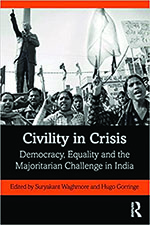
Suryakant Waghmore and Hugo Gorringe
We can extrapolate from the title of the book that civility in India is in serious jeopardy. Despite the fact that majoritarian politics and democracy in India are in place, the book discusses the challenges of ensuring civility for its population. Each chapter delves into this duality and critically assesses the obstacles and problems with democracy by looking at caste and civility in the context of several Indian States.
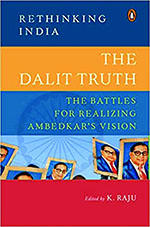
Edited by K. Raju
After more than seventy years of Independence, the caste question remains one of the most intractable vices of contemporary India. Dalits’ struggles in particular have been made strategically invisible amidst the call for how the ‘dreams of our nation’ must always supersede ‘sectarian agendas’. Both are politically loaded terms.
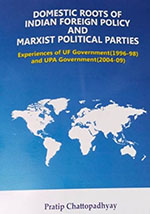
Pratip Chattopadhyay
As India’s influence in global politics increases, there has been a corresponding increase in the number of books on Indian foreign policy. Increasingly, one sees more books and articles based on India’s archives. However, the impact of India’s domestic politics on the formulation of foreign policy remains an under-researched area.
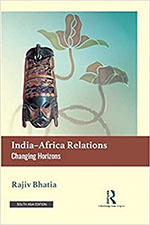
Rajiv Bhatia
he publication of two important books on India-Africa relations in early 2022 is a striking event. The authors are Foreign Service Africanists with multiple assignments on the Continent. They complement each other rather well.Rajiv Bhatia addresses the wide historical canvas, and a range of political and other connections.
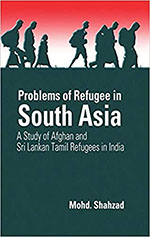
Mohd. Shahzad
Euriphides once remarked, ‘There is no greater sorrow on earth than the loss of one’s native land.’ It does not augur well for today’s modern civilized world that a whopping number of people are born and die in refugee camps, and millions of people each year are forced to leave their countries and seek refuge in other countries, while many others are displaced within their own countries.
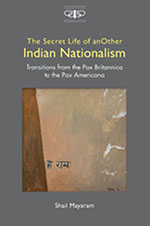
Shail Mayaram
Eric Hobsbawm in the introduction to Nations and Nationalism since 1780 notes that although the idea of nationalism is constructed chiefly from above, it needs to be studied from below as this is where it takes root and is most powerful and capricious. Shail Mayaram’s new book The Secret Life of anOther Indian Nationalism: Transitions from the Pax Britannica to the Pax Americana is a sincere attempt in this direction.

Anirudh Suri
The Great Tech Game comes with a promise to explain one of the pre-eminent challenges of our times, which concerns the rapid growth in the technological domain and its implications for the economic and strategic sectors in countries across the world. The fact that a book on geopolitics is written around the theme of technology underscores the high stakes now attached to the gadgets and algorithms that were once dismissed as a domain for ‘geeks and freaks’.
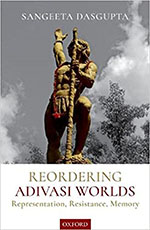
Sangeeta Dasgupta
The debates on colonial construction of tribal identity and the need to revisit the concept are gathering space in academic discourse in recent years. Dasgupta stretches this debate a little further from her previous work. Tribal identity is similar to caste used extensively by colonial ethnographers, anthropologists, and census enumerators to fix identities of the numerous communities living in India.
Ranjana Padhi and Nigamananda Sadangi
No story has ever been fully told, it is said, because no story can ever be fully told. However, as Ranjana Padhi and Nigamananda Sadangi tell us in Resisting Dispossession: The Odisha Story, all stories are only half told. That said, it ought to be conceded that this book, which sets out to tell the story of development and its discontents in Odisha from 1948 to the present, tells it remarkably well.
Monoj Kumar Nath
Muslims in Assam comprise one-third of its population. Since Independence, the politics of Assam has been shaped by the question of alleged illegal immigration from erstwhile East Pakistan. The spectre of an illegal immigrant minoritizing the ‘khilonjia’(original inhabitants) of Assam has been a constant in the popular as well as political discourse.

Sumi Madhok
2022
If the challenge is that of ‘theorizing from the global south’ (p. 50), then the question to ask is, to what extent has the author of this book been successful in meeting this call. Madhok’s interest in offering us an empirical account of ‘subaltern struggles and contestations over rights’ (p. 2) from South Asia is to bring to our notice the conceptual vocabulary used in these struggles, pointing to a different notion of human rights.
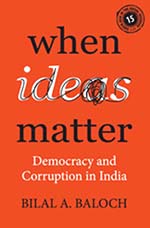
Bilal A. Baloch
In his debut volume, When Ideas Matter: Democracy and Corruption in India, Bilal A Baloch seeks to underscore the salience of ideology in shaping, dictating, and motivating the political elite’s behaviour. Political analysts have conventionally focused on material motivations behind elite political behaviour during the course of an electoral cycle. However, to what extent executive action is determined by ideational frameworks of those in power has largely remained an under-explored theme.
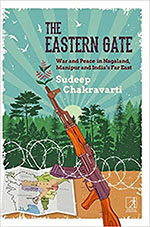
Sudeep Chakravarti
Located in a remote corner of India and, regrettably, the minds of most ‘mainland’ Indians, the North Eastern region has never been an easy site and space to think of, let alone write about. Immensely complex in terms of geography (territory), history, immigration and ethnic composition, economics and politics, the North East, which Sudeep Chakravarti quite correctly rechristens as (India’s) Far East, emerged out of the subcontinental decolonization process