
Literature
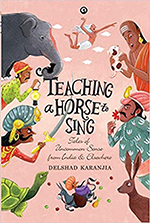
Delshad Karanjia
In Teaching a Horse to Sing, Delshad Karanjia ventures on a journey of retelling ‘tales of uncommon sense’ from all around the world, a task that seems as fantastical as the title at first. To enter into this book of wit, wisdom, humour, and most of all, a deep appreciation for the art of storytelling, is to fall down a rabbit hole. Whimsical and fleeting alike, the stories collected in this book are a homage to popular tales that are both cultural and social, whispered across time and all over the world, in similar iterations, lending a universality that is tinged with the local every time a tale is read.
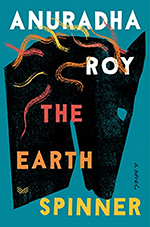
Anuradha Roy
Anuradha Roy is one writer who always takes you by surprise. Each of her books has a story with an intensity that is rare. Each of her books is a joy to read. The Earth Spinner is one such tale. Indian women’s writing in English has successfully moved from the world of domesticity to the more complex world of emotions, ambitions, landscapes. A world that makes you think. A world that draws your attention to differences that determine, decipher, and help us deconstruct the existential discourse.
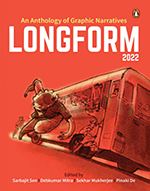
Sarabjit Sen, Debkumar Mitra, Sekhar Mukherjee and Pinaki De
Four years after the publication of their first anthology of graphic narratives, Longform returns with this eagerly awaited second outing, with eighteen texts from India and abroad. This visually and textually provocative collection of stories breaks boundaries and exposes fault lines of the ‘invisible India’ and the world at large, with an unflinching honesty and empathy for all those who fall off the map or are erased from it.
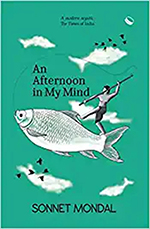
Sonnet Mondal
Sonnet Mondal’s fifth collection of poetry, An Afternoon in My Mind, is a compelling portrayal of contemporary times, when personal grief merges with pandemic loss and loneliness. The book consumes readers and makes them believe that Mondal’s sorrow is their own. It is evident that the poems in this collection are written as a cathartic release, and hence they become an exercise for readers in collective healing.
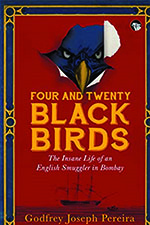
Godfrey Joseph Pereira
After Bloodline Bandra (2014), Godfrey Joseph Pereira returns to Bombay in this provocatively titled historical fiction, to document the story of Charlie Strongbow, Cross Island and the erstwhile ‘urbs prima in Indis’, Bombay, in the 1940s and 1950s. The brick red, orange and blue cover with the silhouette of a boat, and a bird aggressively pushing through a torn page, arouses curiosity and promises a story that is full of surprises.
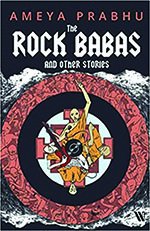
Ameya Prabhu
If one could travel as easily as the mind tours the world in a matter of seconds, where would one go? Would one go to a place from memory or a to a place one hasn’t ever ventured to even in one’s wildest dreams? Who would a traveller such as this meet and what would be the stories one would inadvertently become a part of?
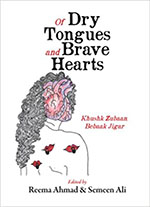
Reema Ahmad & Semeen Ali
The English word ‘dry’ doesn’t even begin to cover what the Urdu word ‘khushk’ conveys. Khushk pricks and chafes, like the continuous rubbing of sandpaper. There is bruising, never enough for the sort of attention that makes one rush to the Emergency Room, but bad enough to remain a painful slow burn. As a metaphor for unacknowledged damage, there couldn’t be a better term.
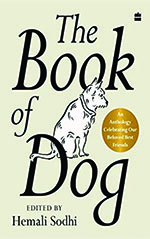
Hemali Sodhi HarperCollins
The Book of Dog is an anthology of 45 stories and is an ode to canine companionship expressed through essays, dramatized tales, poems and pictures. The book features contributions from leading voices in eclectic domains: animal welfare activists; academics; media personalities and journalists; bestselling authors, poets, filmmakers and playwrights; graphic artists, and chefs.
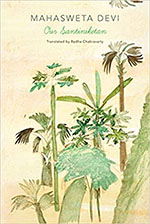
Mahasweta Devi. Translated from the original Bengali by Radha Chakravarty
2022
She donned many mantles. It is a well-known fact that Mahasweta Devi (1926-2016), the Bengali novelist, short story writer, playwright, essayist, columnist, editor, and above all a socio-cultural activist, had relentlessly worked for decades highlighting the problems of the rural poor and the tribals. Standing as she did at the intersection of vital contemporary questions of politics, gender, class and caste, she was perhaps the most significant figure in the socially committed literature field.
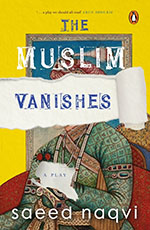
Saeed Naqvi
An itinerant and renowned journalist with a distinguished career and several books to his credit, Saeed Naqvi continues his literary output with a play in three acts. It would be difficult to give details about the play and yet do justice to its ringing tones of anger over a heritage betrayed, or the distress over what has come to pass.
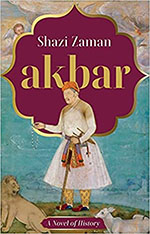
Shazi Zaman
Akbar: A Novel of History is an English translation of Shazi Zaman’s Hindi novel Akbar (Rajkamal, 2016). The novel had attracted lots of critical attention and was applauded for its intricate narrative weave, historical authenticity and creative scholarship. In its present English avatar, the author repositions himself as a writer-translator to revalidate his labour of love and make it available to a potentially larger readership.
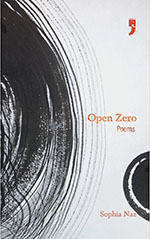
Sophia Naz
2021
In October of 2017 California’s raging wildfires burnt down Sophia Naz’s home, taking everything, heirlooms, paintings, signed books, inter alia treasures, carelessly strewn around homes that bear witness to living—family photographs, handwritten journals, ‘the material history of a lifetime’. Her 2021 collection of poems, Open Zero is less a math of that uncountable loss, or its archiving—for its calculus, as the obliquely eponymous poem ‘After, math’, muses, ‘must be left at memory’s table’. The poems here map the fire’s aftermaths—of all that follows the event of loss.
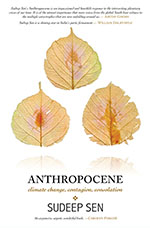
Sudeep Sen
With the arrival of his new collection, Anthropocene, a multi-genre book of poetry, literary prose and photography—Sudeep Sen takes a vertical plunge into deep history. From being a poet of Distracted Geographies, he now ventures to be a poet of distracted geologies and its sedimented pasts. If in his earlier major collection Fractals, he could be seen traversing across ravaged war zones from Kargil to Gaza to trace remnants of life—in this latest book, the entire planet with its disoriented seas, skies, seasons and sites, becomes his theatre of concern.
Ranu Uniyal
2021
Ranu Uniyal, a teacher of English, is here with her latest anthology of poems, in Hindi. Her poems, which she dismissively says are ‘just things I wrote’, are something of a portfolio of a traditional artist, shy and mild mannered, but with the promise of high artistry and an unfaltering grasp on her material and tools.There are poems about the different stages of womanhood, life in the streets (and within the mind), passing seasons, and of course the landscape of the heart. In her wide sweep of ideas, she reminds one of the nineteenth century Urdu/Rekhta masters who left us literal biographies of their towns—local and universal at the same time.
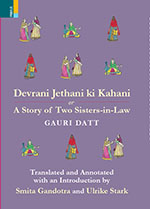
Gauri Datt. Translated and Annotated with an Introduction by Smita Gandotra and Ulrike Stark
Devrani Jethani ki Kahani, first published in 1870, is often hailed as the first novel in Hindi, and this critical edition, with the first-ever translation into English as A Story of Two Sisters-in-Law, takes full cognizance of the book’s historical significance to bring it to a contemporary reader in all its layered complexity. The family saga marks a tryst with modernity against the backdrop of the colonial encounter, while offering a realist/reformist representation of the textures of Agarwal-Baniya community life around the Meerut region in the 1860s.
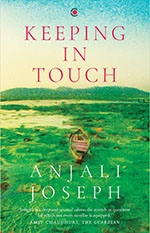
Anjali Joseph
2021
Keeping in Touch by award-winning novelist Anjali Joseph is a love story centering Keteki Sharma and Ved Ved, two thirty-something individuals more or less settled in their hectic, jet-set lives. Though it is love at first sight for Ved, when he sees Keteki at Heathrow Airport in casual jeans and shirt, Keteki revels in her relationship with her new lover but takes her time making up her mind about settling down with him. Thus begins a dance of a relationship between two individuals entirely unknown to each other.
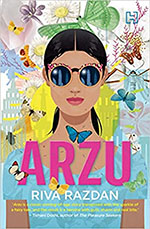
Riva Razdan
2021
Arzu is essentially a coming-of-age story but the beauty of the book lies in the fact that it is able to beautifully capture the process of growth, change and hard work, which can be tremendously difficult to write about in an interesting way. Arzu’s efforts to develop herself and find her place in the world are inspiring, especially for young readers who are trying to figure themselves out.
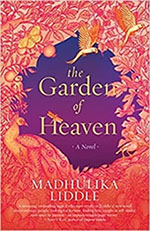
Madhulika Liddle
This historical fiction tells the stories of a ten-year boy, Madhav, and the family of Sridhar Sahu and Ratna. Their stories, spread across two invasions of Delhi—of Muhammed of Ghur in 1192 CE and Taimur in 1398 CE, tells another very important tale—the way the ‘medieval past’ seems to haunt the present. Madhulika Liddle writes in the mode of scholars who focus on Delhi, such as Sunil Kumar (The Present in Delhi’s Pasts), Percival Spear (Delhi, Its Monuments and History), RE Frykenburg (Ed. Delhi through the Ages), Narayani Gupta (Delhi between Two Empires 1803-1931) and Upinder Singh (Ancient Delhi).
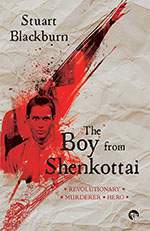
Stuart Blackburn
The major difference one draws upon when discussing history and fiction is that while history is based on facts, fiction is based on imagination. Given this context how would one describe a historical novel, which is a blend of history and fiction? One of the normative responses would be that a historical novel is set in a period of history and conveys the social and cultural oeuvre of that period. This statement has undergone a sea change as the concept of history has altered in contemporary times.

Sanjukta Dasgupta Edited and Introduced by Jaydeep Sarangi and Sanghita Sanyal
This volume arrives resolutely on the global platform of major poetic voices. Sanjukta Dasgupta’s digital footprint is strong thanks to panels and seminars, and her popularity as a performative reader of poems is well known at many cosmopolitan locations. The need for a consolidated selection of her best works was felt by many admirers.