
Literature
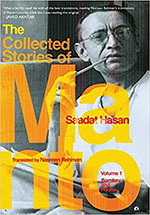
Saadat Hasan Manto
On the very first page of this book, the translator anticipates and answers, or at least deflects, a question many askance readers may have in mind. ‘Those irked by yet another translation of Manto’s stories,’ says Nasreen Rehman, ‘should blame David Davidar, who suggested that I undertake this venture’ (p. ix). It turns out that Rehman had approached Davidar, the founder of the publishing company Aleph, with a modest proposal to publish a selection of fifteen stories by Manto about film life that she had translated, as a by-product of her PhD thesis titled, ‘A History of the Cinema in Lahore 1917-1947’. But if there is a publisher in India who readily deals in quantity and goes for doorstoppers, it is dear David. Further, if half a dozen publishers in India, Pakistan and Britain were already raking it in by publishing Manto in English, there was no reason why he should be left out, especially when he was ready to do it bigger if not better.
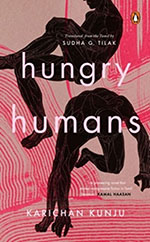
Karichan Kunju
Karichan Kunju’s stormy social realism novel first published in Tamil as Pasitha Manidham in 1978 can be enjoyed today by non-Tamil readers in its English avatar. Translated into English as Hungry Humans by Sudha G Tilak, the novel within 264 pages and a well-appointed glossary at the back, works for the reader as a social commentary and as an incisive but dispassionate observation of human nature. The early twentieth century positioning of the novel about the social mores transacted in and around the villages of Thanjavur in Tamil Nadu and in particular of Kumbakonam, turns the gaze inwards to truths common to all human beings.
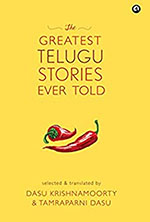
Dasu Krishnamoorty & Tamraparni Dasu
Telugu is one of the six select languages that were accorded the ‘classical language’ status in India. It was the second most spoken scheduled language till the 1981 Census (it has since slipped to the fourth position in the latest Census of 2011). In 1953, Andhra State became the first State in the country to be formed on a linguistic basis. These distinctions notwithstanding, Telugu—as a language, literature, and culture—figures poorly in the national, not to speak of the global, literary imaginary.
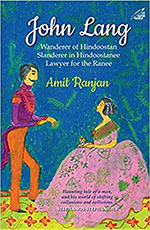
Amit Ranjan
Amit Ranjan’s book John Lang poses a conundrum quite like the persona of the protagonist. Who was John Lang? Columnist, creative writer, lawyer, rebel, alcoholic or just a stupendous wit, masquerading as all of them? I have grave doubts about whether he was really an alcoholic or was it a rumour that suited his humour. There is no such entity as almost an alcoholic.
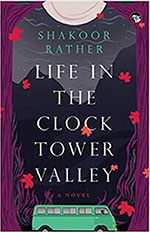
Shakoor Rather
Shakoor Rather’s promising debut novel weaves an intriguing yarn around the mundane and the prosaic of Srinagar in 2008, including two lovers, a family and a neighbourhood simpleton. The plot-lines, in rather simple terms, are as follows.The lovers: Samar and Rabiya are law students who meet initially in the battered matador van they both take to reach their university. After a month of glancing shyly at each other and offering tentative ‘Hellos’, there blossoms a ‘friendship’ that allows circumspect exchanges about corporate law, exams, and so on (p. 59)
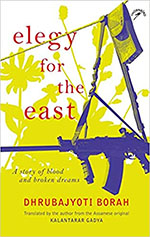
Dhrubajyoti Borah
Dhrubajyoti Borah’s Elegy for the East: A Story of Blood and Broken Dreams is a poignant narrative set against the backdrop of the insurgency in Assam and the North East in the 1990s. Albeit fictional, the novel offers an insider perspective on the ideology and nature of the armed rebellion led by the United Liberation Front Asom, the subsequent counter-insurgency operations launched by the Indian state, and the tormented lives of common people who are caught between the two.
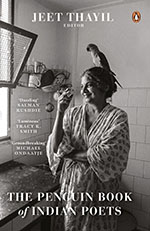
Jeet Thayil
On tracing the history of Indian English literature, if one looks at the genre of poetry, it has been observed that anthologies have brought together voices not just from across the country but also collected varied ideas/perceptions/concepts that have been fermenting and brimming and searching for their readers.You can growyour inward silence indoors nowthe inessential park is closed.
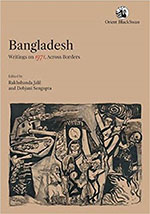
Rakhshanda Jalil and Debjani Sengupta
This volume puts together literary writings in Urdu and Bangla on the liberation of Bangladesh in 1971. The crop is by no means as plentiful as the writings on Partition, but nevertheless quite appreciable, particularly in Bangla. The great advantage of the volume is that it tries to gather the harvest from both the Eastern and the Western wing of Pakistan, in an effort to provide a holistic perspective. Sadly, the writings in Urdu on 1971, except for a few honourable exceptions, are abstract, inane and escapist.
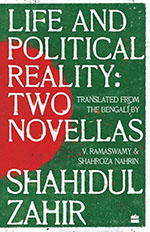
by V. Ramaswamy & Shahroza Nahrin
The written word is a silent medium—we can only see the words on the pages of a book, cannot hear their sounds. We create those sounds in our minds while reading the book. As we slowly move from one word to another, one sentence to another, one paragraph to another, we gradually grow accustomed to listening to the words in our mind. Loud, shrill, gruffy, with different accents—we assign voices to characters, and sounds that we have created while reading assume texture.
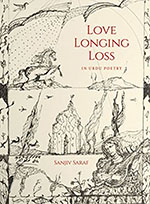
Sanjiv Saraf
In the Urdu world and in the world of Indian culture in general Sanjiv Saraf needs no introduction. He is the man behind Rekhta, the organization that has become synonymous with all things Urdu. Apart from its annual festival, the Rekhta website has become the go to site for all lovers of Urdu and now it is also attracting students and scholars. Through their digitization programme they are preserving books in private and rare collections all over the world. They spent weeks in my father’s library filming all the important books and manuscripts he possessed.
The self that remains rooted at the place of origin is a different one from the identity that the world creates. Home becomes a place one constantly returns to and the division of the self that occurs when one remains away from home magnifies on encountering one’s old self. Concepts regarding the definition of the self and one’s identity change with time but more importantly are dependent on the location and the surroundings. Kamila Shamsie through her writings has tried to discover Pakistan.
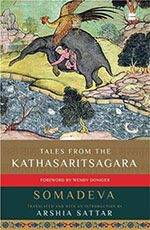
Somadeva. Translated from the original Sanskrit and with an Introduction by Arshia Sattar Foreword by Wendy Doniger
The opening lines of many books have acquired iconic status. From Dickens to Daphne du Maurier, the first lines have entranced the reader, and brought him back to the book time and again. Of all these, few can match the effectiveness of the first line in its simplest form ‘Can I tell you a story?’ or ‘Once upon a time….’ In an instant, the imagination is captured; we want to know ‘What comes next?’
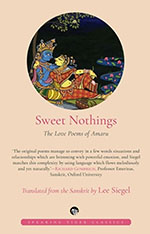
Translated from the Sanskrit original by Lee Siegel
Every now and then there is a spurt of interest in Amarushatakam, a compilation of a hundred love poems, dated around the 11th century AD. If viewed as part of the Indian literary tradition, such poems singing the praise of love, personal and yet universal, to which even an ordinary person can relate, have a hoary tradition. Amarushatakam and its precursor Sringara Shatakam by Bhartrahari, follow motifs and approaches similar to Hala’s Gathasaptasati in Prakrit (dating to the 1st century AD).
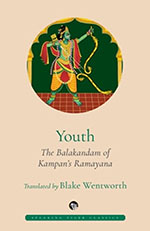
Translated by Blake Wentworth
Though Kamban’s iRamavataram is considered the greatest poetic work of the Tamil language and has served as a source for numerous retellings into English, including C Rajagopalachari’s, Wentworth’s translation of the first canto, the Balakanda is probably the first proper ‘translation’ of even a part of it. The introduction sets the stage, as it were, for the translation itself to unfold. Unlike the Valmiki Ramayana, which is composed in a single metre, the shloka, said to be named thus as it was born out of shoka, grief, when Valmiki witnessed a hunter kill one of a pair of mating cranes, Kampan’s Tamil masterpiece has no less than eighty-seven varieties of metres which are employed to create varied effects.
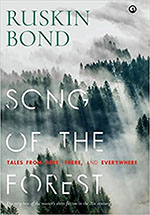
Ruskin Bond
Ruskin Bond is perhaps undoubtedly India’s favourite short story writer and novelist. From children to young adults and grown-ups, there is no category that is left untouched and unmoved by his stories—through the easy-flowing style and the languid descriptions that transport the reader into the mountains of Landour or the hills of Dalhousie or into the surrounding forests, with their accompanying ‘songs’. David Davidar, in the foreword to this collection calls Bond ‘ambidextrous’—a perfect word to describe the man whose oeuvre has mesmerized and influenced at least three generations of readers.
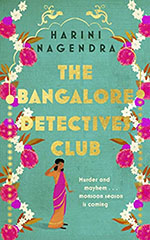
Harini Nagendra
Harini Nagendra is Director of Research at the Azim Premji University and leads the University’s Centre for Climate Change and Sustainability. She has authored several scientific publications and books on the planet and its ecosystems. The Bangalore Detectives Club is her first foray into fiction.A murder mystery featuring a 19-year-old protagonist, the book is based in Bangalore in the 1920s. Young, beautiful, upper-class wife of a doctor, Kaveri the protagonist, could well be the heroine of a young adult book of fiction, which is almost what TBDC is.
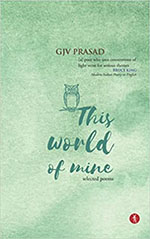
GJV Prasad
Professor GJV Prasad’s abundant creativity offers us a smorgasbord of options from which to choose—poetry, fiction, criticism, academic writing and translation. Currently, it is his translation into English of Ambai’s Tamil stories, taking ‘a seed from one soil’ and planting it into another, that is bringing in the praise he so richly deserves. His long-standing passion for writing poetry in English, I’m sure, has aided in honing his skills as a translator.
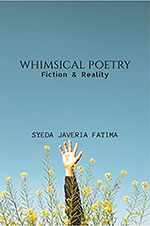
Syeda Javeria Fatima
Syeda Javeria Fatima’s collection of poems is not as whimsical as the title suggests; in fact, it is quite the opposite to it. Written in simple rhyme schemes, the poems voice the observations of a child’s world which has been marred by experiences too mature for her. Divided into sections that range from spiritual belief to romantic love, and her mother’s sacrificial omnipresence for her family members to friends that include her schoolmates and her grandparents, Fatima’s poems are a gamut of emotions both personal and relatable at the same time.
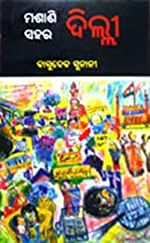
Basudev Sunani
Mashani Sahara Dilli is an important book for many reasons, one of which is its sheering honesty. This Odia novel tells us stories that are marginal to the aspirational India we are supposed to inhabit these days. These are narrated from the vantage point of Anurag, a Government of Odisha officer who is now posted in Delhi for work.
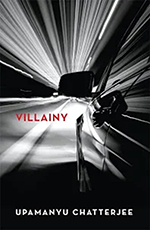
Upamanyu Chatterjee
2022
Several years ago, Nilanjana S Roy had defined the current crop of Indian Writing in English novelists as a ‘Doon School-St. Stephens’ conspiracy’. It was an interesting but true observation since the writers who were popular at that time were all products of these elite institutions and were quite adept at imitating western culture and simultaneously wrote in a style that was quite polished and urban.