
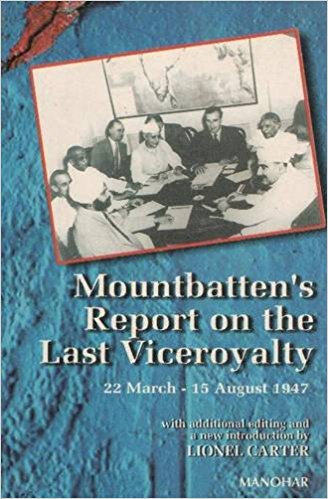
Lionel Carter
Here is a man who seems to be sure what memoirs are about. Memoirs are to preserve some memories—and to erase some. It is all about presenting the narrator to history. That is one of the reasons this work is of absorbing interest and also why one should read it with caution.
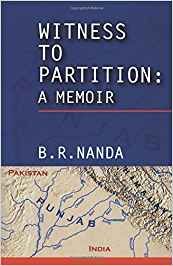
B.R. Nanda
Looking at ‘India’ from the long-drawn historical point of view, it is a country (and an idea as well) that has primarily grown by accretion. The inclusion and subsequent exclusion of Burma both were peripheral colonial acts.

Visalakshi Menon
Visalakshi Menon has given us a fascinating story of a political party at the crossroads. Having spearheaded an anti-imperialist movement and had its cadres languish in colonial jails, it debates whether to assume office and eventually forms governments in eight provinces of British India.

M.V. Kamath
2004
This collection of lectures organized by the Nehru Centre, Mumbai, two years ago to reassess the relevance of Jawaharlal Nehru of the modern world makes pleasant reading. The writers are all well-known experts on politics, foreign policy, national security and modern Indian history.
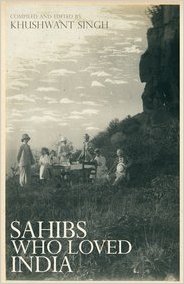
Khushwant Singh
Sahibs who loved India? Khushwant Singh didn’t know too many. I knew four sahibs who loved India so much that they stayed on after independence, lived and died in India and called this country their home.
Satish Alekar’s best plays are like jigsaw puzzles in which not all the pieces are designed to fit in exactly. Some do, some don’t seem to, but no piece is random. The action often proceeds at a tangent to what the words are saying; the narrative gets refracted through subplots which seem unrelated.
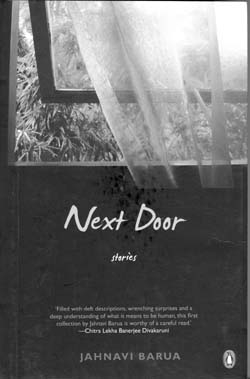
Jahnavi Barua
Next Door is a collection of eleven short stories by Jahnavi Barua, recently published by Penguin India. Set for the most part in the valley of the Brahmaputra in Assam, these stories deal with extraordinary events in the lives of ordinary people living there.
Uma Chakravarty’s chatty yet sound introduction is the highlight of this collection of novellas. She cautions against the nineteenth century labelling of the novel as a lighter genre that women not only read but even write.
The laconic, understated style of the book is prefigured in the titles of the stories: not only the title story, but ten of the eleven pieces that make up the volume have cryptic titles like ‘Responsibility’ ‘Eyes’ The Image’, ‘The Balance’ and so on.

Krishnan Srinivasan
Krishnan Srinivasan has worked at high levels in the Foreign Service and the Commonwealth Secretariat. He has spent several years in Africa where he seems to have acquired an insider’s perspective into the shuffle and elbowing that go by the name of diplomacy in most countries. This is Srinivasan’s second book, which he describes as his prequel to The Eccentric Effect, published in 2001.
Rosinka Chaudhuri
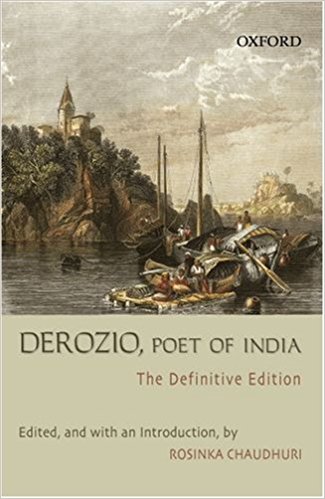
Henry Louis Vivian Derozio (1809–31), a Eurasian of Portuguese Indian ancestry, has been described as the first Indian poet to unleash the Age of ‘Modernity’. Derozio has been traditionally portrayed as a harbinger of ‘Indian Renaissance’ by many a critic.
In a literary landscape dominated by prose and the prosaic, poetry has become an imaginative-aesthetic rarity; a kind of aesthetic insertion that is at a discount amidst the prosaic sensibility of the present.
2009
This is an extraordinary book, and its author, Lokesh Chandra is an extraordinary man; combining esoteric learning and an active public life in a characteristically Indian mode.

Azhagia Periavan
2004
Azhagia Periavan (Aravindhan) is one of the young Dalit writers in Tamil who claim attention for their authentic and honest portrayal of the life of the oppressed classes. The portrayal is, on occasions, too real and raw to be art, and a conscious process of transformation of the raw material into finished product might have made the stories richer and given the writer also a kind of training in critical intelligence.
Sumit Ganguly, Larry Diamond and Marc F. Plattner
Indian democracy is perhaps the most-discussed academic theme in contemporary scholarship. Reasons for this are many. There is undoubtedly the growing consolidation of values in support of socio-political processes endorsing vox populi or the voice of the people.

Autar S. Dhesi and Gurmail Singh
Punjab’s economy experienced phenomenal growth since the 1960s but its agricultural sector is now facing an acute crisis, raising serious questions about future sustainability in development.
On occasions Gujarat’s development and growth scenarios look enviable but at the same time, it is also perceived as an enigma. How is this state able to attract investments and at the same time invest outside the state substantially? In every nook and corner of the world one can find a Gujarati, yet in some sectors notably in education there is a shortage of qualified manpower.
Prabhat Patnaik
Several great divides in economic theories including that between liberal traditions of the ‘classical’ school and ‘marginalist’ theories of neo-classical tradition could not capture the essential division in the theoretical constructs of analysing capitalism.
Thich Nhat Hahn, a Buddhist Zen master of Vietnamese origin, is a human rights activist and a renowned organizer of retreats on the art of mindful living. Thây (‘teacher’), as he is generally known to his followers, also pioneered the concept of ‘engaged’ Buddhism during the Vietnam War when he gave a call to interlink meditation practices and social activism.
Sachidananda Mohanty
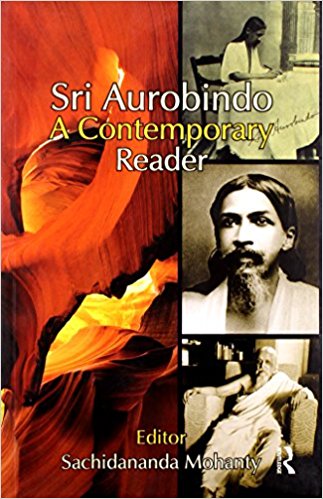
Sachidananda Mohanty’s compilation, so far as I am aware, is the fifth such work to be published in the space of the last thirty years or so. Of these, the earliest to arrive was the compilation of Manoj Das (1972) followed by those of Peter Heehs (1998, 2005) and Makarand Paranjape (1999).