

Sushil Joshi
School education is a significant part of one’s life span that endeavours to impart critical thinking, reasoning and logic among children. Within the paradigm of school education, science as a discipline is a dynamic, expanding body of knowledge covering ever new domains of experience.
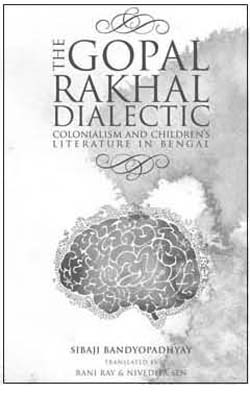
Sibaji Bandopadhyay
Children’s literature in Bengal has a rich history, not unusual since Bengal was in the lead during the 19th century, and even later. The Bengal renaissance had also seen a rich proliferation of literature, including the genre of children’s literature.
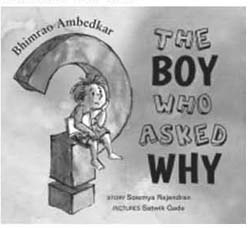
Sowmya Rajendran
Sowmya Rajendran’s The Boy Who Asked Why is an apt choice for a child’s first view of our society and its flaws. The book is meant for children aged 6 and above and is a very simple yet powerful introduction to India’s caste system, hierarchies, discriminatory practices and their repercussions over time. The Boy Who Asked Why is the story of Bhim, born to untouchables in British India.
Subhadra Sen Gupta
The blurb at the back of Subhadra Sengupta’s A History of India for Children clarifies that it is sufficiently updated with the relatively recent approach to the study of history. ‘History is … about how ordinary people lived—the houses they lived in, the food they ate, the clothes they wore and what the children studied in school … it is the story of our past.’ Such a sensitization has also marked the rewriting of history textbooks in schools.

Kamesh Ramakrishna
It is so difficult to achieve a combination of the ancient and the modern, the historical and the imaginary, the authentic and the innovative. But in The Last Kaurava by Kamesh Ramakrishna we have it. In it, the Mahabharata comes alive with a twentyfirst century zest.
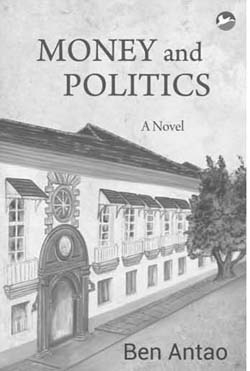
Ben Antao
Ben Antao has tackled the birth of Goan Independence with humour and an unrepentant pen. That politics is money is unquestioned in this novel. That politics is business is also boldly stated. And with the events in this tale taking place in the early 1960s when, for those of us who were raised in a more idealistic time and were led to believe in statesmanship and leadership (Kennedy, Gandhi, Churchill et al), and in altruistic nation-building in a post-WWII era, this book comes as a bit of a shake-up and a wake-up call.
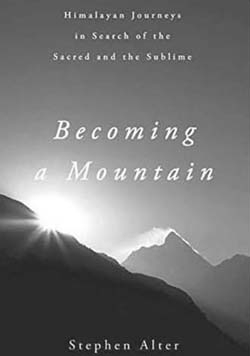
Stephen Alter
It is only at a time of crisis that we experience the vulnerability of human existence—in a flash the whole world may change for us and take on new meanings.
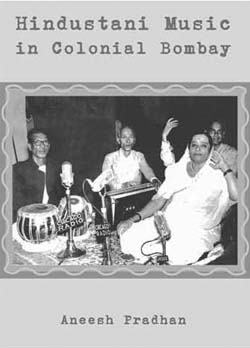
Aneesh Pradhan
‘Dharma Migu Chennai’, ‘Madras is replete with piety’—so the saintpoet Ramalingaswamy pronounced in the nineteenth century. In her excellent account of the social history of music in South India, the historian Lakshmi Subramanian (2006) probes this ‘curious testimonial’.
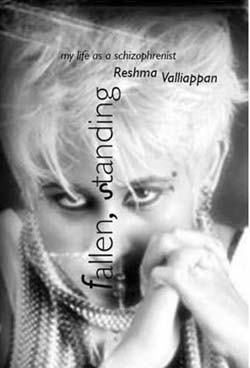
Reshma Valliappan
More than two million people in the United States have a diagnosis of schizophrenia, and the treatment for most of them mainly involves strong doses of antipsychotic drugs that blunt hallucinations and delusions but can come with unbearable side effects, like severe weight gain or debilitating tremors.
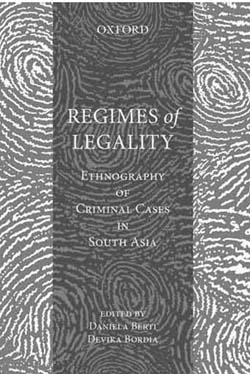
Daniela Berti
It’s about the farcical trial of a Left-wing folk singer accused of instigating a sewage worker to commit suicide in a manhole. India’s official entry for Oscars 2016, a Marathi movie called Court, has earned acclaim for its insightful portrayal of the Indian legal culture. It’s a rivetting story even as it focused on banality rather than the usual fare of dramatic situations and stirring dialogues. In a matter-of-fact tone, the movie brings out the quirks of the judge, prosecutor, defence counsel and the accused person, not only in the court premises but in their personal lives too.
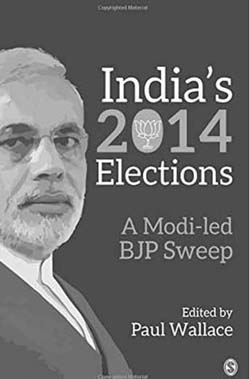
Paul Wallace
The election held in 2014 was significant in many respects. First, for the first time in the electoral history of India, a non-Congress party was able to come to power at the centre on its own, considering the fact that the Janata Party was a conglomeration of parties ‘coming together’ to contest election in 1977. Second, the colossal presence and impact of Narendra Modi as the prime ministerial candidate and chief campaigner of the BJP over the eventual electoral outcome was a reminder of the personcentered campaigns undertaken by Indira Gandhi in the 1970s. Third, it was arguably the first election when the social, electronic and print media seemed to play such an important role in setting the electoral agenda and influencing electoral choices.
Samuel Paul
It has for long been an accepted economic wisdom that the trajectory of economic development taken by ‘constituent units of a country’ (hereafter as ‘States’) tends to converge over time. In a timely intervention, Samuel Paul and Kala Seetharam Sridhar have, in their co-authored book entitled, The Paradox of India’s North-South Divide: Lessons from the States and Regions (hereafter as The Paradox) ‘counter’ this by drawing from variegated economic experiences of North and South Indian States. They examine the why and how of North-South divide by invoking a set of ‘proximate’ and ‘foundational’ factors to (i) test the ‘credibility’ of the claim that southern States performed better than their northern counterparts, (ii) examine ‘when and in what respect’ the South performed better than the North, and (iii) examine the ‘reasons behind the paradox’ of the North-South economic divide (pp. 5–6). While acknowledging the import of ‘proximate’ factors like literacy, health, education, infrastructure, and urbanization, among others, Paul and Sridhar contend that ‘foundational’ factors like governance, law and order are critical in determining divergent economic outcomes of North and South Indian States (pp. 33–34).
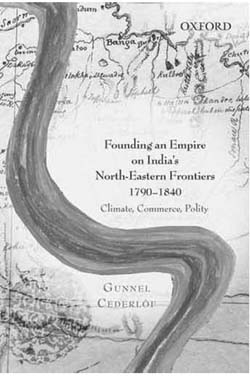
Gunnel Cederlof
Gunnel Ceder’s Founding an Empire is an important contribution to the historical scholarship on colonial state making in South Asia in general and frontier and borderland studies in particular. Taken together, her earlier works on the interfaces of agrarian, environmental and legal histories in colonial and early colonial South India and eastern Bengal and the book under review on India’s North Eastern frontiers, speaks of the author’s…
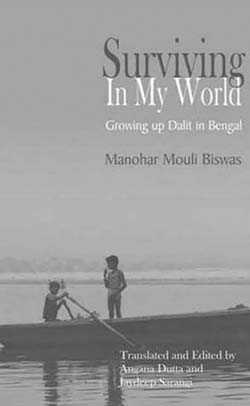
Manohar Mouli Biswas
This is an engaging, poignant and important autobiography. It will be a serious ‘reality check’ for all readers! Biswas is a wonderful story teller, his almost ‘matter-of-fact’ style engages the reader and virtually transports him or her to the rice paddies, river banks and muddy creeks which are indelibly part of Biswas’s formative years.
Devaki Jain
This collection of essays edited by two eminent Indian women brings together contributions from some of the best known and most respected scholars and activists in the country. It is the second edition—coming three decades after the first—of a collection of essays that is described as a precursor to the ‘Towards Equality’ report. Surely a book that will endure as a benchmark in the field of women’s studies, to be quoted and cited for many years to come.

Tarun Das
Tarun Das transports the reader on a 30-year twin journey: he narrates the opening up of India, from its hesitant and wayward path before P.V. Narasimha Rao became Prime Minister in 1991, gaining traction after the latter launched economic reforms; that story is juxtaposed with a detailed account of the transformation of an obscure engineering industry association into what became for a time India’s most powerful non-state economic actor.
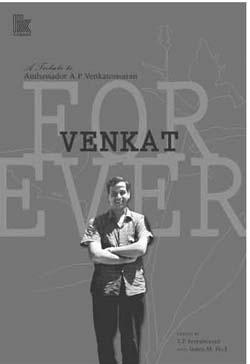
T.P. Sreenivasan
This is not just a tribute, as suggested in the title, it is a ‘labour of love’ undertaken at speed by a former admiring junior colleague and Venkat’s one sonin-law, and motivated, as the editors elaborate in an introductory note, by the conviction that the hero of the volume was such a unique person that he should be remembered forever.
Nira Wickramasinghe
As David Thelen said the main ‘challenge of history is to recover the past and introduce it to the present.’ This recovery and introduction is being done by historical writing, which is one variety of written expression that seeks to inform and persuade the reader through the use of evidence organized around a central thesis or argument. Sri Lanka in the Modern Age: A History recounts the modern history of Sri Lanka, starting from colonial times to the present, a story of about two centuries.
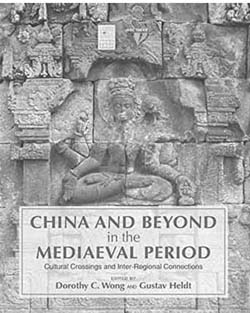
Dorothy C. Wong
This is a splendid book on cultural interactions across Eurasia from approximately the 3rd-10th centuries CE. In keeping with its title, the book itself crosses many boundaries—disciplinary, national and conceptual—to provide us with an awe-inspiring picture of the ‘different forms of transmissions, transgressions, hybridizations, dialectic encounters,
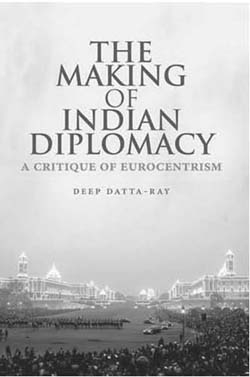
Deep K. Datta-Ray
This book will generate very different responses from its readers. Indian academics may contest its premises and conclusions, but will have to grapple with a thesis so novel, which argues that Indian diplomacy flows from the Mahabharata, emerging from the progressively narrower and corroded conduits of Mahatma Gandhi and Jawaharlal Nehru…