
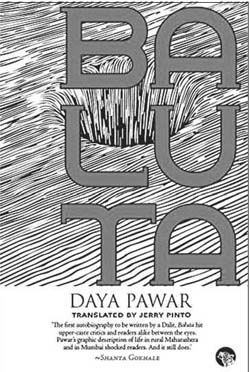
Daya Pawar Translated by Jerry Pinto
2015
Rohith Vemula’s hanging body; Soni Sori’s swollen face; Kawasi Hidme’s ejecting uterus; Monisha, Priyanka and Suranya’s floating bodies—all have one thing in common—these are Dalit bodies. Living or dead, their faces, uterus, eyes, hands and feet are first Dalit, then parts of a human body. This raises a crucial question: how can a human body, an anatomical subject formed of cells that are always dissolving, regenerating and growing, embody something as non-biodegradable as caste?

S. Diwakar . Translated by Susheela Punitha
There is hardly any doubt that Kannada has one of the richest traditions of literary writings and debates, reflecting a largely uninterrupted continuity from pre-colonial to modern times. For whatever awards are worth, it is perhaps not accidental that its writers have received the highest number of Jnanapith awards in post-Independence India. Assured of their bedrock of literary output and open always to literatures across the world, Kannada writers have written their own works and translated from the best writing available, always evolving as the social context changed, in terms of literary form and content.
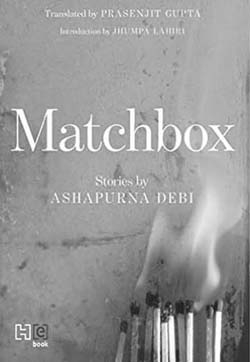
Ashapurna Debi . Translated by Prasenjit Gupta
2015
Ashapurna Debi is one of the first Bengali women writers to bring to the fore the condition of Bengali women in the larger part of the 20th century. She was known as one of the first Bengali writers to write realistically about the life these women faced within the four walls of the house, in the midst of complex family relationships, petty jealousies and other experiences. The stories in this collection The Matchbox, translated from the Bengali by Prasenjit Gupta are part of this same mosaic, delineating the emotions of the ordinary middle class Bengali, whose outward lives seem devoid of sensationalism, to the extent that everyday is like the previous one, or even the next one, yet these same lives contain within them a psychological and emotional terrain that is far more complex than the external image.
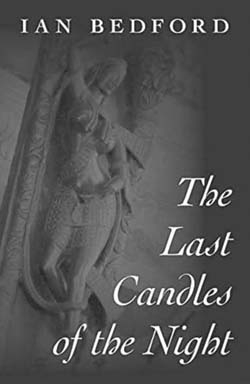
Ian Bedford
The Last Candles of the Night is the fourth and last novel by Ian Bedford, who passed away, at the age of 76, shortly after the novel was published. He must have been a remarkable man. He did his Master’s in Lahore, studied Islam in Pakistan and India, did much field research work in India, Pakistan and elsewhere in Central Asia, translated Urdu poetry, explored Sufism and Indian classical music, and married an Indian woman. And yes, he worked in the Department of Anthropology at Macquarie University for decades before taking to writing fiction.
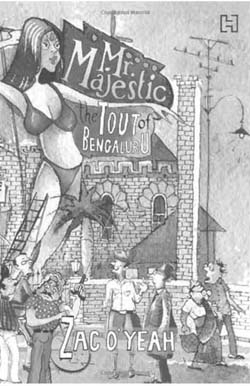
In 1931 sculptor Carl Milles cast Poseidon in 23 feet of imposing metal and the Southern Port City of Gothenburg, Sweden installed him atop a fountain as homage to the seas and their Viking past.About 60 years later a Swede left Gotaplatsen and the shadow of Poseidon behind him and travelled East until destiny brought him in front of another idol.30 odd feet of garishly painted metal sheeting tacked to a bamboo scaffolding!
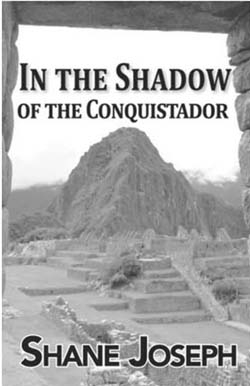
Shane Joseph
In a recent interview, US President Barack Obama said, ‘when I think about how I understand my role as citizen, setting aside being president, and the most important set of understandings that I bring to that position of citizen, the most important stuff I’ve learned I think I’ve learned from novels.’ Shane Joseph’s latest book, In The Shadow of the Conquistador, is indeed one such novel from which we can learn much. While on its surface it might appear to be a lovetriangle romantic story, it has a lot to offer in our understanding of the human spirit that at times lusts for conquest and colonization, but can develop bonds of friendship which sometimes lead to betrayal, and yet through the power to love it can overcome evil.
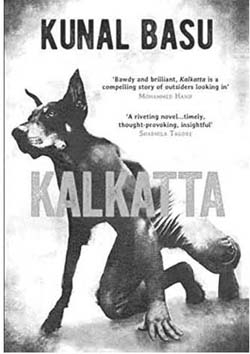
Kunal Basu
2015
Set against the backdrop of the Partition, this novel narrates the story of Jamshed Alam, a Bihari Muslim boy born in the infamous Camp Geneva in Dhaka and raised in Kolkata, a city his poor refugee parents migrate to hoping for a legally secure, economically rewarding and socially dignified life. But does the city deliver what the Alam family seeks? The unfolding lives of Jamshed, his polio-stricken elder sister Miriam (Miri), tailor-father Abu, and seamstress-mother Ruksana in 14, Zakaria Street in northern-central Kolkata and beyond show how the city,
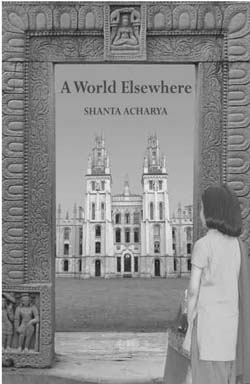
Shanta Acharya
A World Elsewhere, a self-published novel by Shanta Acharya, is about a new world, a search for a state of being, a quest for meaning and for home—wherever that may be. Set in Orissa, India in the turmoil of the post-Independence years, in the clash of old and new world views, Anglophilia and Anglophobia, we are introduced to a hardworking, academic Hindu family who believes in the power of education, who struggles to maintain stability both within the family as well as in society, who understands that progress is needed for growth yet is bound by the demands of a closed society, especially when it comes to women.
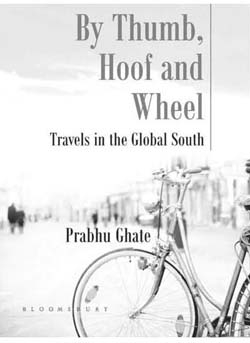
By Prabhu Ghate
It is good to have an end to journey toward; but it is the journey that matters, in the end. (Ernest Hemingway)The opening sentence of Prabhu Ghate’s By Thumb, Hoof and Wheel: Travels in the Global South sets the tone for what the traveller-reader should expect from the book: ‘Apart from trying to communicate the sheer joy of travel, and its huge educational possibilities, and weaving a bit of contemporary history into the story, I hope to persuade readers in this book that one does not have to be particularly rich to travel, or young for that matter (just young at heart, reasonably fit, empathetic, and curious.)’ The book catches the fervour of our times, when interest in travel and travel writings is growing among people, especially catching on with Indians.
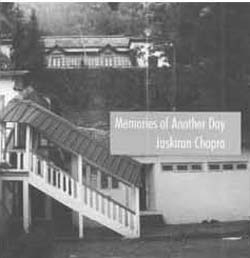
Jaskiran Chopra
This nosegay of memories, personal and collective, has many a bright offering which takes the reader by the hand through the lesser-known and familiar byways of the Doon valley. Every generation treasures memories of days gone by: a slower paced world, a world warmed by the sandpapering of time. Nothing can ever remain the same again. Memories of Another Day brings to life the old and the familiar to those of us who lived in this once green valley. Vanished landmarks like Kwality restaurant, Landour Clock Tower and others are symbols of the loss.

Syed Mujtaba Ali . Translated by Nazes Afroz
The painting of tall, grim-looking Afghans on the cover of In A Land Far From Home makes for possibly one of the most deceptive book covers. You’d believe that here is a heavy, boring, fact-addled tome on Afghan history. Nothing could be further from the truth. Syed Mujtaba Ali’s book, a travelogue that should be treated as a slice of history, is possibly one of the most delightful books ever written, and equally delightfully translated by Nazes Afroz from the Bengali original, Deshe Bideshe.
Translated by Somdatta Mandal
Travelogues from the past are more than mere journeys over a land mass or stretch of sea. They speak to us of life-styles, of economic strengths and weaknesses, of politics and race and of nationhood and family relations—all interlinked and woven together in the writer’s imagination. The translator and editor of both the volumes which have appeared in quick succession, Somdatta Mandal, herself a tireless traveller and an equally indefatigable translator, is determined to bring the invisible past before us. A few years ago she had brought to the public another Bengali woman’s travelogue Attiya’s Journey and in the years in between she has edited two volumes of critical essays on travelogues from Indian languages.
Nandini Bhattacharya
Gora in Bengali is considered to be the best novel by Rabindranath Tagore for its epic range. Though written between 1907 and 1909 (when the author was in his forties), the action of the text is clearly set at least thirty years earlier, in the early 1880s and takes into account events that happened even earlier. If one takes into consideration the moment of Gora’s birth, then the action of the narrative should be said to begin from the year 1857. The novel is considered central to the nation question because it captures the Indian nationalist upsurge of the late nineteenth-early twentieth century in all its tragic complexity. Gora is produced in an awareness of Lord Curzon’s proposed partition of Bengal and the consequent crystallization of the Bengal-Indian identity.
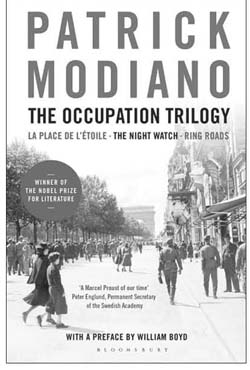
Patrick Modiano
As our journey into the future continues—the present moment drifting away, our own biographies lengthening, our pasts receding inexorably, quietly becoming “history” in the distance— so certain aspects of those retreating eras seem to come more sharply into focus and claim our attention. The longer view allows us to see these features of the recent past as truly defining characteristics of those decades that we lived through.’—William Boyd.
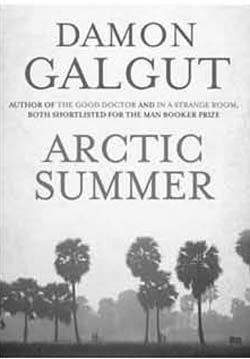
Damon Galgut
2014
Astory about the secret life of a novelist and short-story writer, and a famous one at that, never fails to interest, and this novel does not disappoint. Mainly covering the twelve-year period between 1912 and 1924 when the conception and writing of the classic novel, A Passage to India, took place, Damon Galgut takes us through the repressed life of E.M. Forster, a creature of Empire who was also the victim of its restrictive class, racial and morality norms. Forster’s homosexuality was known among his inner circle but never to his wider audience of readers until his posthumous novel Maurice was released.
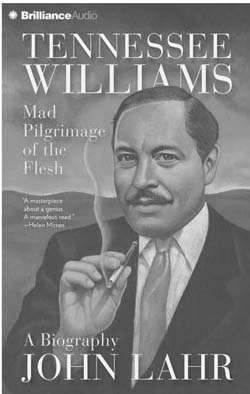
John Lahr
Nancy M. Tischler’s first definitive biography of Tennessee Williams appeared in 1960 when the dramatist had all but exhausted his trajectory of great writing. Tischler’s book entitled Tennessee Williams: The Rebellious Puritan was, in many ways, the first critical appreciation of the great American dramatist’s work. It wove his life—family and background—into his work and tried to offer a psycho-biographical interpretation. Another significant biography appeared in 1985—two years after the dramatist’s death.
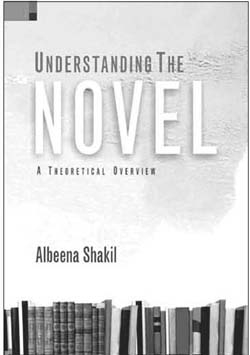
Albeena Shakil
One’s first encounter with fiction has been generally through the reading of or listening to fairy tales, mystery tales, superhero stories, popular stories, classic love stories and fantasy novels. And while reading and enjoying them we hardly give a thought to how this enchanting form, both long and short fiction came into existence. Defining the novel is a tricky task since it mediates through various forms of art and adapts itself to the demands of the changing cultural milieus
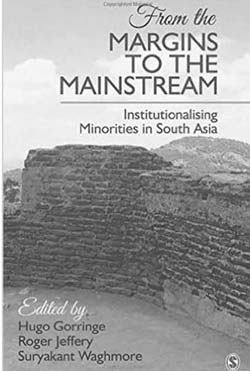
Edited by Hugo Gorringe , Roger Jeffery and Suryakant Waghmore
The process of institutionalizing radical protest politics and their demands include a swathe of dilemmas and complexities that include the possibility of de-radicalizing and blocking the political and collective sense that such politics grounds them on. Thus, radical politics on the one hand wishes to witness institutionalization and mainstreaming of their politics to redefine political landscapes, while on the other, they wish to continue as radical protest politics maintaining the fervour and the process of wedging open social narratives that had little space hitherto. It has often been witnessed that political movements that institutionalize themselves in law, policy, and formal institutions carry the anxiety of deradicalizing themselves. The protests get entangled in legal dilemmas as has happened with the sub-caste politics, where mass mobilization was replaced by technical detailing of who is or is not eligible for reservations, or as has been the case with domestic violence where with 468(a) the issue was individualized, and became a matter of accessing the judiciary,
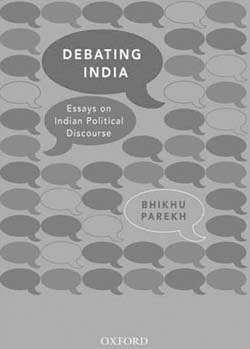
By Bhikhu Parekh
India is endowed with a rich philosophical tradition, which dates back to ancient times, a tradition which is also varied along various axes. One of the main concerns of Bhikhu Parekh is to show the richness of this tradition from the perspective of the norms and standards of argumentation within the political and philosophical discourses. His main concern is how standards were maintained when discussion and debate went antagonistic—publicly. Parekh thinks it is worthwhile to investigate this aspect because he is of the opinion that earlier studies, particularly the work of Amartya Sen is not satisfactory enough. Although he agrees with much of Sen’s work in The Argumentative Indian, he ‘departs from him in several respects’. The word ‘argumentative’ in the book is used sometimes ‘in the sense of being methodical in one’s reasoning and weighing up arguments before reaching a conclusion’ and sometimes it seems that it is being used in the negative pejorative sense and in a ‘more common and conventional sense, it refers to someone who argues for the sake of arguing.’ Moreover, Sen does not emphasize the importance of having a tradition of ‘public debate’. Sen only focuses on ‘disagreements between two individual or schools and overlooks the equally and, in some contexts, far more important public debates conducted before large audiences, having formal structure and involving a binging verdict.’ The aim of the book partly is to introduce to the reader the methods in which this public debate took in the ‘Indian tradition’.
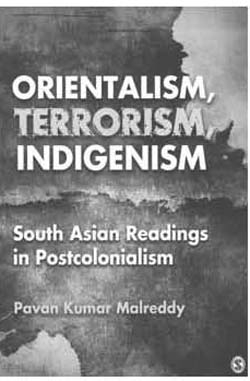
By Pavan Kumar Malreddy
Pavan Kumar Malreddy’s slim volume discusses and synthesizes three concepts with concrete examples: orientalism, terrorism and indigenism (Dalit Bahujan movements), with an involved reading of academic literature as well as the popular media. He draws from the contemporary literary studies in South Asia to discourse on orientalism and contemporary manifestations of terrorism (9/11 for example). What gets highlighted in the process are contradictions inherent in the way South Asia has viewed and comprehended postcolonialism, as analysed in the Subaltern Studies and the way the West has viewed it. The book makes an attempt to position Orientalism in a postcolonial world in transition with terrorism and identity-based cleavages occupying axis-space for discussions. The use of the work of prominent literary figures from South Asia to analyse the three concepts is an innovative analytical tool in the study.