
by D. Suba Chandran and Bhavna Singh
Connectivity between India and China has always been a difficult issue. Historically, though there was flow of ideas and goods between the two sides, these connections were lost over time. With the economic rise of both India and China the debate over the benefits which border trade and connectivity can provide for further development of the region has gained momentum. To encash this India and China started border trade at Nathu La in July 2006.
by Rohan Mukerjee and Anthony Yazaki
It is often a matter of surprise and disappointment that two countries, namely India and Japan, well-established and vibrant democracies which have no historical baggage of any dispute, and which on the other hand are bound by Asian cultural traditions and values, and the teachings of Buddhism, still do not find themselves having a substantive relationship. Actually there are considerable complementarities in the economic field; moreover, the two share a common security concern of the rising power of the neighbour.
Mohd. Sanjeer Alam and K.C. Sivaramakrishnan
Boundary lines between constituencies not only determine who controls parliament or a legislative assembly but their functioning as well. Fixing Electoral Boundaries in India is based on the central idea that drawing constituency boundaries has serious implications for both the practice of politics and the working of democracy. This book underscores the point that demarcating constituencies is not a routine ‘techno-bureaucratic’ exercise but involves ‘philosophical, legal, political, technical and practical’ considerations

Wendy Doniger and Martha C. Nussbaum
This is a volume where the editors lend it gravitas because of their redoubtable scholarship. They are further assisted by twenty essays written mostly by scholars who would invariably be part of a volume like this either because of their previous works and association and thereby justify inclusion in a compendium like this. As the title goes, it provides a wide canvas for the essays to explore wide issues ranging from importance that should be given to history, to importance of poetry in today’s increasingly monosyllabic and geometric world.
Neil De Votta
Given the legacy of colonialism and the lack of transition that the South Asian states have made to frameworks for understanding alternative cartographic imaginations, nation-states, modernity, development and security issues both at the national and regional level, Niel De Votta’s edited work, An Introduction to South Asian Politics, is an important contribution towards laying out the broad contours and contemporary canvas of South Asian politics. It has been argued that fragile domestic structures in South Asia have largely been responsible for determining the national, regional and international politics of South Asia, and the idea of South Asia in the 21st century and beyond will continue to be governed by this important variable.
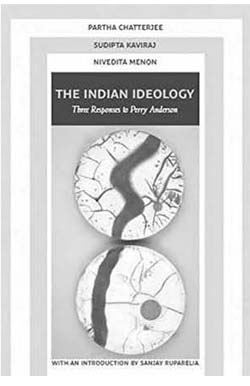
By Partha Chatterjee , Sudipta Kaviraj, Nivedita Menon, Sanjay Ruparelia
Critique is essential to the healthy existence of a society. From its inception as an independent nation to its functioning for more than seven decades there have been many critiques of the dominant ideas that shape Indian society and its daily life. One of the most pervasive ideologies that Indian society is inflicted with is the ‘mahatma-ness’ of Gandhi and the dazzling statesmanship of Nehru. It is normally perpetrated through the medium of text-books and other state apparatuses upon the people’s life. It is not the purpose of this review to argue that Gandhi and Nehru were not great men but to show and acknowledge the existence of an ideological apparatus that profits from maintaining the projection of the extraordinary greatness of these personalities.
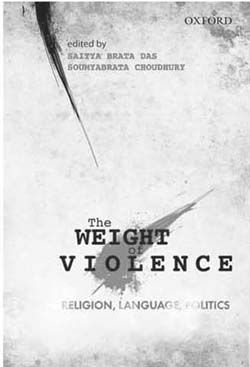
Saitya Brata Das and Soumyabrata Choudhury
The book under review, an edited volume by Saitya Brata Das and Soumyabrata Choudhury, comprising fifteen articles divided into two sections, is one of the important epistemic interventions concerning violence and its metaphysics. Besides addressing aforesaid questions in different ways, the book surprisingly and illuminatingly underlines the question of violence or violence theory in those thinkers/philosophers (Rene Girard, Sigmund Freud, Emmanuel Levinas, Jacques Derrida, Schelling, Deleuze, Nietzsche, Whitehead, Musil, Karl Marx and Walter Benjamin) who are otherwise known for their different impactful and consequential works. Identified realms of weight of violence are religion, language and politics.
Romila Thapar
In his obituary to Benedict Anderson, historian Ramchandra Guha recollects a letter from him in which he asked, ‘How many public intellectuals are there in India? In Southeast Asia they are dying, replaced by professors and bureaucrats to whom not many ordinary people pay any attention… I guess your Gandhi was a public intellectual, but probably Nehru not???????’The worry about the disappearance of the institution of public intellectual is widespread. Romila Thapar expressed her own anxiety about the decreasing tribe of public intellectuals in the annual Nikhil Chakravartty Memorial Lecture in 2014 titled To Question or Not to Question
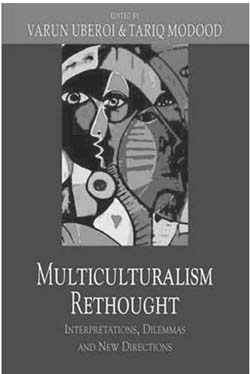
Varun Oberoi and Tariq Modood,
To those who describe Bhikhu Parekh as the leading political theorist of Indian origin, essays in this volume will show that such parochial frames of representation do not do justice to his ideas. He is, and must be viewed as an eminent political theorist of our time, whose work has contributed enormously to our thinking about political concepts that we use to analyse the modern world and confront the challenges of our time.
It is perhaps a cliché to argue that South Asia is a potpourri of different influencing societies, nationalities, ethnic traditions and cultural heritages. South Asian culture is rich and varied underlining the complex relationship between its myriad common traditional cultures. The nations share an ethnic background and most of the territorial divisions have come up only in the recent past.
I have just read the 40 years of the Book Review. Wonderful, if you have not read it, well need I say you should! One of the editors is close to me, in many ways. I think she wanted to render homage to the words and books which, nurtured us, accompanied us. We grew up in a home, I say home not house for therein lies the difference, for words meant a lot to us, in a home I was saying, where the walls were lined with books which murmured wherever we moved, whatever we did. This constant presence never did quieten, throughout our lives the ‘emanating words, words from the walls words from the air’
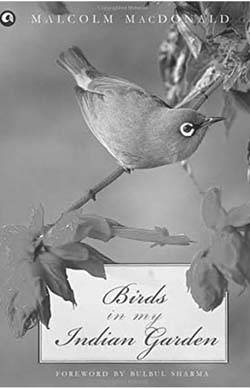
Malcolm Mcdonald Alfred A. Knopf ; First Edition edition (1961)
To review a classic is always difficult. How much could one praise and fawn over a book which reads so delightfully that you tend to forget that it is a nonfiction piece of work? Malcom Mcdonald was the UK High Commissioner to India in the 1950s and lived in the heart of Delhi, the Lutyen’s zone. Being a bird watching enthusiast he spent a lot of time observing the feathered ones in his garden.

Ruskin Bond Illustrated by Shubhadarshini Singh
For many people living in rural and suburban areas, coming across wild animals is a part of life. Be it that friendly squirrel or the (ever-dwindling) flock of sparrows, or the sinister snake that lives at the end of the garden. However, as urban sprawls expand to swallow up green spaces, these relationships are becoming ever scarcer.
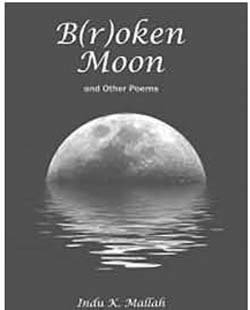
Indu K. Mallah
In her first book of poetry Indu Mallah has chosen as her epigraph an exquisite poem by Ralph Nazareth. The glassblower’s art becomes a metaphor for the art of writing: ‘I’ve seen / Glassblowers/ stretch little / Into much. / Such is my hope / For words—/ Blowing syllables up / To hold a world / Close to breaking.The first part of the poems in this collection deals with her family, husband, sons, daughter. The feelings of intense love, pain and loss pervade this section. In the first poem, ‘Meeting Points’, is to her husband, whom death snatched away.
Jayant Parmar . Translated from the Urdu by Nishat Zaidi
As a curious reader scans the titles of the poems listed on the contents page of the poetry collection of Jayant Parmar’s Pencil aur Doosri Nazmein translated by Nishat Zaidi as Pencil and Other Poems, an unsurprising summation ensues: poems related to nature with images from the flora and fauna; ghazals and nazms, predictably expected from an Urdu poet; then poems that are dedications to persons; poems about persons and poems related to places and travel. The reader is reassured of the obvious terrain to traverse. Comforted, the process of reading the poems begins.
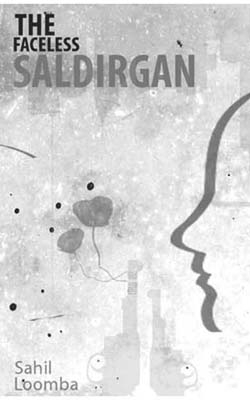
Sahil Loomba
Sahil Loomba’s debut novel The Faceless Saldirgan is the perfect screen play for a masala potboiler. A thriller with the right blend of intrigue and suspense, it keeps the reader on edge as suspicion darts from one suspect to the other. For a seasoned discerning reader of crime fiction, none are above suspicion but Loomba factors in the right elements, ‘a multi-billionaire victim, gruesome body art, tantalizing allegations, media frenzy, destroyed reputations and what not!’ along with a gripping pace and provocative clues
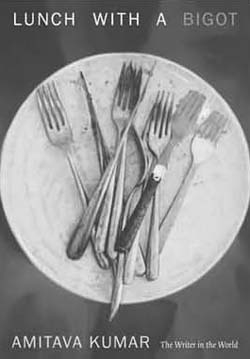
Amitava Kumar
2015
Amitava Kumar’s Lunch with a Bigot is divided into four main sections— Reading, Writing, Places and People. They offer a road map to navigate through the different articles that were written and published in diverse places.In the first section, there is a journey through his childhood experience and him emerging as a person who was grasping varied experiences and incorporating them as his ‘resource bank’. I have recently read Sudhir Kakkar’s memoirs and the narration of his own childhood. In my mind, there is an intermingling of his narration with that of Amitava’s in terms of the evocative details offered of the experience.
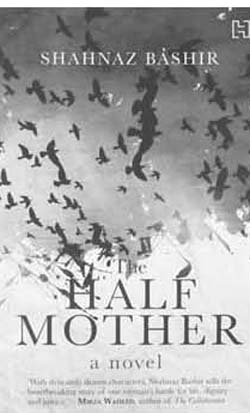
Shahnaz Bashir
2014
The book is set against the backdrop of the rise of insurgency in Kashmir, when what began as a conflict between rival political groups escalated into youth crossing the border into Pakistan to return with kalashnikovs. The brutality with which the army responds turns the valley into a war zone. Kashmir is virtually under siege. The novel provides an insider’s view of how political apathy coalesces with mindless military brutality to wreak havoc on the lives of ordinary people by focusing on one woman’s desperate and futile search for her missing son.
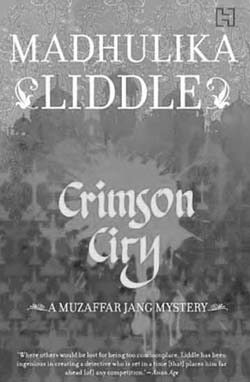
Madhulika Liddle
2015
Crimson City, the fourth Muzaffar Jang mystery by Madhulika Liddle, is a whodunit set in mid-seventeenth century Dilli with the Mughal court as its backdrop. Emperor Shah Jahan’s grandiose plans have begun to deplete the exchequer dangerously. A Mughal army is besieging the fort of Bidar, as a first step towards conquering the Bijapur kingdom with its enormous wealth.
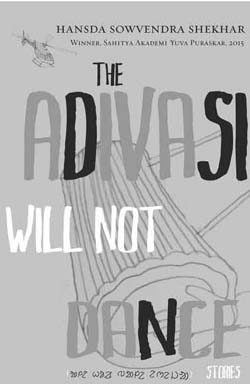
Hansda Sowendra Shekhar
Writings by Adivasis (ecriture) which have emerged in India during the last three decades mark an important milestone in the context of the cultural expression of Adivasis hitherto found only in the oral-performative tradition (orature). These writings are markers of identity assertion and cultural activism by educated Adivasis who want to write about themselves in their own words to combat their degraded or exoticized depiction by non-Adivasi writers. One needs to read Narayan’s interview (Kocharethi, OUP, 2011, 208–16) to realize why educated Adivasis are prompted to pick up their pen.