
In the times we live in—where, often acknowledging, tolerating and celebrating differences is seen as a sign of weakness nothing opens better the debate on gender, as this quote from Marguerite Yourcenar’s ‘With Open Eyes’ written and published in 1980: ‘… Anyway, women who say “men” and men who say “women”, usually to complain within one group as within the other, instill in me a great sense of ennui, like do those who stumble through all that is formulaic.There are virtues that are specifically ‘feminine’ which feminists seem to scorn, this does not by the way mean that these were ever the prerogative of all women : gentleness, goodness, finesse, delicacy, virtues so important that if a man did not possess them at least in small proportions, he would be considered a brute, not a man.
A report on a book discussion held at the India International Centre on May 24, 2016, with Indu Agnihotri, CWDS, in the chair and Vidhu Varma (JNU), Kusha Tiwari (Shyam Lal College) and Baran Faoorqi (JMI) in the panel.Prostitution is about the only job in the world in which you earn the most on your first day. As the days pass, your income declines before you finally burn out within 10–15, or if you are lucky, twenty years. Prostitution consumes your body, destroying it with the abuse, insecurity and poverty that often comes with it. The bouquet of three books under discussion approaches the subject of prostitution from multiple angles. A statement that emerges with tremendous force from these three books could be, ‘Prostitution is a choice where there is no choice.’
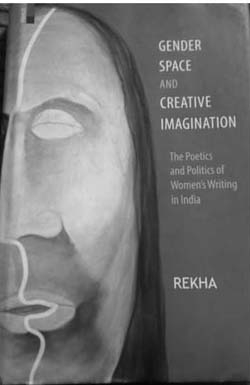
By Rekha
Rekha’s book attempts to chart the complex terrain of women’s writing in post-Independence India, while declaredly wishing to avoid the pitfalls of the ‘generalizations’ that are attendant on both mainstream Women’s Studies methodologies and what she calls ‘Indo-centric’ approaches to the subject. Rekha also wishes to address what she considers a significant gap in the existing oeuvre of critical work on women’s writing in India: the privileging of the ‘temporal axis’ and the insufficient attention paid to the politics of space in the shaping of women’s experience, especially as reflected in the literature produced by them. In view of this, she makes what she calls a ‘representative sampling’ of women’s prose fiction from the country, choosing the work of five major writers: Krishna Sobti (Hindi, b. 1925), Mahasweta Devi (Bengali, b. 1926), Kamal Desai (Marathi, 1928–2011), Ambai (her pseudonym, she writes as C.S. Lakshmi when she writes as a critic in Tamil and English, b. 1944) and Githa Hariharan (English, b. 1954).

Edited by Sheema Kirmani , Asif Farrukhi and Kamran Asdar Ali
Tehrik-e-Niswan, a pioneering performance group, working on gender and politics turns thirty in 2009. The group organized its first theatre festival in Karachi in 2009, followed by a Conference in 2010. The book at hand is an outcome of that conference. The volume has been originally published as Gender, Politics and Performance in South Asia by Oxford University Press, Pakistan and Women Unlimited has brought out the Indian version by arrangement with OUP. The volume has 14 papers divided into four sections, with an introduction on (Re)-presenting the Nation by Syed Jamil Ahmed. Gender is a predominant category of analysis in most papers, even though the definition of the same varies from writer to writer. Most of the articles are based on Tehrik-e-Niswan’s history, productions and reception. As such it is an amazing document of the group. The others deal with women who have paved the way for newer perspectives by their lives and works right from the late 19th century to the present. Syed Jamil Ahmed has documented the history of the play Kabar, an iconic play on Bengali Renaissance in Bangladesh in 1953. There is one article on archaeological findings of dancing and singing figures in Sindh region of Pakistan. India is represented by the introductory article and Madhu Kishwar’s article on Bollywood films.
By Aloysius Irudayam , Jayshree P. Mangubhai, & Noe I.G. Lee National Campaign on Dalit Human Rights
Dalit Women Speak Out: Caste and Gender Violence in India is a sobering book. The study, encompassing four states in India (Bihar, Uttar Pradesh, Andhra Pradesh and Tamil Nadu—Pondicherry) and based on interviews with 500 Dalit women, sets out to explore ‘the phenomenon of violence against Dalit women, a subject hitherto little addressed by academics, human rights activists and the Indian state’ (p. 31).The study forces our attention on a grim truth that is widely known yet ignored precisely because of its everydayness—when viewed from the constitutional and human rights perspective (human rights, the authors remind us, are ‘the foundation of human needs’ (p. 5)), the right to equality remains unrealized and inaccessible for Dalit women. Extreme forms of sexual violence and economic exploitation shape the lives of these women. Staking claim to a piece of land or one’s rightful wages or to the common resources of the village are treated as major acts of transgression.
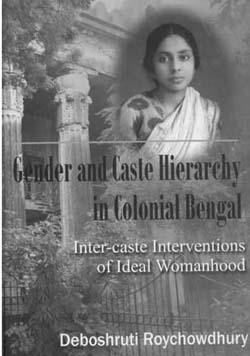
By Deboshruti Roychowdhury
Gender and Caste Hierarchy in Colonial Bengal by Deboshruti Roychowdhury explores how different ranks of caste groups in colonial Bengal contemplated the ‘ideal woman’. The subtitle suggests that the book might talk about significant ‘interventions’ by subordinate castes on the ‘women’s question’ in colonial Bengal, interventions that could possibly bring out the contested and variegated nature of the ideal(s). Reading the book, however, makes it clear that the author’s point is about ‘Brahmanical hegemony’ being ‘something truly total in nature’ (p. 217). Thus the author argues that claims of superior status in terms of caste were organically linked to claims of ‘purity’ which, in turn, placed oppressive burdens of chastity, fidelity, subservience and self-sacrifice invariably on women. Amid unprecedented opportunities offered by the colonial regime, low caste groups saw their improvement of social status in the imposition of oppressive patriarchal norms, ‘Brahmanical in nature’ (p. 216), on their women. Roychowdhury assumes that this meant a loss to lower caste women’s erstwhile relative freedom ‘whose way of life was subjected to fiercer scrutiny than ever before’ (p. 204). To quote her: ‘The absence of free choices for women thus became a ubiquitous phenomenon prevalent across almost all the social strata of colonial Bengal’ (p. 9).
By Purnima Mehta Bhatt
What makes this book a unique read is that it focuses not on any stepwells in Gujarat but on stepwells that were commissioned by women between the 7th and the 19th centuries— we are talking about the connect that stepwells and women had which was not restricted only to women drawing water from them but also of women creating a space for themselves at the stepwells. The book opens with two pictures facing each other—one is a map of the important stepwells commissioned by women or built to honour them while the other picture is that of a group of women on their way to the wells with their water pots. The book begins by tracing the importance of water for rituals and traditions across India. Bhatt traces the history behind the construction of wells and stepwells which were regarded as ‘acts of charity’.
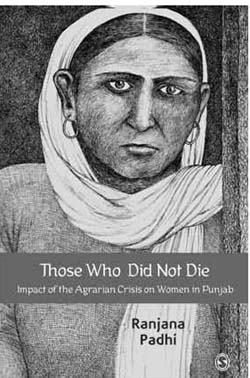
By Ranjana Padhi
One of the first thoughts after going through the book under review is the sense of deep dissatisfaction and unease with the dominant model of development as induced by World Bank and International Monetary Fund manifested in Structural Adjustment Programmes being practised in the name of development in India in general and Punjab in particular. From the feminist lens the resultant situation is more alarming as it is the women who have and are still bearing the aftershocks of such lopsided understanding and practice of development as ‘… development policy in general, and structural adjustment in particular, is not gender-neutral’ (DeshmukhRanadive, 2003: viii). Padhi’s book is an account through the voices of women survivors i.e., Jat-Sikh wives and widows and mothers how their lives are fraught with economic and familial insecurities, helplessness, humiliation in the wake of suicide committed by the male members of the family due to inability to repay back the loan to the local money lender, the arhtiya. Through the extensive fieldwork conducted intermittently during 2006–2010 of the selected villages, the author judiciously uses both questionnaire and interview tools to elicit data in narrative form which later on has been qualitatively and quantitatively analysed to arrive at ‘patterns’ of ‘structured layers of class, caste and patriarchy’ (pp. 168) affecting women. The agrarian milieu of districts of the Malwa region, Punjab provides the setting of the study. The choice of the region is much guided by the fact that it has been the seedbed of green revolution.

Mathias B. Freese
Because the darkness is never so distant,’ ————-W. H. AudenBrian D. Freese writes in the preface that ‘all literary depictions of the Holocaust end as failures’. ‘Holocaust is but an approximation of what happened. The species cannot grasp its nature for the word is not the thing itself’. The species, he asserts elsewhere, is ‘damaged, for only a damaged species could have committed the Holocaust.’ The author starts with a pessimism born of long years devoted to understanding the phenomenon.
Nayantara Sahgal
Since the emergence to power of the Sangh Parivar and the dominance in Indian politics of a narrow-minded majoritarianism, there has been an understandable tendency towards nostalgia for the so-called ‘Nehruvian’ period. This is a tendency in which this reviewer has also participated: in publication projects that have more or less been based on backward glances to what seems in retrospect a ‘golden age’ of the Indian state. But the nostalgia for a more tolerant and less exclusionary (in terms of income, class, caste, gender) India can go too far in invoking the ‘Nehruvian’ as such a golden age
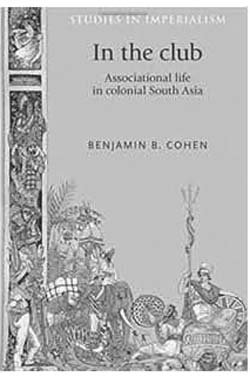
Benjamin Cohen
In the Club is a welcome addition to the study of colonialism and colonial bourgeois sociality in South Asia. The book is not so much a history of clubs as it is a study of the formation and articulation of social relations in clubs. Though the network of clubs played a significant role in the unfolding of colonialism in South Asia, it is still a relatively ignored area in the historiography of colonial encounters. In fact, this is the first book-length survey of clubs in this part of the world. It is not dedicated to a particular city.
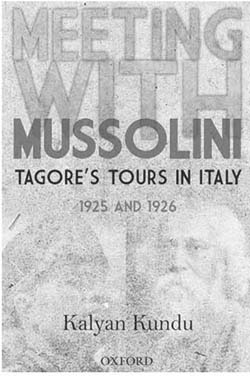
Kalyan Kundu
Rabindranath Tagore’s visit to Italy in 1925, and especially the controversial tour of Italy in 1926 at the invitation of Benito Mussolini, has been a matter of interest to Tagore scholars for a long time. The acceptance of an invitation from a Fascist dictator by a great humanist baffled the international community of that time. The encounter also aroused a good deal of media interest both within and outside Italy.
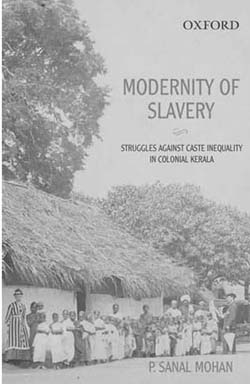
P. Sanal Mohan
As the title suggests, P. Sanal Mohan’s Modernity of Slavery, employs a multidisciplinary approach and marks a significant contribution towards understanding the history of oppression within the story of modernity. By exploring the hitherto neglected histories of slave caste populations in colonial Kerala, he makes a passionate attempt to recover lost voices.
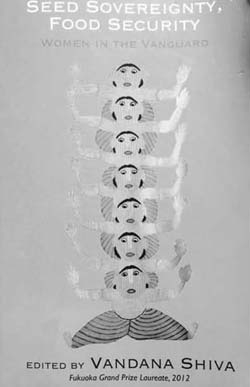
Edited by Vandana Shiva
A representative from Monsanto, the world’s largest seed company that today controls 65% of the global seed market for maize and more than a quarter of the world’s commercial seed market, is on record to have defined the problem to securing a Global Intellectual Property Rights Agreement as: ‘Farmers save seeds’—and thus they offered a solution: ‘Seed saving should be made illegal’.
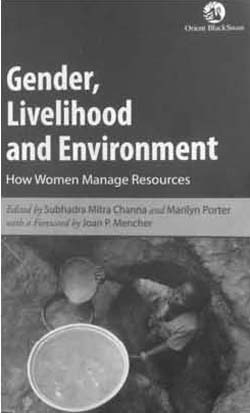
Edited by Subhadra Mitra Channa and Marilyn Porter. Foreword by Joan P. Mencher
The edited volume under review by anthropologist Subhadra Mitra Channa and sociologist Marilyn Porter focuses on a wide range of case studies from across the world related to ways in which women manage environmental resources. The book is a product of the International Union of Anthropological and Ethnological Sciences (IUAES) meeting held in China in 2009. The contributors to the volume show the connections between increasing poverty and global capitalist exploitation that negatively affects women’s access to resources. As recognized by the UN Security Council, since the 1990s, most conflicts around the world are related to disputes over natural resources, whether they are over oil, water, mining or access to land to grow crops. Women have played an important role in the peace processes.
Anuradha Roy
This book as the author claims ‘draws upon her PhD dissertation written more than a quarter of a century ago’. She fears that the definition of ‘cultural history at that time was rather narrow and the broad spectrum that is attached today to this branch of historical study was unknown those days’. She apologizes for the narrative style of her compendium which she admits is ‘overburdened with data’ and is apprehensive about the ‘readability of the book’ because she admits that her ‘youthful enthusiasm as a researcher’ led to a kind of ‘data fetishism’.
By Svati P. Shah
What has sex work got to do with private water tanks or making of hair pins or average rainfall in Marathwada? In Street Corner Secrets, Svati P. Shah critically engage with the academic knowledge production which ignores such connections. She debunks the figure of the lonely sex worker lurking timidly among the shadows by the street or who remains confined within brothels. Instead she situates women engaged in sexual commerce firmly amidst thick descriptions of migration, informal labour economy, land speculation, urban housing projects, infrastructure underdevelopment of rural areas, ecological degradation, water scarcity, displacement, caste politics and gendered inequalities in the wage labour market. These also mark the compulsions or constraints surrounding the livelihood choices of women including sex work.
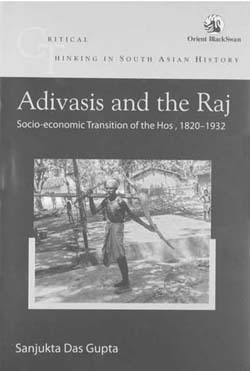
Sanjukta Dasgupta
In 1981, the Kolhan Raksha Sangh, an adivasi political organization formed in Singhbhum in 1977, declared that Kolhan1 was a sovereign state, independent from India. A delegation of the representatives of this ‘Kolhan republic’ went to Delhi, and thereafter to England. The delegates claimed that Kolhan was legally outside India’s territory and was entitled to self-government under Wilkinson’s Rules since there was no official document of merger between Kolhan and the State of India.
Edited by Saraswati Raju and Santosh Jatrana
While providing new opportunities to women workers, global capitalism, tends to both not only use prevailing gender stereotypes but rearticulates them. This is the core message of the book. Surveying women’s location in varied professions from high tech occupations, to traditionally male dominated professions, while there is exploitation, there is also a degree of agency exercised by women. Metro cities belying the assumption of a liberal, more accommodating spaces to women nonetheless re-entrench culturally engraved sociocultural norms about where women can work and what kind of work is permissible. Looking at different locations where they work like petty production work, home based work, modern professions that require education and special skills and training, what emerges is this: gender norms pose limits to what they can gain through equal wages and equal access to positions of power and leadership. Equal wages is sidelined by segmentation of work into gender segregated work.
Piketty’s book Capital in the 21st Century has burst upon the sky of economics, like a huge round of fire crackers. It has sold 2 million copies and has been translated into several languages. The book has focused on economic inequality—its source and its impact. Piketty’s main thrust is to reveal that the wealthy, he calls it the one percent, will continue to accumulate wealth. He reveals the dynamics of such a process, and then concentrates on the tax system as a possible source to reduce this phenomenon. It is of course a startling revelation, especially the argument on the process.