
David Cooper
One of Freud’s distinctive departures from the psychiatric tradition of his time was to consider himself solely as the patient’s agent and thus to repudiate any obligations to the patient’s family and society.
Ranjan Kaul
Ranjan Kaul’s debut novel presents a dark view of relationships, institutions and struggles in contemporary India. In fact, the most striking feature of the novel is its current register of the several Indias that exist simultaneously with each other.

D.P. Kumar
‘Nepal is an area on the political evolution of which not enough is known as yet,’ says the author; and to meet this gaping need he sets out to make his own contribution. What sort of treatment he renders to the subject is indicated in the title itself —Nepal: Year of Decision.

Bijay Kumar Satapathy
Bhagabati Charan Galpamala (Bhagabati Charans Short Stories) is not the first anthology of the short stories of Bhagabati Charan Panigrahi (190843), the founder of Nabajuga Sahitya Samsad (Literary Society of the New Era), the Odia version of the Progressive Writers Movement which had its first convention at Cuttack between 29 November and 6 December 1935…
Yashpal
Bhisham Sahni had once said, The only novel about Partition is Yashpals Jhootha Sach; everything else is merely a footnote. Surprisingly, however, it has taken almost fifty years for its English translation to come out. Jhootha Sach was originally published in Hindi in two volumes in 1958 and 1960…
Christoph Von Furer-Haimendorf
In A Himalayan Tribe: From Cattle to Cash, a welcome sequel to Apa Tanis and Their Neighbours, Von Furer-Haimendorf describes his observations on the Apa Tanis whom he revisited after a gap of thirty-six years.
Rama Mehta
What does one make of pedestrian prose, a plot devoid of suspense and concerned mainly with the bric-a-brac of the lives of women in a Haveli? Add to this no subtlety to the characterization, no range, no depth and to think of it that it walked away with the Sahitya Akademi award!
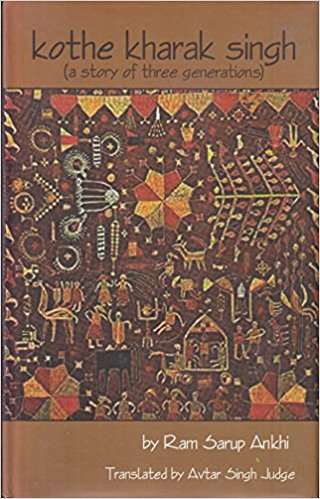
Ram Sarup Ankhi
There is a view supported by, among others, Salman Rushdie and Amit Chaudhuri that Indian Writing in English is superior to literature produced in regional languages. Obviously this opinion fails to take into account the variety, vigour and sincerity that marks writing in various Indian languages. Punjabi fiction being a case in point.
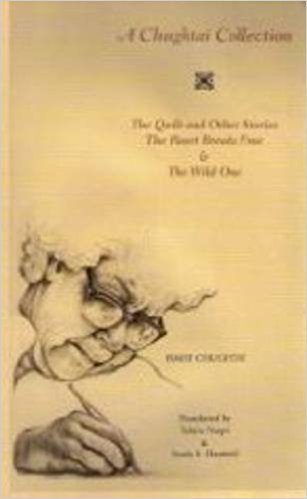
Ismat Chughtai
The present volume is a collection of fifteen short stories and two novellas. Ismat Chughtais name should be familiar to anyone who has even a slight interest in Urdu literature and drama. She opened new avenues for women writers in Urdu fiction. According to Tahira Naqvi, Ismat was an unselfconscious feminist (who) was doing…
Krishan Chander
Before getting into the complexities of analysing or assessing this occultly romantic yarn which self-confessedly was inspired by Russian Jewish writer Anskys (also An-sky, a pseudonym for Shloyme Zanvl Rappoport) play The Dybukk dealing with spirits, it is important to take into consideration the psychology of the novelist who through most part of his life struggled (successfully, though) to traverse the potholed path of narrative diversity that is latent between serious and the not-too-serious, the literary and the populist because this is the key to Krishan Chanders oeuvre which is considerable, and his ideology thats inherently contradictory. He has to his credit 20 novels, 30 collections of short stories, countless radio plays, and several travelogues…
Rashid Jahan
Selected Short Stories and Plays portrays an era when Indian society was coming to terms with the idea of independence and democracy. It comprises sixteen short stories and seven plays, each depicting the struggle of the characters within, in the scheme of circumstances being paved for development in the modern age….
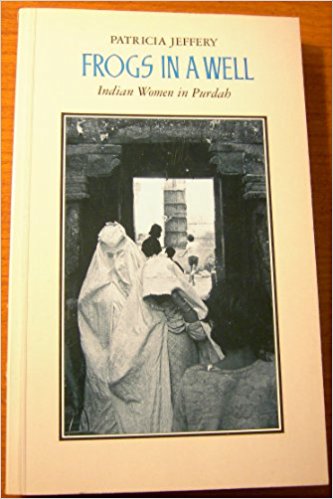
Patricia Jeffery
Engels said of Hegel that his ‘principles’ were revolutionary but the conclusions conservative. The inexorable spread of Marxism in the 20th century has resulted in a growing trend among bourgeois social sciences to combat it by turning its progressive principles against their revolutionary thrust.
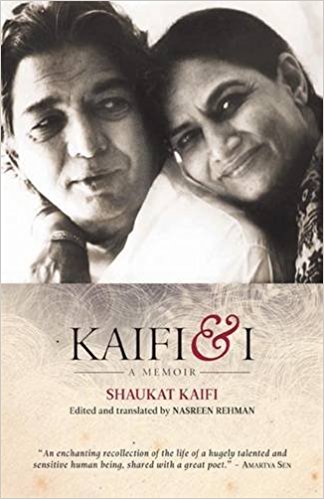
Shaukat Azmi
2011
It was all alone that Id started towards thegoalPeople kept pouring in and it swelled into acaravan.She has lived through turbulent times. She has seen the country fight for and secure Independence. She was associated with the Progressive Writers Movement (founded in 1936) and the Indian Peoples Theatre Association (set up in 1942)…
Sibte Hasan
Anyone possessing even a passing familiarity with the Progressive Writers Movement would know Syed Sajjad ZaheerBannay bhai. Zaheer never attained the dizzying heights of fame and acclaim accorded to say, Faiz but that is probably the way he would have preferred it.Bannay bhai was the driving spirit behind the formation of the All India Progressive Writers Association…
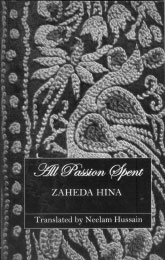
Zaheda Hina
All Passion Spent was launched recently in New Delhi by Zubaan in the author’s presence. The exchange with the author that followed was thought provoking and moving, not least because Zaheda Hina chose to speak in Urdu/ Hindustani in response to questions, after a brief reading from the novel…
Muhammad Umar Memon
The All India Progressive Writers Movement (AIPWM) has been one of most dominant, indigenous, 20th century countrywide movements taking in its sweep most writers of vernacular literature. Initiated in British India, it has the distinction of being the only literary movement aimed at propagating political, Marxist socialist principles…
Zahida Zaidi
2011
Zahida Zaidi was a poet, dramatist, translator and critic whose literary contributions belong to the realms of both Urdu and English literatures. She was a prolific writer passionately concerned with the pulse of the times so one comes across varied political, cultural and social themes in her work. She was innovative too in her use of various literary forms…
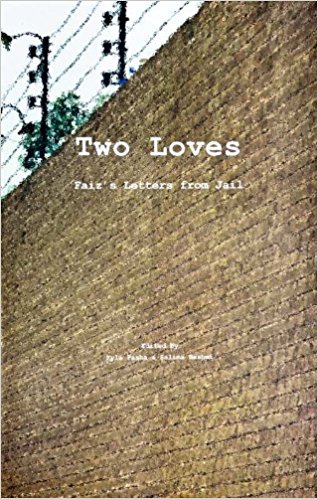
Kyla Pasha
I run my hand over this large volume with a pictorial cover of a brown prison wall, pierced diagonally with barbed wire, a patch of a sky, a few forlorn trees standing behind parallel search lights and a sentry standing erect before a guard room. Inside the volume is the story of two loves; Faiz Ahmed Faizs letters written…
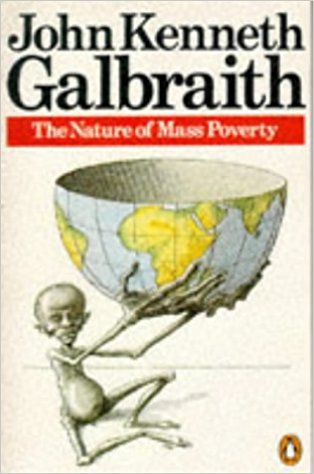
John Kenneth Galbraith
These two books have titles that sound deceptively similar. While their common theme is indeed the problem of poverty in developing countries, no two books can be more radically different in the basic approach in defining the nature of the problem and the possible directions in which policy-makers in these countries can seek a solution.
Ashfaq Hussain
The five almost undisputed leaders of modern Urdu poetry, chronologically by year of their of birth, are N.M. Rashid (1910-1975), Faiz Ahmed Faiz (1911-1984), Meeraji (1912-1949), Majeed Amjad (1914-1974) and Akhtarul Iman (1915-1996). Of these poets, only Faiz belonged and remained loyal to the Progressive Writers Movement until his death…