

Meenakshi Gopinath
The author shows how Bhutto and his P.P.P. organized the campaign despite its being a new party. Its programme and campaign caught the aspirations of the people. Bhutto raised his voice against rightist parties, which in the name of religion were supported by feudal elements, a section of capitalists and imperialists.
Sudeep Sen
The Harper Collins Book of English Poetry edited by Sudeep Sen is an amazing and audacious project in more ways than one. It attempts to showcase poems of 85 post-Independence Indian poets writing in English.
V.V. Nagarkar
Nagarkar’s book is yet another example of the heart-searching of the troubled generation that witnessed Partition. His motives, as stated in the preface, are admirable—to cut through the syndrome of the search for the ‘Guilty’, to discard ‘simplistic’ and ‘inadequate’ analysis, and seek an ‘objective’ answer…
Braj B. Kachru, Yamuna Kachru and S.N. Sridhar
The jacket of a recently published book on Macaulay by Zareer Masani says cheekily, ‘If you’re an Indian reading this book in English, it’s probably because of Thomas Macaulay’.
Raghu Rai
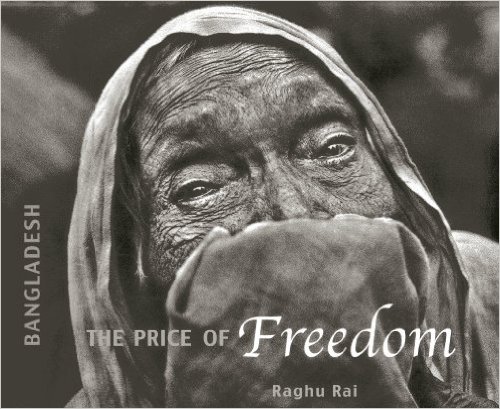
Not very long ago, Raghu Rai found a box containing rolls of long lost black and white negatives of photographs he had taken in 1971.
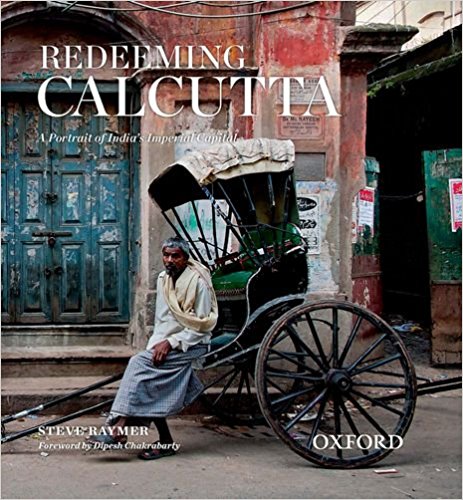
Steve Raymer
Steve Raymer, a National Geographic photographer for many years who now teaches journalism at an American university, made six trips to India to, as he writes, ‘follow my dream to do a book about Calcutta.’
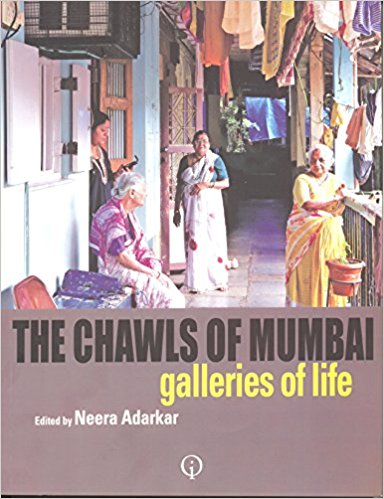
Neera Adarkar
Like ‘cutting chai’, ‘chawls’ is a very Bombay/Mumbai term. Not many who live outside this megapolis will understand what it means. And if they do not, it is unlikely that they ever will because chawls are an endangered species, a built form that is disappearing even as Mumbai goes through changes that are inevitable for all big cities.
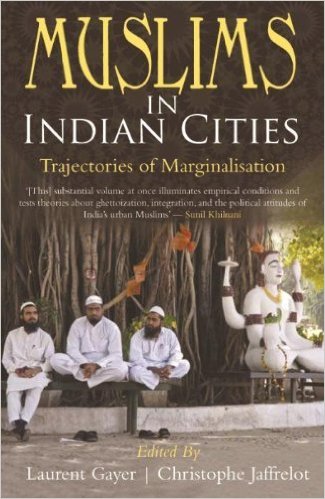
Laurent Gayer
I read this book from cover to cover in just three sittings. It was indeed enthralling as I have virtually been part of most of the stories it unfurls. Reading about Lucknow, culture capital of India and city of my birth, Aligarh, seat of the educational Taj Mahal where I studied and taught during 1961-66—and Ghalib’s Delhi where I have lived for forty-five years, made me nostalgic.
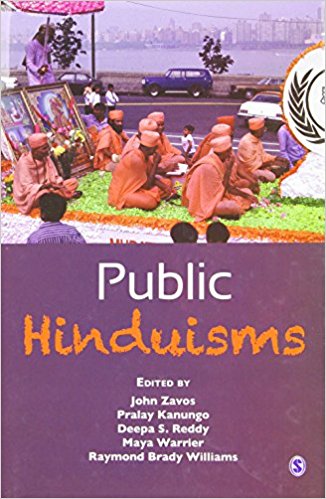
John Zavos, Pralay Kanungo, Deepa S. Reddy, Maya Warrier, Raymond Brady Williams
2013
The book under review Public Hinduisms has a captivating title and an even more engaging set of questions that it seeks to explore: ‘How does Hinduism become public? What forms of translation or disciplinary processes inform the passage of ideas about what it means to be a Hindu as they are expressed in a range of different public environments? Who feels empowered by such transitions, and who feels dispossessed?’ With these evidently broad and complex set of questions for a single edited volume of 500 and odd pages, it gives an impression of being many books in one.
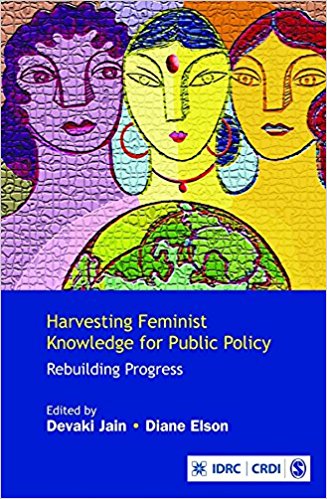
Devaki Jain
Harvesting Feminist Knowledge for Public Policy: Rebuilding Progress edited by Jain and Elson is a collection of fourteen essays by feminist thinkers across the world putting forward a critique of the current development pattern that has led to the global spate of ‘triple crisis’ of food, fuel and finance.
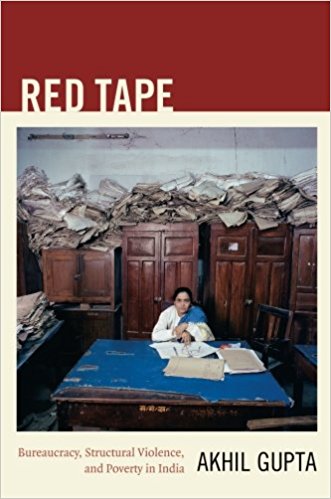
Akhil Gupta
Social science research focused on South Asia has for a long time had a critical shortcoming: the state is almost never an object of study in its own right, but rather studied in conjunction with factors—caste and ethnicity, party competition, regionalism, social movements—in the production of social outcomes.
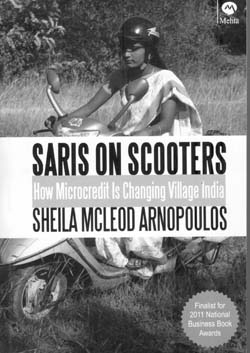
Sheila McLeod Arnopoulos
…given the opportunity, women handle money more efficiently. They have long term vision, they handle money more carefully. Muhammad Yunus
Parmod Kumar and Sandip Sarkar
The prolonged agrarian crisis in India since the mid-nineties is reflected by the meager growth rates in the agricultural sector.
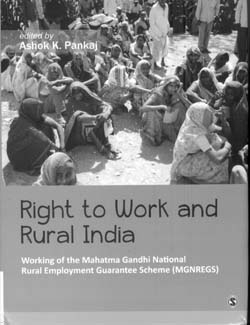
Ashok K. Pankaj
The title of the book in discussion is indicative of the foundational tenet of the volume. The point of departure is to accept ‘right to work’ fundamentally as an issue of justice with reference to the rural communities of India.
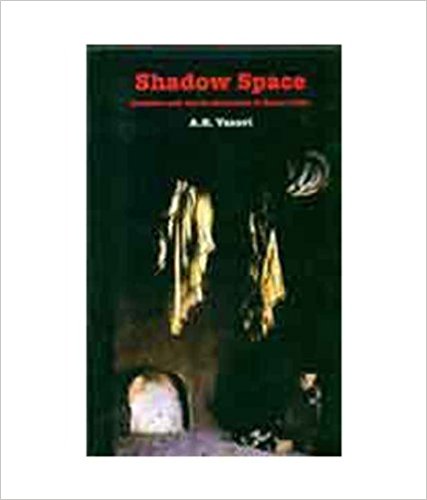
A.R. Vasavi
Why, in a period of sustained national economic growth, have Indian agriculturalists been committing suicide in such larger numbers? And what might these acts signify with respect to the challenges facing rural India at this moment? These are some of the pressing questions A.R. Vasavi’s Shadow Space seeks to answer. Through six closely related essays, each of which takes up a different aspect of this crisis, Vasavi contends that the suicides express the marginalization of vulnerable agriculturalists within a political economy that has neglected their welfare. In laying out this argument, Vasavi has produced a work that is both meticulously researched and passionately argued—one that is indispensable for understanding the momentous shifts currently underway in Indian agriculture.
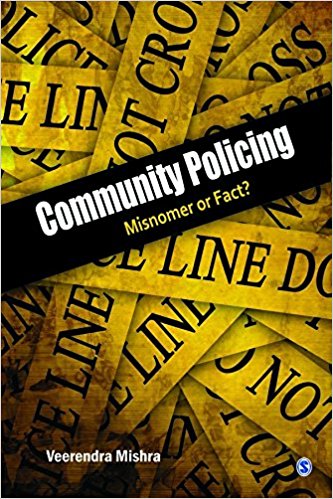
Veerendra Mishra
Community policing has several meanings. To begin with, it refers to a process of taking policing back to citizens, for according to some scholars, that is where it began as a measure of public safety even before states and regimes appropriated this role and created a ‘police force’ for maintenance of public order and, of course, for their own protection.
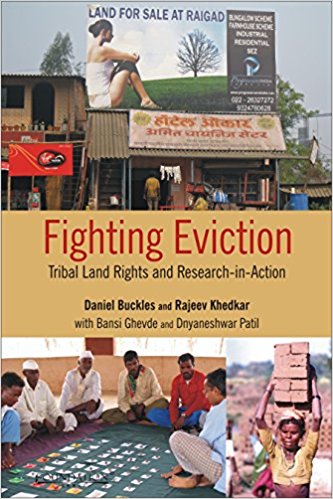
Daniel Buckles and Rajeev Khedkar with Bansi Ghevde and Dnyaneshwar Patil
The age of liberalization, privatization and globalization has raised a number of issues, which are central to the tribal life in India. One such important issue is the land question, which is generally considered as a ‘philosophy of tribal life’.
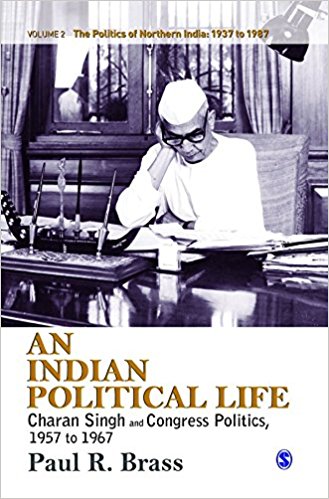
Paul Brass
Paul R. Brass’s mega project on ‘The Politics of Northern India: 1937-1987’ is steadily progressing. His style is unique, focusing on the second rung of leaders who played a vital role in the pre-Independence period and immediately thereafter.

Shimon Lev
Two more books to the Gandhi shelf! Looks like a library will not be enough to house books on and by him. Yet Gandhi is never going to cease to be an enigma.
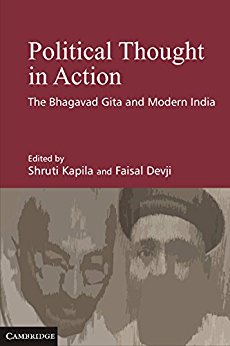
Shruti Kapila
The book under review is a very welcome addition to the growing interest in mining older Indian intellectual traditions to understand and account for many of the diverse, and often contradictory, impulses of anti-colonialism and nationalism.