
Politics
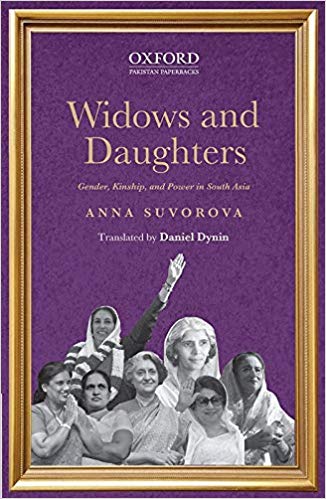
Anna Suvorova
This fascinating book provides a compelling narrative about the life and times of South Asia’s female heads of state. While the content focuses mainly on Indira Gandhi, Benazir Bhutto, Khaleda Zia, Hasina Wajed, Sirimavo Bandaranaike, Chandrika Kumaratunga.
Katherine Eban
Catherine Eban is an American journalist known for her ‘Investigative firepower’. Bottle of Lies: The Inside Story of the Generic Drug Boom is her second book on the pharmaceutical industry. Eban’s first work Dangerous Doses: A True Story of Cops.
S.Y. Quraishi
In the summer of 2019, while following the election campaign of Kanhaiya Kumar in Begusarai, I stumbled upon a dilapidated nondescript piece of history, tucked away in the vast hinterlands of Bihar. A dilapidated structure, seemingly remains of what was once a polling booth.
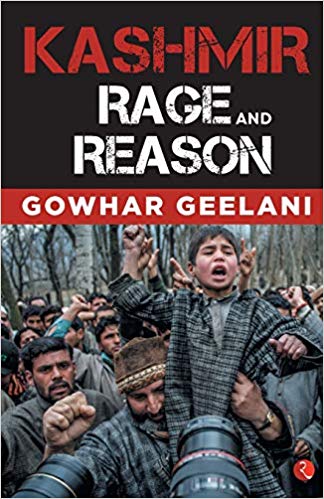
Gowhar Geelani, Moosa Raza,Rekha Chowdhary
Personalized accounts are a powerful source of knowledge about intricacies of conflict, and violence that follows. Rather than relying on grand theories or narratives, these accounts navigate a reader through the ‘lived and survived experiences’ of violence/conflict.
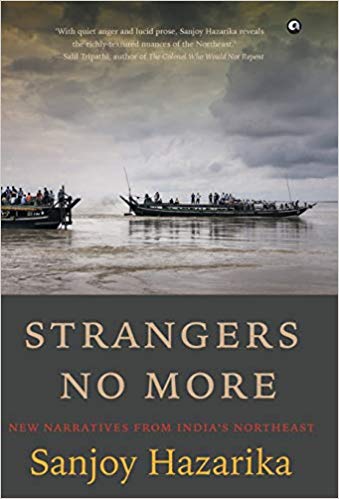
Sanjoy Hazarika
A journey through the eight States of North East India, the present book is a sequel to Sanjoy Hazarika’s earlier published and much acclaimed title Strangers of the Mist: Tales of War and Peace from India’s Northeast. Hazarika states that Strangers No More is a deeply personal book through which he intends to understand and express his concern on topical issues…
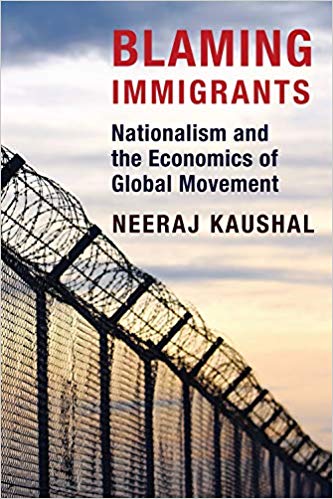
Neeraj Kaushal
Immigration has been a sensitive issue in national politics in the western hemisphere for the last 25 years. Its ascent as an issue to be discussed, debated and voted upon has been an outcome of the process of globalization. However, within the last ten years, particularly after the failed Arab Spring of 2011, it has become a hot topic in Europe as well as in the United States.
Louise Tillin
The Constituent Assembly of India, after two years, eleven months and eighteen days of intense debates, came up with the final draft of the Constitution which proclaimed India as a sovereign democratic republic. While the terms ‘secular’ and ‘socialist’ were later added to the Preamble (which is non-Justiciable by law) by the 42nd Amendment, the word ‘federal’ was eschewed.
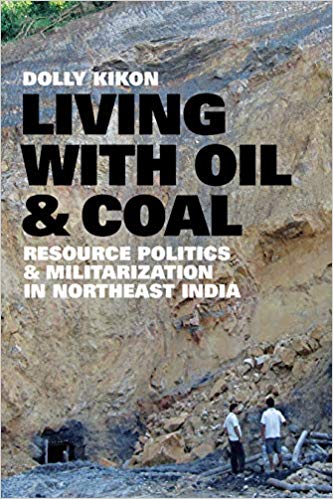
Dolly Kikon
In Living with Oil and Coal, Dolly Kikon presents the ethnography of the entangled lives of multiple actors—of villagers, state officials, geologists, insurgents, traders and landowners—in the militarized carbon landscape of the foothills of Assam and Nagaland in North East India. Although the extractive economy of carbon—oil, coal (and tea)—in these places and beyond is often presented as techno-developmental interventions by geologists…
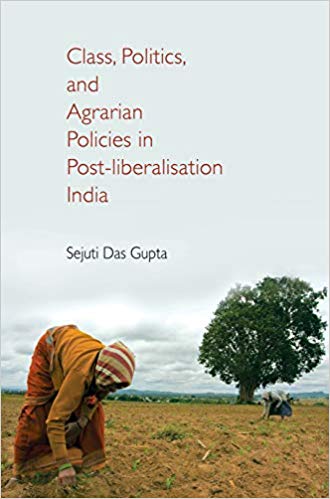
Sejuti Das Gupta
Class, Politics, and Agrarian Policies in Post-Liberalisation India by Sejuti Das Gupta is a valuable and timely contribution to a political economy analysis of state and agrarian policies in India during the period of neo-liberal economic reforms. That Indian agriculture has slipped into some kind of a persistent crisis, leading to rural distress since the late nineties is something that has been amply written about and recognized.
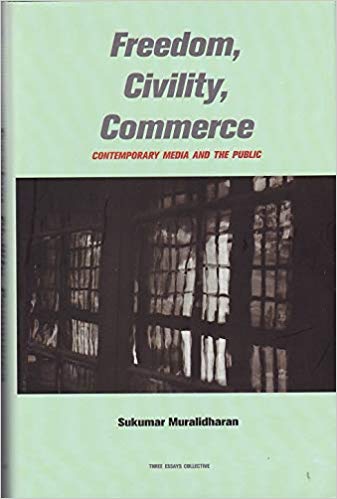
Sukumar Muralidharan
This is a fascinating book on contemporary media studies comprising eight chapters focusing on the existing debate on speech and freedom, nationalism, the state, civil society, satire, media, market, advertising and journalism.
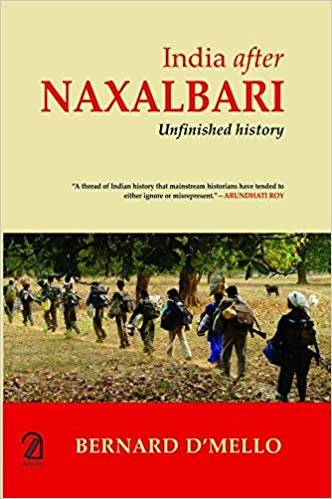
Bernard D’Mello
Maoism in India has evoked the interest of and intrigued social scientists and scribes in India and across the world of all persuasions for over seven decades. Though generally chronicled from the uprising in Naxalbari in 1967, its history goes back to the Communist Party of India-led uprising in Telangana in 1946 with the same intent, ideology and strategy. The Naxalbari movement of 1967 in West Bengal has a historical continuity with Telangana.
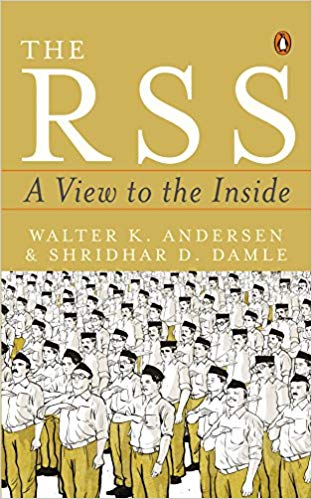
Walter K. Andersen
The Rashtriya Swayamsevak Sangh (RSS) is ideologically driven, has a strong and complex organizational structure and is demonstrably the most powerful non-government organization in present-day India, with a determining influence in cultural and political life. In terms of its appeal and reach across social and geographical boundaries, both its growth and expansion have been phenomenal. Yet, it remains inexplicably mystifying and beyond the reach of those who wish to understand its unfolding strength objectively.
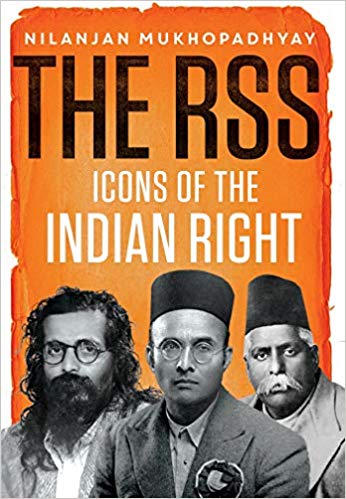
Nilanjan Mukhopadhyay
Nilanjan Mukhopadhyay is better known as a prolific columnist and author. Quite often his journalism is considerably informed by modern Indian history, more particularly Hindu-Muslim relations. Besides, he has also authored a few books which include a biographical account of Narendra Modi and also a detailed account of the anti-Sikh pogrom which was unleashed after the assassination of the then Prime Minister Indira Gandhi in 1984.
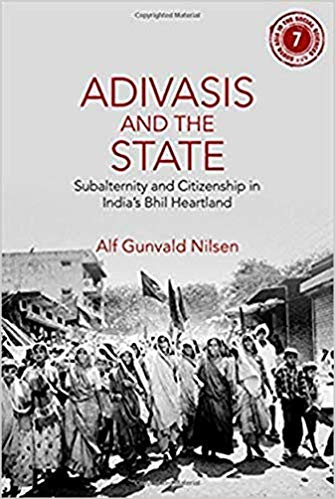
Alf Gunvald Nilsen
In the post-liberalization era the tribal communities are facing two contradictory situations. On the one hand, neo-liberalization has enhanced the processes of dispossession and marginalization and on the other hand, tribal organizations have compelled the Indian state in recent years to introduce various national laws like the FRA and MNREGA, which give tribal and other marginalized communities ownership and livelihood rights.
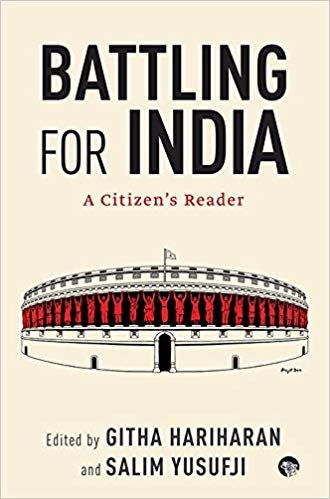
Amir Ali
This book is a necessary compilation that comes from an embattled republic of letters in a nation slowly being desiccated by the philistinism of its politics. The great merit of the book is its comprehensive nature as it focuses expansively on many themes. There is the question of the economy being roiled by adverse global headwinds that the ruling dispensation seems to be gloriously inept at handling.
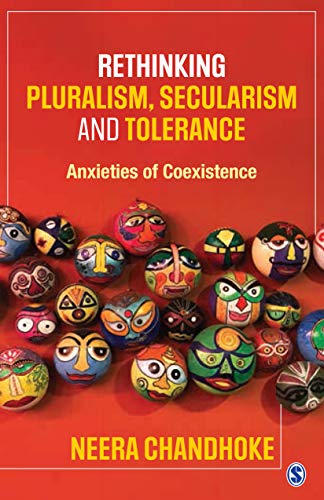
Neera Chandhoke
From India’s most clear-headed political theorist Neera Chandhoke (a former Professor of Political Science at Delhi University), comes a new page turner—an extraordinarily accessible and yet tightly argued monograph on the nature and value of contemporary India’s plural democracy. Anyone familiar with Chandhoke’s earlier works such as Democracy and Revolutionary Politics (Bloomsbury, 2015)
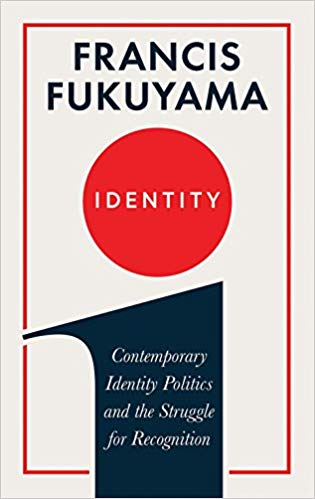
Francis Fukuyama
Francis Fukuyama needs no intro- -duction. He shot into prominence with the publication of his widely read book, The End of History and the Last Man in 1992. In brief, Fukuyama had put forth the thesis that with the collapse of Communism ideological wars have come to an end and the future belonged to liberal democracy, which—in a Hegelian sense—was the culmination of all human associations, and indeed, its very pinnacle. Fukuyama’s contention was problematic and in a short period it became widely apparent that liberal democracy faced severe challenges from within.
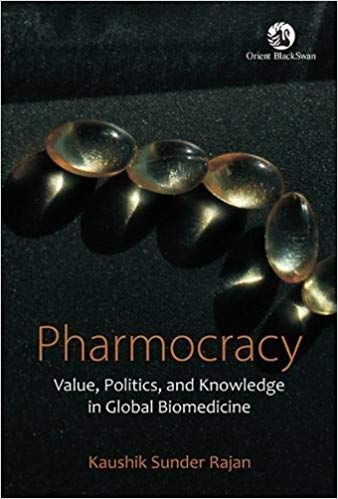
Kaushik Sunder Rajan
It is not easy to review a book that should be a classic in the field, or one that follows another book that is already, in my view, a classic. Kaushik Sunder Rajan’s earlier book Bio-Capital is indeed what I would describe as a classic: it is an exhaustive work, a final word if you want, that shows you what the structure of the global industry of drugs and pharmaceuticals is and how this global industry has moved away from chemical formulations…
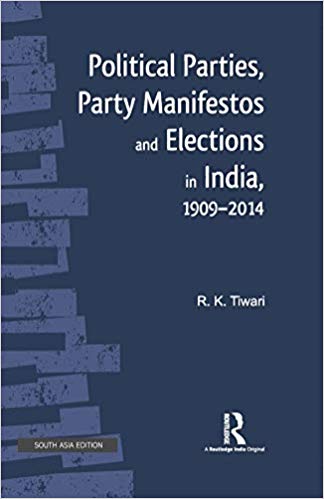
R.K.Tiwari
There have been few academic studies that factor in election manifestos political parties frame, put out and follow once the elections are over in India. Large or small, parties frame a list of their intent, should they come to power, or share power (significant in the era of coalition politics), to be shaped as public policies to attract voters to give them their mandate.
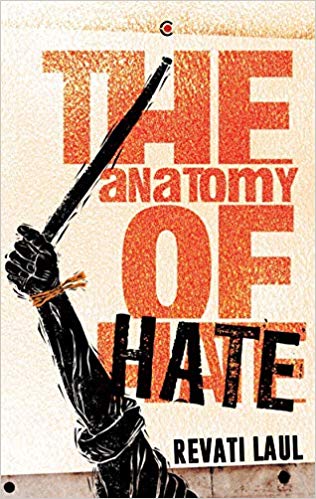
Revati Laaul
2018
Gripping, agonizing, stomach churning. The Anatomy of Hate is all of these, while also holding up a subtle, insightful and illuminating mirror to modern-day Indian society.
Revati Laul devoted more than ten years speaking to scores of persons about the sectarian violence that engulfed Gujarat in 2002; prising out excruciating recollections, trying to make sense of the motivations of the participants and delving into what drives mob behaviour.