
Politics
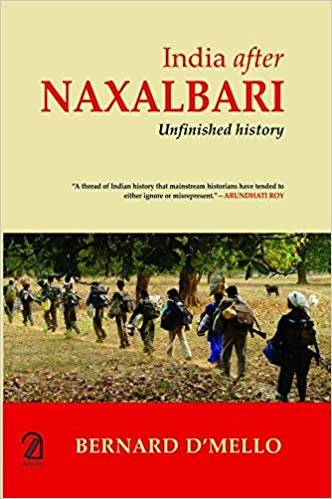
Bernard D’Mello
Maoism in India has evoked the interest of and intrigued social scientists and scribes in India and across the world of all persuasions for over seven decades. Though generally chronicled from the uprising in Naxalbari in 1967, its history goes back to the Communist Party of India-led uprising in Telangana in 1946 with the same intent, ideology and strategy. The Naxalbari movement of 1967 in West Bengal has a historical continuity with Telangana.
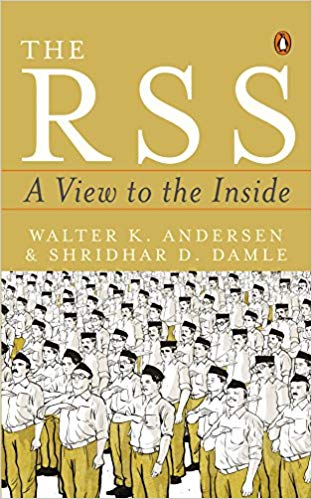
Walter K. Andersen
The Rashtriya Swayamsevak Sangh (RSS) is ideologically driven, has a strong and complex organizational structure and is demonstrably the most powerful non-government organization in present-day India, with a determining influence in cultural and political life. In terms of its appeal and reach across social and geographical boundaries, both its growth and expansion have been phenomenal. Yet, it remains inexplicably mystifying and beyond the reach of those who wish to understand its unfolding strength objectively.
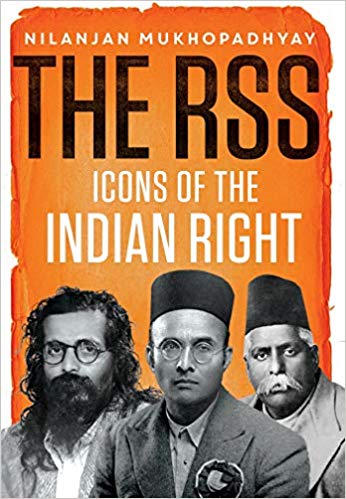
Nilanjan Mukhopadhyay
Nilanjan Mukhopadhyay is better known as a prolific columnist and author. Quite often his journalism is considerably informed by modern Indian history, more particularly Hindu-Muslim relations. Besides, he has also authored a few books which include a biographical account of Narendra Modi and also a detailed account of the anti-Sikh pogrom which was unleashed after the assassination of the then Prime Minister Indira Gandhi in 1984.
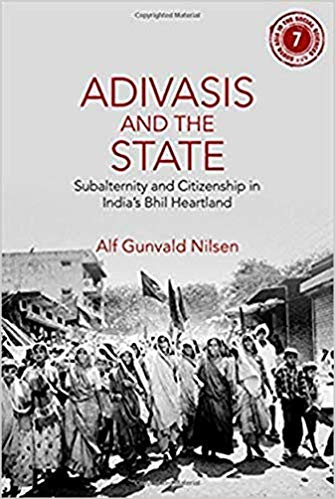
Alf Gunvald Nilsen
In the post-liberalization era the tribal communities are facing two contradictory situations. On the one hand, neo-liberalization has enhanced the processes of dispossession and marginalization and on the other hand, tribal organizations have compelled the Indian state in recent years to introduce various national laws like the FRA and MNREGA, which give tribal and other marginalized communities ownership and livelihood rights.
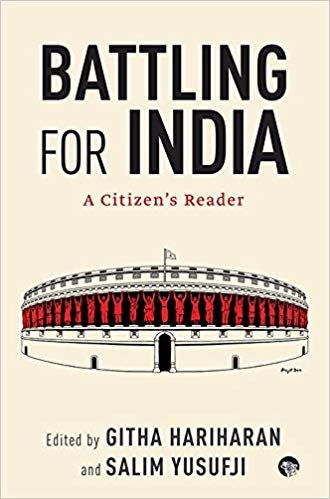
Amir Ali
This book is a necessary compilation that comes from an embattled republic of letters in a nation slowly being desiccated by the philistinism of its politics. The great merit of the book is its comprehensive nature as it focuses expansively on many themes. There is the question of the economy being roiled by adverse global headwinds that the ruling dispensation seems to be gloriously inept at handling.
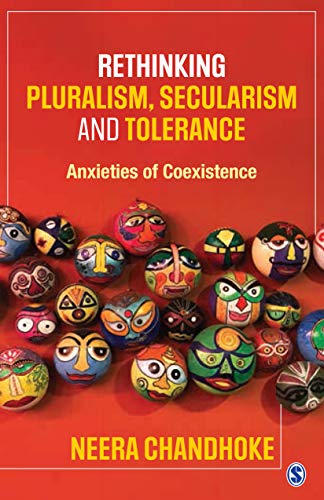
Neera Chandhoke
From India’s most clear-headed political theorist Neera Chandhoke (a former Professor of Political Science at Delhi University), comes a new page turner—an extraordinarily accessible and yet tightly argued monograph on the nature and value of contemporary India’s plural democracy. Anyone familiar with Chandhoke’s earlier works such as Democracy and Revolutionary Politics (Bloomsbury, 2015)
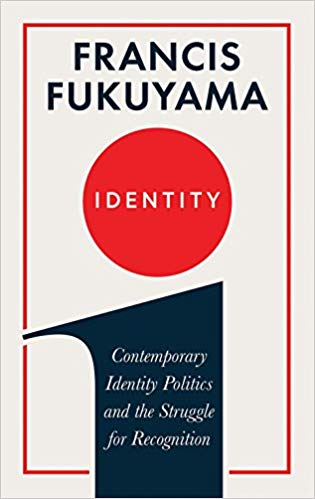
Francis Fukuyama
Francis Fukuyama needs no intro- -duction. He shot into prominence with the publication of his widely read book, The End of History and the Last Man in 1992. In brief, Fukuyama had put forth the thesis that with the collapse of Communism ideological wars have come to an end and the future belonged to liberal democracy, which—in a Hegelian sense—was the culmination of all human associations, and indeed, its very pinnacle. Fukuyama’s contention was problematic and in a short period it became widely apparent that liberal democracy faced severe challenges from within.

Kaushik Sunder Rajan
It is not easy to review a book that should be a classic in the field, or one that follows another book that is already, in my view, a classic. Kaushik Sunder Rajan’s earlier book Bio-Capital is indeed what I would describe as a classic: it is an exhaustive work, a final word if you want, that shows you what the structure of the global industry of drugs and pharmaceuticals is and how this global industry has moved away from chemical formulations…
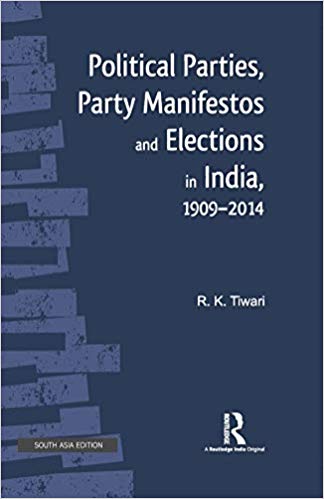
R.K.Tiwari
There have been few academic studies that factor in election manifestos political parties frame, put out and follow once the elections are over in India. Large or small, parties frame a list of their intent, should they come to power, or share power (significant in the era of coalition politics), to be shaped as public policies to attract voters to give them their mandate.
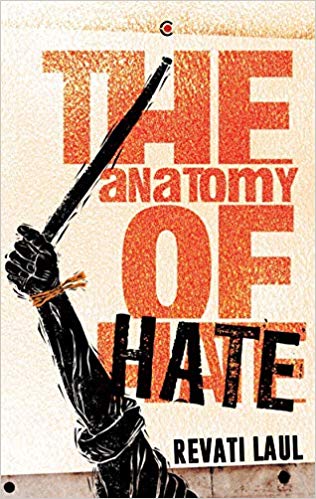
Revati Laaul
2018
Gripping, agonizing, stomach churning. The Anatomy of Hate is all of these, while also holding up a subtle, insightful and illuminating mirror to modern-day Indian society.
Revati Laul devoted more than ten years speaking to scores of persons about the sectarian violence that engulfed Gujarat in 2002; prising out excruciating recollections, trying to make sense of the motivations of the participants and delving into what drives mob behaviour.
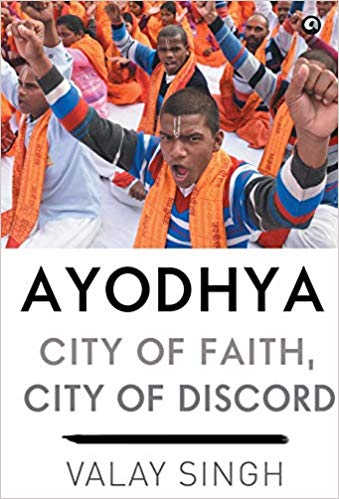
Valay Singh/Sameena Dalwai
Writings that revisit the knocking down of the Babri Masjid in Ayodhya and underscore India’s struggle to remain a secular republic are grim reminders of just how easily and repeatedly political divisiveness triumphs over constitutional values. That, to stamp out the injurious wrath of hateful agendas–-a disposition that has since seemed to have enveloped our collective psyche––it is critical to, with equal rigour, disfavour all beliefs that appeal to individuals and communities to frustrate diversity…
Y.V. Reddy and G.R. Reddy
It is rare to find books which are easy to read even though they are dealing with relatively non-readable topics such as Fiscal management, Institutional development and Policy formulation. This book, while it pulls no punches on these usually convoluted issues, is both lucidly simple and yet packed with information, which is presented in a very readable manner.
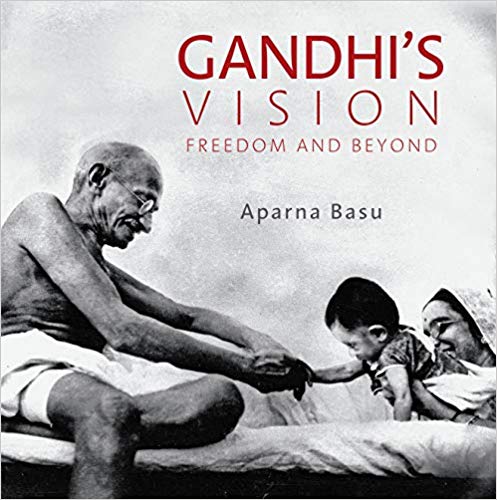
Aparna Basu
Photojournalists, press photographers, amateurs, followers and family members visually documented Mohandas Karamchand Gandhi’s life in great detail. Many of these photographs are housed in specialized archives, the National Gandhi Museum being a leading repository. Based on several photographs displayed at an exhibition organized by the National Gandhi Museum and the India International Centre and curated primarily by Aparna Basu, Gandhi’s Vision
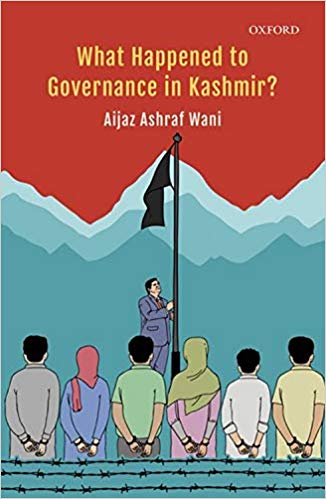
Aijaz Ashraf Wani
The Kashmir conflict, since the beginning, has posed many challenges to the Indian state and the narrative it propounds. Even though experts and academics have often tried to focus on the security dimension of the conflict, the failure to link governance with conflict has not received much attention. It is taken as a given that governance will take a lead once the security dimensions are resolved. Security gets prominence over governance then.
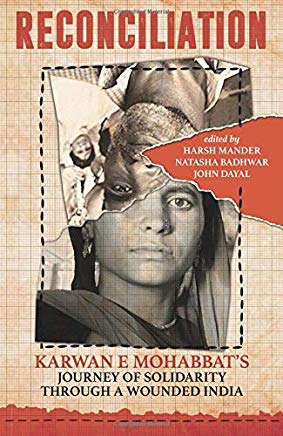
Harsh Mander
This volume is a slightly rushed attempt at collecting the findings about the lynching, hate crimes and rise of cow vigilantes that have stormed the news in India over the last few years. It details the violence that has surged against Muslims, Dalits and other lower castes. While doing so, many writers take pains to establish the even more vulnerable position of women, children and the aged belonging to these backgrounds and families.
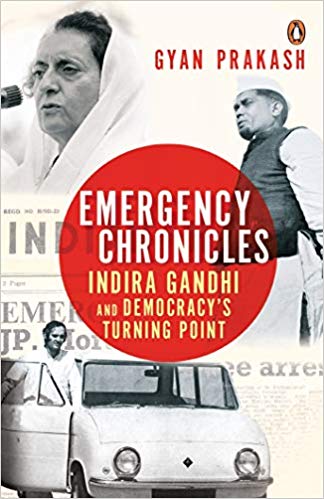
Gyan Prakash
Emergency Chronicles fills a void among the available scholarly works covering the period of what was an ‘aberration’ in Indian politics. In this riveting work of impressive archival research, Gyan Prakash lifts the curtain from the evolutionary sequencing of events leading to June 1975—the day Emergency came into force—and uncovers the everyday governing apparatus of a then proto fascist—if not a full blown fascist-government…
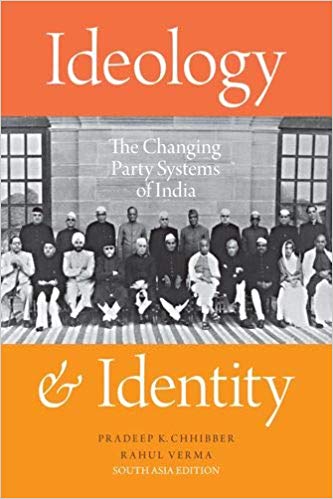
Pradeep K. Chhibber
Party politics in India has often been characterized by observers as being patronage-based, chaotic and opportunistic, driven largely by interests of office seeking politicians rather than ideology. This in turn is assumed to have led to corruption, rent-seeking and clientelistic behaviour rather than broad-based programmatic delivery of public goods. Literature also refers to Indian politicians adopting particularistic appeals based on voters’ identity such as caste…
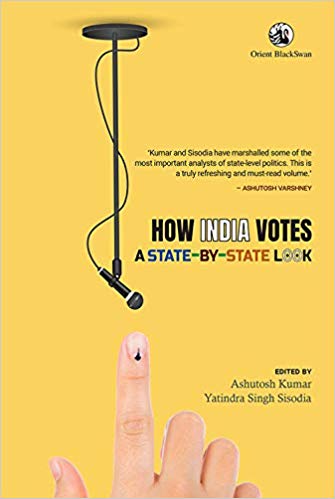
Ashutosh Kumar
The historian Ramchandra Guha had once observed that two of the things that keep India together are cricket and Bollywood. If one were to think of a third unifying element it would undoubtedly be the national election. However, despite its pan-India appeal and its consistency in attracting wide public participation, it is surprising that the national election in India has not received the kind of nuanced attention that it deserves.
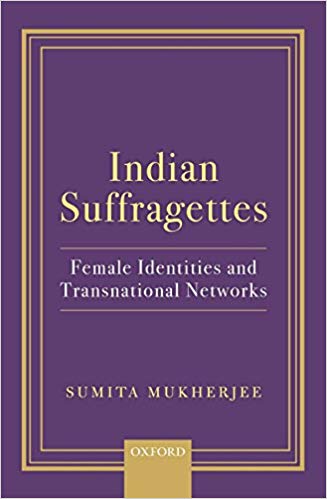
Sumita Mukherjee
The suffrage movement marks a watershed in the history of women’s movements and continues to inspire feminist contestations across the world. However, all forms of delineations and depictions on the suffrage movement, whether in academia or popular culture, exclusively focus on the role and struggles of the women in the West. In her extensively researched work, Indian Suffragettes…
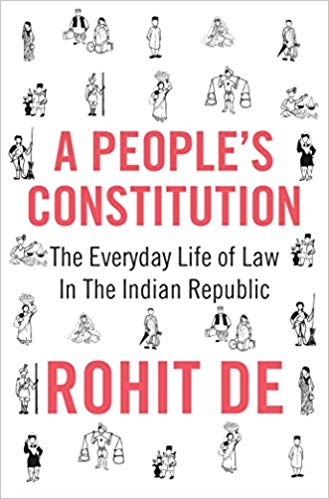
Rohit De
Way back in 1985, I got a call from an agitated lawyer friend. He wanted me to mobilize opinion against the newly passed Administrative Tribunals Act, which took away the jurisdiction of the Supreme Court and the High Courts over service disputes of public servants, and vested it in administrative tribunals. The power of constitutional courts was being handed over to statutory tribunals, which did not even need to have judicial members on the bench.