
History
Nayanjot Lahiri
The book is a historian’s personal quest for a ruler who crafted himself in multiple ways and was in turn received and recast in more ways than he could have imagined. Thus, the book is really not about Ashoka who is no stranger to history and historians, but rather about how Ashoka comes through to us in stone and metal, text and poetry, scattered through the subcontinent and outside over centuries.
Herman Tieken
Herman Tieken’s command over the source language Prakrit and the Brahmi script is writ large in the book. His training in classical Kāvya literature led him to view the inscriptions as a literary corpus. The book in some ways offers fresh perspectives, even though one may disagree with one or two.
Uma Chakravarti, Naina Dayal, Bharati Jagannathan, and Snigdha Singh (Ed.)
2023
What comes out clearly is the extent of the work and influence that Kumkum Roy’s own research have had on a range of aspects of early Indian history—gender, of course, but also questioning the texts, minutely, meticulously and critically examining these texts, and then developing new ways of understanding the past.
Cao Yin
This book is about the various Chinese professionals who came to India during the Second World War and resided in India during that time. This was the time when close to 100,000 Chinese nationals were in India which was the highest ever in history.
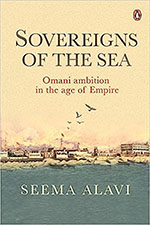
Seema Alavi
In this work, Seema Alavi addresses the ‘overwhelming silence’ and the ‘invisibility’ of Arab polities and dynasties in the historiography that reflects an ‘unabashed Eurocentrism’. The inability of ‘mainstream’ scholarship to make sense of the unique structures of state power that shaped the Ocean’s political culture has been brilliantly exposed in this work.
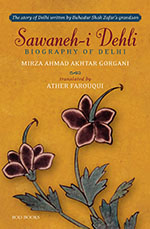
Mirza Ahmad Akhtar Gorgani. Translated from the original Urdu by Ather Farouqui
Farouqui’s translation of Sawaneh-i Dehli is a cultural, archaeological, historical treatise since it is not limited to simply translating the text from one language to another but also painstakingly locates factual errors in Gorgani’s original text and has elaborate explanatory footnotes: as Farouqui points out in his Preface, Gorgani knew very little of history.
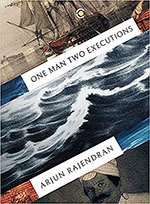
Arjun Rajendra
If you’re also caught up in the tug-of-war between the history of Mughals in India and of that of the Rajput kings stirred by current politics, Rajendran’s poetry of the French colonial past in Pondicherry will come as a great relief! The poetry collection which starts with over 30 poems stretched across a decade in Pondicherry, offers an insight into the lives of natives and colonials, couched in multilingual verses with heaps of historical references.
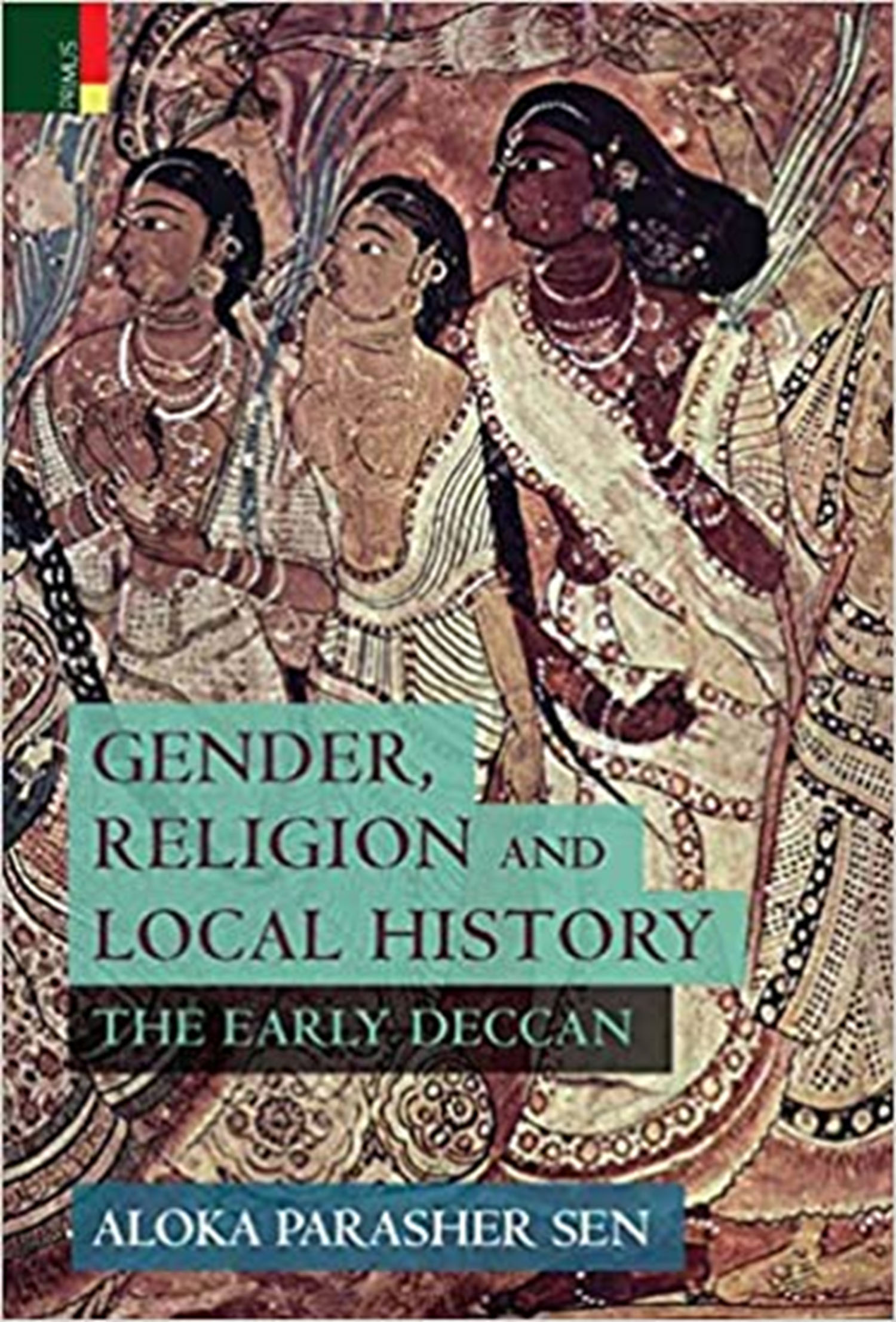
Aloka Parasher Sen
Aloka Parasher Sen’s latest collection brings together seven essays dealing with gender and religion, almost all of which were previously published, and have been revised for inclusion in this volume. Taken collectively, the volume is a three-pronged history of the intersections of gender and religion in local contexts. Parasher Sen’s stated intent is to trace how women subscribed to and broke out of the prescriptive norms that were laid out for them and to generally explore how religious ideas shaped gender relations in early India, while trying to bring in the particularities of local history in all this (p. xviii).
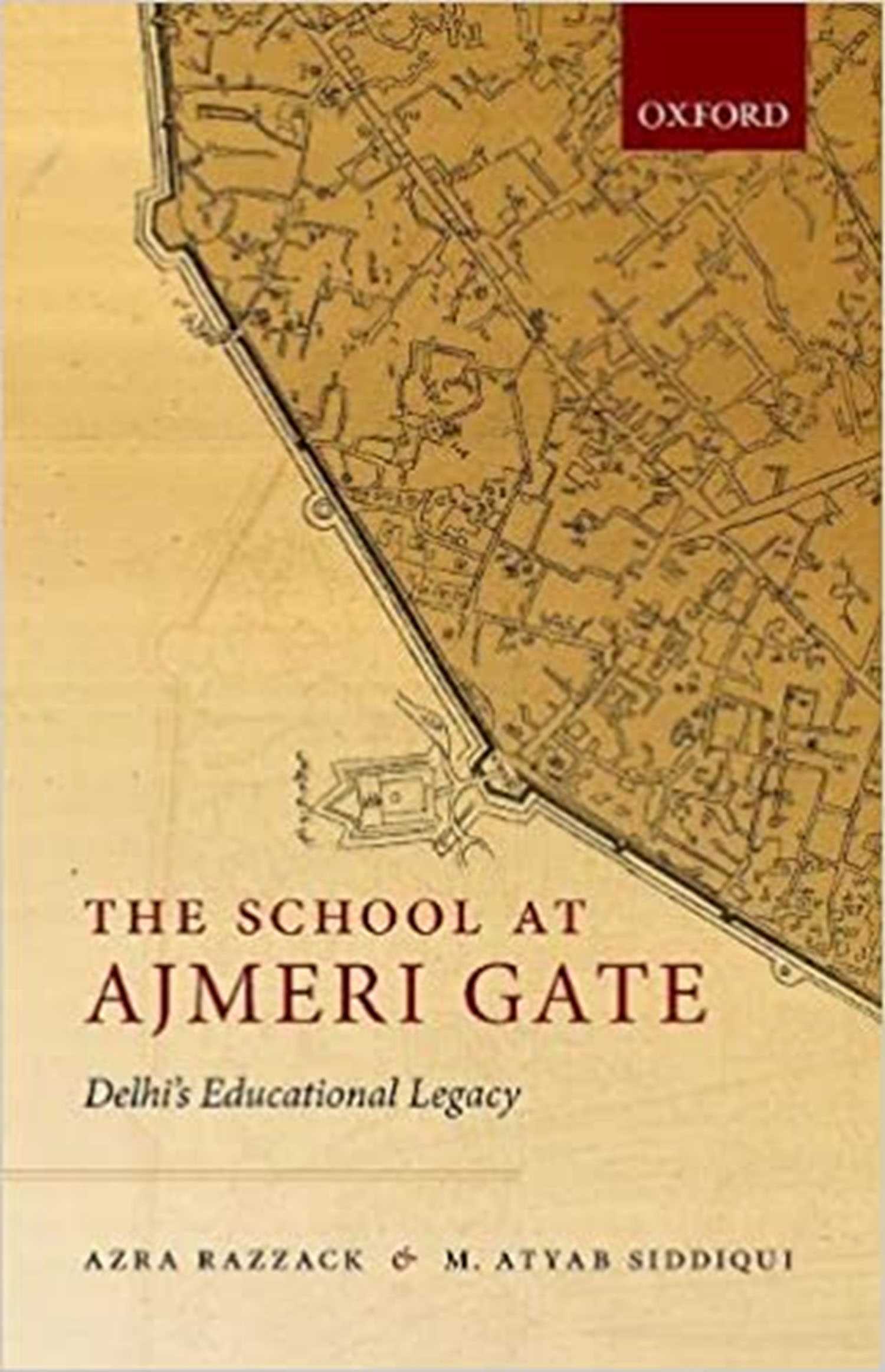
Azra Razzack and M. Atyab Siddiqui
In the vicinity of walled-Delhi, or old Shahjahanabad, stands a school with a long, fraught and yet cherished history. The magnificence of the Anglo-Arabic School is amplified by the Indo-Persian architectural style of the mosque and buildings, and the astoundingly serene and sprawling campus within which it is housed.

Krishna Mohan Shrimali
Professor Krishna Mohan Shrimali is amongst the handful of scholars who have consistently pursued an academic interest in the histories of religious traditions. What is more, his analysis is almost invariably located within the socio-economic contexts of these traditions and is informed by a careful consideration of historiographical debates.
Allen Packwood
Companionship’ can be a limp word; it lacks the intimacy of friendship or the instrumentality of a working relationship. And yet, it serves the title of this volume well, claiming to be neither definitive nor comprehensive, an almost leisurely exploration of the subject, his facets and foibles, his many individualisms and his many more many inconsistencies.
Amar Farooqui
The book authored by Amar Farooqui written at the fag end of his teaching career contains the filtered essence of earlier voluminous scholarship on various components and aspects of British consolidation in the Indian subcontinent. The filtered essence has been further fermented by recent historiographical debates on the subject, thus imparting the information and interpretation an unusual freshness.
Martin Puchner
This is one of those books that breeze across centuries and continents, leaving the reader’s mind ventilated by long cultural cross currents. Puchner argues that culture cannot be considered hived off, discrete, and possessed exclusively by a set of people. This is the kind of nigglingly neat billiard ball understanding of culture that political theorists operated with as they made the case for cultural pluralism or multiculturalism.
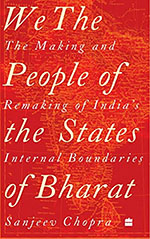
Sanjeev Chopra
In a crucial scene set in an underground temple in Bankimchandra Chatterji’s Anandamath, the protagonist Mahendra first encounters the Motherland, as he goes into a dark room, and ‘Gradually a picture revealed itself to him. It was a gigantic, imposing, resplendent, yes, almost a living map of India. This is our Mother India as she was before British conquest,’ he was told.
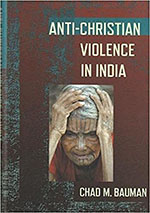
Chad M. Bauman
It was with keen and eager expectation that I picked up and perused Chad M Bauman’s Anti-Christian Violence in India (originally published by Cornell University Press, 2020). The book is a timely contribution to understanding an issue of extreme significance not just to the Indian Christian community but also to the secular-democratic fabric of India itself.
Angus Phillips and Nitasha Devasar
It is not too often that one comes across a comprehensive book on Indian publishing. We grew up on A Career in Book Publishing and 15 Years of Indian Publishing by Samuel Israel, the doyen of India’s publishing industry. One of the earliest books on publishing is BS Kesavan’s (First National Librarian of independent India), History of Printing and Publishing in India in three volumes. We also have BG Verghese’s edited essays in Indian publishing titled Beyond the Headlines.
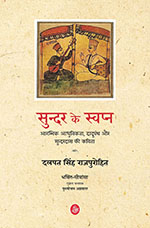
Dalpat Singh Rajpurohit
Dalpat Singh Rajpurohit’s book is primarily about the relatively lesser-known religious-literary figure, Sundardas (1596-1689 CE), a bhakti sant with primary allegiance to Dadupanth. For the author, however, Sundardas is not just a sectarian figure who should be viewed only within the boundaries of bhakti, but rather a momentous figure in the emerging vernacular intellectual culture and early modernity in 17th century Mughal India.
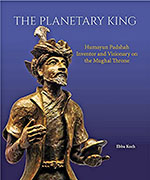
Ebba Koch
There is an impression that Humayun has not received adequate attention in historical writings on the great Mughals. However, there is an earlier scholarship in which Humayun figures quite prominently. The pioneers were SK Banerji, whose study, based on his doctoral thesis of 1925, was published in 1938; Sukumar Ray, whose detailed essay on the ruler’s Persian sojourn was published in 1948.
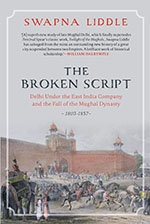
Swapna Liddle
2022
A study of the ‘hybrid half-century’, The Broken Script is a narrative of the city of Delhi for the period 1803-1857, when the Mughal Empire witnessed the last vestiges of its power and the British East India Company emerged as the de facto ruler, marking the end of one way of life and the rise of another. It is the story of a city, ‘a fast-modernizing society’ in the midst of profound changes, a discussion on its culture, literature, language, intellectualism, its tehzeeb, social and economic life.
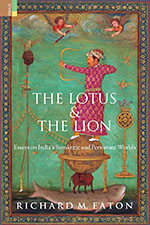
Richard M. Eaton
This collection of essays is representative of the themes pursued by Richard Eaton. As a definitive, prolific and meaningful scholarly voice studying medieval India since the 1970s, Eaton’s essays cover a swathe of topics in the domains of social and cultural history. While some themes—such as the cultural history of Islam, and the social history of religious communities—are regularly featured in writings by historians of medieval India.