
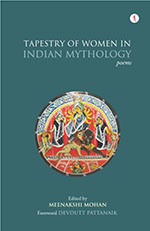
Meenakshi Mohan
Tapestry of Women in Indian Mythology is an anthology of poems with contributions from 70 poets, both women and men. The book has an epic-like range and draws attention not only to women from mythology who are part of the popular imagination but more importantly, to those whose narratives have been ignored, suppressed or completely glossed over.
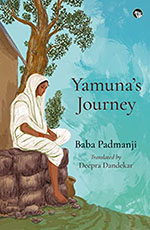
Baba Padmanji
Yamunaparyatan, deemed to be the first Marathi novel, was published in 1857. It was written by Baba Padmanji Mulay, a formidable activist-intellectual and public persona of his times (1831-1906). It has now been translated into English as Yamuna’s Journey by Deepra Dandekar, a keen chronicler-critic of Padmanji’s times and texts.
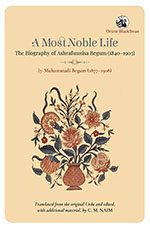
Muhammadi Begum
Women’s role and contribution to Urdu literature and journalism in the eighteenth and nineteenth century remains a relatively under-examined area. CM Naim’s A Most Noble Life: The Biography of Ashrafunnisa Begum (1840-1903), makes an important intervention as it tells the tale of an extraordinary woman who was deeply devoted to the cause of women’s education, and enriches the reader with a wealth of material that highlights the social, cultural, and literary context that shaped the contours of ordinary Muslim women’s lives in the nineteenth century.
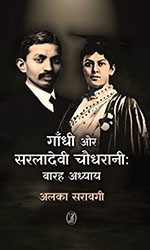
Alka Saraogi
Sarala boarded the train from Ahmedabad. Her body seemed to burn. As if she was in the grips of a fever. She craned her neck to the sills of the window, to breath in a little fresher air. She perhaps went to sleep without intending to. When her eyes opened, her neck was stiff. Half of her face blackened by fine particles of coal flying from the rail engine looked at her from her hand held mirror. She shrank to the core. What if someone saw her like this, what would they make of it?’
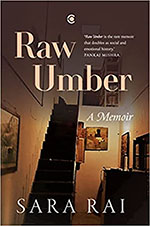
Sara Rai
Sara Rai, a renowned contemporary author in Hindi who is at home with its literary and sociocultural landscape, notes that she has chosen to write about writing, as well as the journeys of her family and their times, in English. Perhaps it is to reach a wider reading public. Or perhaps, it is a language which allows emotional and intellectual distance. For Raw Umber is a literary memoir fashioned with circumspection in some ways, and with an evocative lyricism in others.
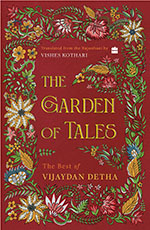
Vishes Kothari
The translator Vishes Kothari’s note that prefaces Vijaydan Detha’s collection of folk tales reminds us that what we are going to read is an act of literary and cultural translation as well as a feat of literary magic where the intangible is made visible and accessible to the readers who do not have access to the original Rajasthani stories and perhaps even the milieu in which these stories are set and from which they emerged.
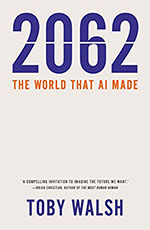
Toby Walsh
Today, Artificial Intelligence is the dominant topic of discussion with questions about its expected rate of growth and its impact on various aspects of human life. The outcry over ChatGPT is just one of the many examples in our midst. People want to understand how AI is going to affect their lives and Toby Walsh’s book is an outstanding read which deals with this topic comprehensively, in a very easy to understand manner.
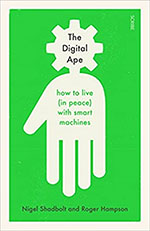
Nigel Shadbolt
At the meat of The Digital Ape: How to Live (in Peace) with Smart Machines lies the fundamental question that has been haunting us human beings for the last few decades—is Artificial Intelligence (AI) on the cusp of ‘waking up’ and consigning humans to the trash can? If you look at the rapid technological advancements that have taken place in the last 50 years or so, there is great evidence to suggest that the possibilities of AI are no longer restricted to the works of sci-fi, that there are actual reasons to base our fears on.
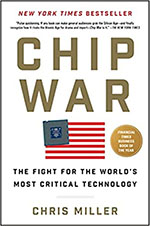
Chris Miller
In September 2022, Apple launched the iPhone 14 and its different variants. The phone came armed with different chips, viz., A15 and A16. A15 was the lower spec version as it has 15 billion transistors while A16 carries 16 billion transistors.In 2019, the then-latest version of the iPhone (p. 11) carried the A13 chip.
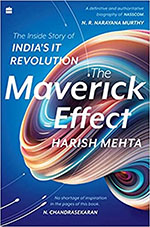
Harish Mehta
In the 1970s, the possibility of India being a global information technology leader seemed like an impossible dream. In 1985, Texas Instruments was given a direct satellite link for round-the-clock communication with the US from Bangalore, enabling offshoring of software work. Still, the full potential of software services was not realized. So, when negotiating the Uruguay Round of trade agreements, in the 1990s, India was opposed to including trade in services which would have helped the software industry.
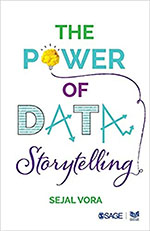
Sejal Vora
‘175 Zettabytes By 2025’ reads a Forbes headline from 2018, followed by ‘that’s how much data IDC estimates will be generated annually by 2025’. Evidently, Big Data is about to get a whole lot bigger, and the human race is already caught in a game of chase trying to identify patterns and correlations in the millions of data points collected daily.
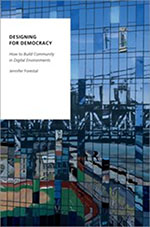
Jennifer Forestal
What kind of built environment does democracy require? This question of critical importance is what Jennifer Forestal, political theorist, explores in her latest book.That digital technologies have transformed engagement of citizens in participatory democracy is a given in today’s world. While it is true that digital technologies have a pernicious effect on democracy,
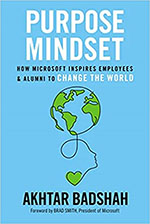
Akhtar Badshah
In an era of unprecedented social, economic, and political change, what can we learn from established personalities, both past and present, about finding a purpose, making societal changes big and small, and creating environments in which we inspire others to do the same? Microsoft alumnus Akhtar Badshah seeks to give us an answer in his book Purpose Mindset: How Microsoft Inspires Employees & Alumni to Change the World, by looking closely at the spirit of giving back to the community within Microsoft’s internal network
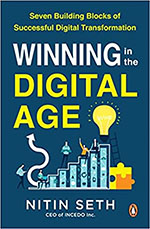
Nitin Seth
The book Winning in the Digital Age captures the key nuances of how to make a turnaround in the direction of digital, highlighting the slightest pitfalls. Nitin Seth, having been in entrepreneurial roles in the digital landscape of large corporations as well as being a digital entrepreneur himself, tells the story of successes and the red flags from his own lens.
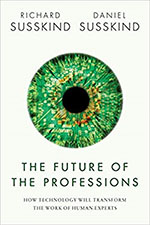
Richard Susskind
Richard and Daniel Susskind’s The Future of the Professions: How Technology will Transform the Work of Human Experts is an insightful analysis of the implications of emerging technologies on professionals and their work. The authors advocate for the ‘liberation of practical expertise’, the argument being that knowledge is concentrated in the hands of a few experts.
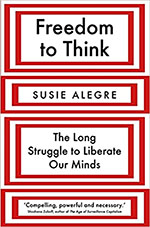
Susie Alegre
In Freedom to Think, Susie Alegre paints a dire picture of the state of intellectual freedom and free expression in the digital age. As a journalist and former editor at The Economist, Alegre brings a wealth of experience and insight to the topic, as well as a deep concern for the consequences of our increasingly digital lives.
Rasmus Kleis Nielsen
You can’t write this book without pissing someone off, you know that, right?’ is how authors Rasmus Kleis Nielsen and Sarah Anne Ganter start their acknowledgement in The Power of Platforms. They speak to experts and analyse data to understand the ‘platform power’ that leading technology companies have come to exercise in public life.
Cathy Hackl
Seldom do you find books that handhold you from demystifying a new concept to integrating it in your everyday life. The authors of Navigating the Metaverse have done a stellar job in simplifying metaverse terms, new economic opportunities and how we are evolving into the next generation of the web. The book provides a comprehensive and in-depth exploration of the rapidly expanding world of the metaverse, including its key components, the various technologies that are enabling its development, and the ways in which they are being used to create new forms of social interaction and commerce.
Simon Lindgren
Simon Lindgren, the author of the book under review is Professor of Sociology at Umeå University in Sweden. The book is his research on the relationship between digital media and society with a particular focus on politics and power relations—a critical aspect of modern society which has also been under a lot of scrutiny globally in the last couple of years.
Eswar S. Prasad
Eshwar S Prasad in his book The Future of Money gives us the tools to grasp how money will come to be used and viewed in the years to come, and explains in detail the social, political and economic ramifications it will have. He does this while harnessing multiple case studies of countries that have proved to be early leaders in adopting the Central Bank Digital Currency (CBDC) to support his claims.