
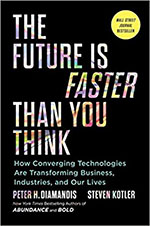
Peter H Diamandis & Steven Kotler
The Future is Faster than You Think opens with a suitably futuristic scenario the authors Peter Diamandis and Steven Kotler say is playing out right now: the arrival of flying cars. ‘By 2027 or so, you’ll be able to order up an aerial rideshare as easily as you do an Uber today,’ they predict, ‘And by 2030, urban aviation could be a major mode of getting from A to B.’
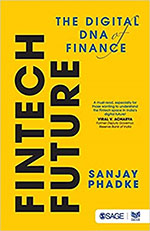
Sanjay Phadke
The financial system across the world is at a cusp of another major transformation due to innovations of information technology called fintech and the spread of Internet. In his book Fintech Future, Sanjay Phadke has very elaborately and logically explained the changes that are brought about by the fintech revolution in different parts of the world.
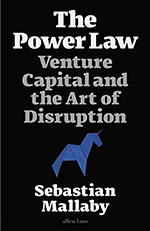
Sebastian Mallaby
Recent headlines on global internet companies have been far from positive. Internet technology companies have been accused of a long list of excesses with immesuarble harm to their users and society at large. These accusations include outright fraud, issues of privacy, censorship, platforming hate speech, snooping on activists by governments, the weakening of democratic institutions, the spread of manufactured fake news, and throttling of market competition.
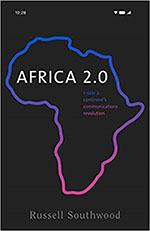
Russell Southwood
Written over three decades, Africa 2.0: Inside a Continent’s Communications Revolution by Russell Southwood could well be an ethnographic book. Southwood takes us through the journey of Africa since 1986 when all of sub-Saharan Africa had fewer phone lines than Manhattan in New York. If someone in Africa wanted a fixed-line telephone connection in 1986, it used to take a minimum of two years.
Anne Delaporte & Kalvin Bahia
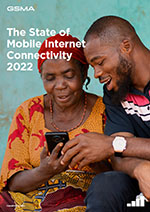
A new report by the Groupe Speciale Mobile Association (GSMA), an association representing the mobile industry and its operators, on the state of mobile internet indicates an increasingly connected, if still woefully unequal, world.The report reveals that as of the end of 2021, 55% of the world’s population, or 4.3 billion people, were using mobile internet.
Kevin Driscoll
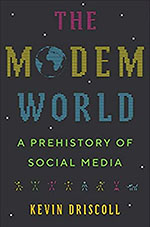
In the book The Modem World, Driscoll tells a coming-of-age story of the internet—he uses a crisp yet vivid narrative voice that has the potential to hook a techie and non-techie alike. The book fills an important gap in the cultural memory and theoretical literature of the internet by paying close attention to the Dial-Up Bulletin Board Systems (BBS).

Danielle Keats Citron
As a child of the 80s the concept of how we consider and view privacy, I am increasingly realizing, is outdated and ‘so very last century’. As of this year I have lived more than half my life in this century and yet as technology consumes and propels most aspects of our lives I still think the right to privacy, intimate or otherwise, cannot and should not change.

Payal Arora
For some time now, Silicon Valley has been obsessing over the next billion users. As mobile telephony becomes accessible along with cheap data—Jio, for instance, offers the cheapest data in the world—what kind of new markets will emerge in the global south, and how to parse the tech-consumption of the world’s poor to both enable them and profit off them.

Catherine Price
The title How to Break up with Your Phone reminded me of an essay I had read many decades ago while in school. On ‘Not Answering the Telephone’ was a witty essay by William Plomer in which he expresses his dislike of owning a phone and discusses the inconveniences in having a telephone of one’s own. But the likeness ends there.
S. Kris Gopalakrishnan
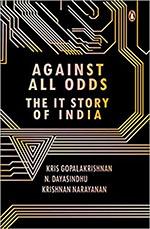
Against All Odds: The IT Story of India is written by Infosys co-founder Kris Gopalakrishnan together with N Dayasindhu and Krishnan Narayanan who have also been associated with Infosys in the past. Dayasindhu and Narayanan also run Itihaasa which is a non-profit funded by Gopalakrishnan and others to record oral histories of the people associated with the IT industry.

The internet has taken over unexpectedly and unwelcomed by many, but it’s here to stay. The pandemic has demonstrated how easy it is to access entertainment online, even when the world is shut down. However, the advertising industry seems stuck in a one-size-fits-all approach. While every brand has its appeal, they need to understand that every creator has their own appeal too. In the creator-verse, makers have created their own parallel universe of content, from everyday observational comedy to political satire to pranks.
Chris Bail
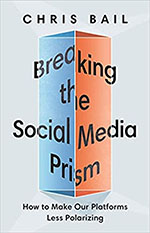
Chris Bail’s Breaking the Social Media Prism: How to Make Our Platforms Less Polarizing is an attempt at understanding and breaking the social media echo chamber. Bail is a Professor of Sociology, Public Policy, and Data Science at Duke University, where he directs the Polarization Lab. At the lab the team endevaours to diagnose the problems with social media platforms using scientific research and builds new technology to reverse the course. Over the years, the team has collected hundreds of millions of data points that describe the behaviour of thousands of social media users over multiple years.
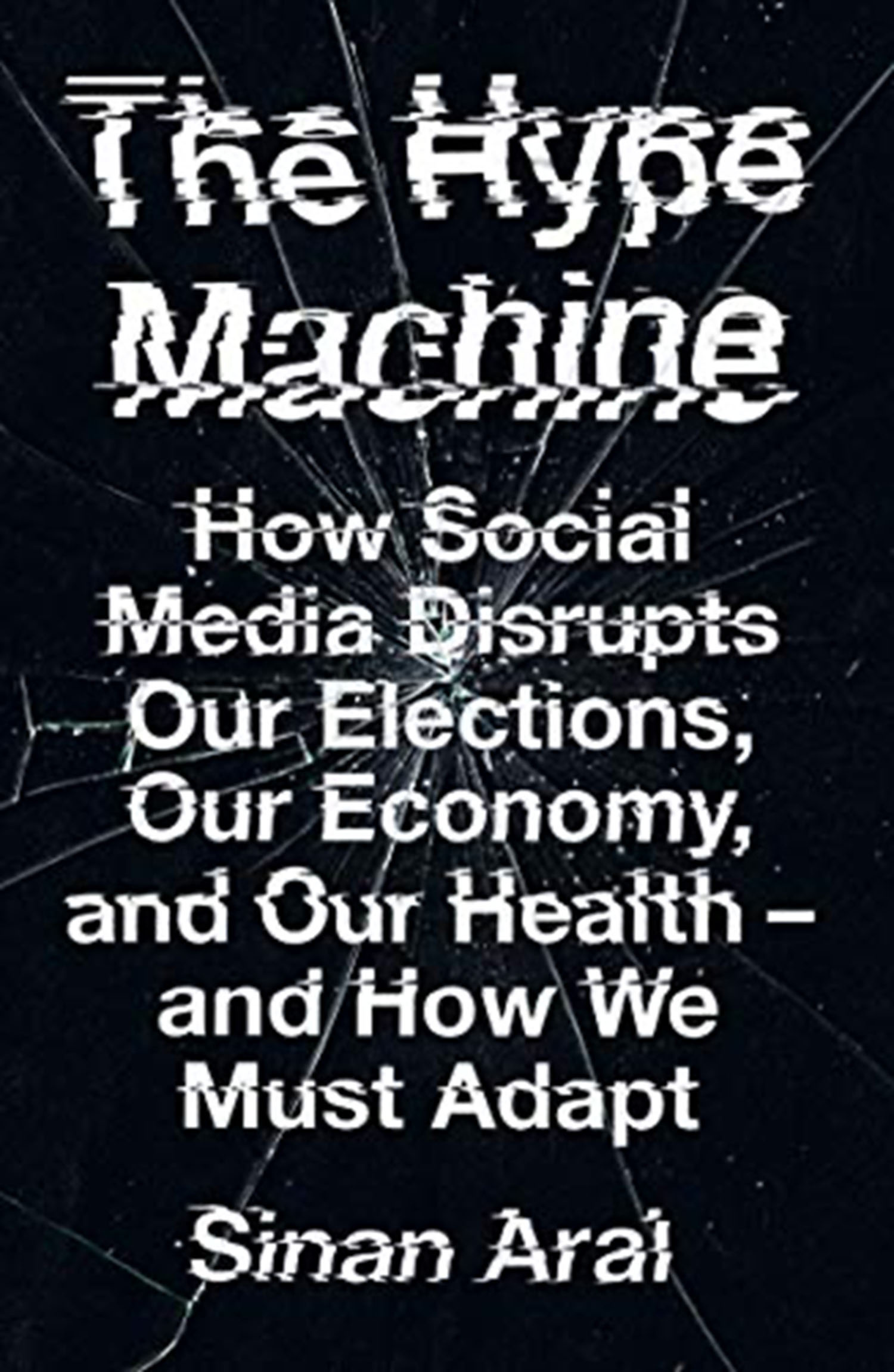
Sinan Aral
Sinan Aral in his book delves into the complex relationship between humans and social media. He describes the communication ecosystem created by social media as the ‘Hype machine’ and examines its potential for both promise and peril. Aral provides an ‘insider perspective’ and offers insights on the inner workings of social media, while also addressing its impact on decision-making, choices, and society.
Nicholas Kardaras Ph.D
2022
It requires peculiar skill to write an empty book about one of the biggest burning issues of our time. Nicholas Kardaras’s tedious, grating and sermonistic Digital Madness riffs and rants on the ills of our hyper-connected digital-first world without offering new information or insight. It took me back to the early days of the pandemic when India’s Prime Minister Narendra Modi urged citizens to take a stand against the Coronavirus
Gaurav Mandlecha and Durjai SethiPan
The Indian start-up ecosystem is known for its cutthroat competition. With an increasing number of start-ups entering the market, the level of competition has become extremely fierce. It is not just about having a great idea, but also about executing it well, and that too in a crowded market. Entrepreneurs are constantly facing the challenge of standing out from the competition, and it can be difficult to attract the necessary investment and talent to grow their business. Additionally, the Indian market is known for its price sensitivity, which can make it hard for start-ups to build a sustainable business model.
Dhruv Nath
At a time when India’s start-up scene is thriving and its founders are making headlines for their tenacity and inventiveness, this book, an engaging result of the ‘bearded professor’ generously spilling the beans on his decades of expertise, is a good addition to the literature for those of us who are interested in the nitty-gritty details of running a company.The author starts with the concept of a ‘Dream Founder’, taking us through real life stories of Instamojo and ‘iDream’, the latter a start-up providing educational solutions to rural India.
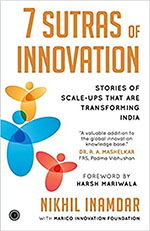
Nikhil Inamdar
This winter when I came across an appeal for donation of woollens and other material from an NGO on an online platform, instead of scrolling down listlessly, I was quick to devise a plan to source these from my locality and deliver them to their centre. The trigger behind the action came from Nikhil Inamdar’s powerful narration of the organization’s backstory that created an understanding of how small steps can lead to a big impact for communities at large, in ways which we clearly are unaware of and perhaps too immersed in our urbane, rushed lives to care for.
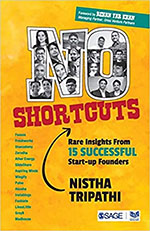
Nistha Tripathi
Right off the bat, what makes Nistha Tripathi’s book stand out among others on entrepreneurial journeys is its sincerity. Through its 300-odd pages, and the conversations with 15 exceptional entrepreneurs, Tripathi manages to cull some remarkably perceptive observations about thinking like an entrepreneur and acting upon impulse and rational thought alike to create products and services that carry the stamp of extraordinary minds, be they ultimately successful or not.
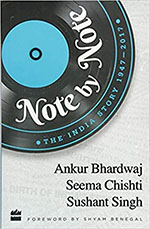
Ankur Bhardwaj
If India had one film song as its soundtrack, what would it be? Jinhe naaz hai Hind par woh kahaan hai from Guru Dutt’s Pyaasa? It gets my vote, but it is a tribute to the richness of Hindi film music and to the depth of Note by Note: The India Story 1947-2017 by Ankur Bhardwaj, Seema Chishti and Sushant Singh, one of the most innovative books I’ve read recently, that it doesn’t figure as the song of the year in 1957. Another song from Pyaasa does, however, the brilliant Yeh duniya agar mil bhi jaaye toh kya hai, also written by the great Sahir Ludhianvi.
In May 2005, the mighty AC Milan considered to have the best defence in the world and had the best player in the world (Kaka), met with Liverpool Football Club, who were thinking how in the blue hell they were the finalists of the toughest football competition in the world, The Champions League. For those who don’t know, The Champions League final has as much viewership, if not more, as a FIFA World Cup final.