
Raji Narasimhan
You know that a discipline has come of age when academics and practitioners talk the same talk. They discuss approaches and strategies to and of their common area of interest, and find that they are actually on the same page and not at the extreme ends of the spectrum.
David Davidar
2015
The book under review is an anthol¬ogy of short stories put together by Indian novelist and publisher, David Davidar. The collection is inimitable with thirty-nine short stories by literary giants like Rabindranath Tagore, Munshi Premchand, R.K. Narayan, Saadat Hasan Manto, Thakazhi Sivasankara Pillai, Vaikom Muhammad Basheer…

K. Natwar Singh
Natwar Singh’s book is like the man himself—to the point, sparse and understated. It covers mostly his public life and carefully spans over the pri¬vate in measured words. If there are expecta¬tions that he will ‘spill the beans’ and come out with juicy details over private life happenings…
Malavika Karlekar
Malavika Karlekar has produced an¬other work for the ‘Common Reader’, as Virginia Woolf called the general reader, who would have special¬ized or lay interests in a multivocal world. Colonialism has been read for the last hun¬dred years from many vantage positions. What Karlekar attempts to do is to compress her erudition, while dispensing with foot¬notes…
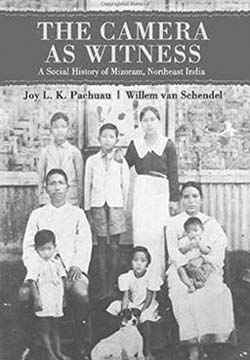
Joy L.K. Pachuau
As a narrative which relies on photographs to communicate, The Camera as Witness is a remarkable book of history. Possibly one of the first academic history writings of its kind on North East India, it traces the history of Mizoram from the colonial to the contemporary times.
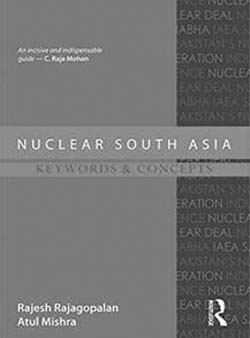
Rajesh Rajagopalan
The book is a long awaited one on three counts. One is that it fills a gap in South Asian strategic affairs literature and on that score will be valued by students and initiates among the attentive public.
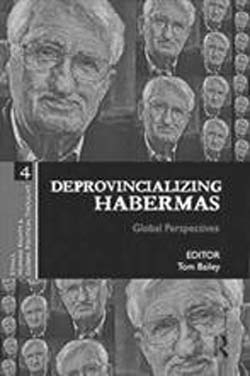
Tom Bailey
Jürgen Habermas has been a sine qua non social theorist of contemporary times. Habermasian political theory is one of the critical/crucial defences of modernity in the era of absolute subjectivism and sheer positivism. Habermas defies time and space. His ‘universal’ is eternal and location free.
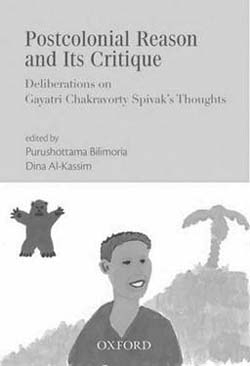
Purushottama Bilimoria
The conversation around Gayatri Chakravorty Spivak’s seminal work A Critique of Postcolonial Reason: Toward a History of the Vanishing Present refuses to die down.
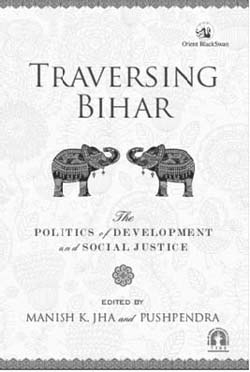
Manish K. Jha
Traversing Bihar portrays Bihar’s internal contradictions and struggles and is an attempt to interpret some of the paradoxes existent in contemporary Bihar.
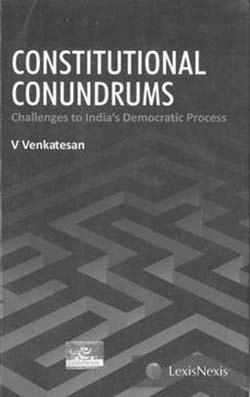
V. Venkatesan
Ideas and practices associated with India’s living document, the Constitution of India have remained central to the political imagination and assessment of democracy in contemporary India. Recent writings on ideas, institutions and processes in Indian politics have attempted to foreground the language of democracy in deliberations involved in the making of India’s Constitution.
Anupam Chander
The argument for an electronic silk road, promoting free trade and by extension, harmonious global values and laws, is an inherently appealing idea to all digital natives used to an ‘open web’ experience.
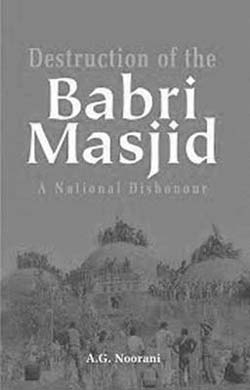
A.G. Noorani
Public memory is short. A regime of public accountability requires safe-guards against the brevity of memory. For a nation such as India, where the governmental presence is looming and large, disclosure norms are of recent vintage and their functioning leaves much to be desired.
Tabir Kalam
For several decades now, historians have hotly debated the socio-economic and political developments in the eighteenth century in South Asia, with some viewing it as a period of chaos and decline, and others describing it as marked by economic growth and socio-cultural efflorescence.
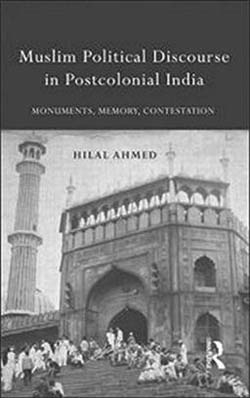
Hilal Ahmed
For many observers the destruction of the Babri Masjid in 1992 stands as a pivotal event in turning India from a pluralistic and secular society to one founded on a monolithic concept of ‘Hindu’ identity.
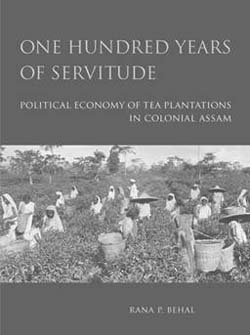
Rana Behal
Before North East India got identified with political unrest, Assam was known for its tea. In fact Assam teas a global brand name. It took years of frantic search, botanical experiments, massive entrepreneurships, colonial machinations and above all the blood and toil of millions of labourers to create that brand name.
Shukla Sanyal
To get rid of poison, a stronger dose of poison is required. This poison is Revolu-tion.’ This powerful message, among many others, from revolutionary literature of early twentieth century Bengal sought to impress upon people that colonial rule was irredeemable and only a revolution could bring change.
Harleen Singh
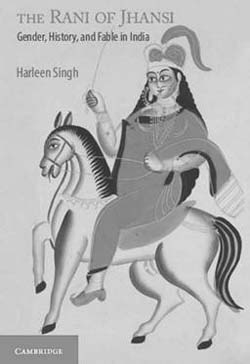
Rani Lakshmi Bai of Jhansi is perhapsthe most prominent of the iconic figures of the revolt of 1857. Her outstanding heroism became the subject of alarge number of literary productions fromthe late nineteenth century onwards. It is atheme that continues to interest novelists,producers of comic-books, and film-makersdown to the present day.
Richard Hartz
Globalization: the word is hardly fifty years old but the process has been going on for a very long time. Scholars generally trace its origins to the early seventeenth century, but it is possible to go back much further.
Qaisra Shahraz
2015
Typhoon is the story of three women with different backgrounds, though connected by the manner in which past plays a critical part in their lives. Naghmana is a glamorous woman from the city, Chaudhrani Kaniz, a land baron based in a village, and Gulshan, an innocent homemaker.
Aditya Sudarshan
Many years ago I was on a highway driving happily towards a friend’s house for dinner. Well into the trip I realized that I failed to come across any of the landmarks cited by my friend. When the friend called to enquire how I was coming along, I told him that I had good news and bad news. The good news was that I was making very good time, and the bad news was that I was horribly lost.