

Shakeei Hossain
The book under review catalogues the exhibition with the same title held in 2013 in New Delhi, Rampur and Lucknow. This beautifully illustrated book brings together the rich diversity within Amir Khusrau’s work which is seminal in creating a sense of urban heritage.
Rabindranath Tagore
2015
It is said that Rabindranath Tagore had himself remarked that his play Chirakumar Sabha could never be translated. According to him, audiences could misinterpret the relationships presented in the translated play.
Mamang Dai
Mamang Dai’s recent novel The Black Hill is fascinating. Written in the genre of historical novel, it is an account set in the middle of the nineteenth century among the Himalayan societies of present day Arunachal Pradesh.
Kalyan Ray
2015
‘And I quit life as I would an inn, not a home, for nature has given us lodging for a sojourn, not a permanent residence’. (Cicero) No Country, Part III, ‘Brendan: “Rose of Erin”’
K.R. Meera
2015
I kept the company of Hangwoman, a novel by K.R. Meera for more than two months, leaving it from time to time to attend to more worldly duties.
Ziya Us Salam
The subject of films has been approached from the perspective of stars, auteurs and spectators. At other times the collaborative nature of the cinema is emphasized by bringing in the contribution, or noise, of other players which include, among others, story writers, lyricists, music directors, cameramen, fight masters, choreographers and even minor actors.
Madelaine Healey
2015
Indian Sisters: A History of Nursing and the State, 1907–2007 is a comprehensive inquiry into, and, an analysis of the attractions and challenges of the nursing profession as it evolved in India over a century.
Ashima Goyal
2015
Reconciling growth and development has decidedly been an important challenge for the Indian economy. Scholars have appraised the economic reforms since the nineties in a divergent fashion in the wake of persisting backwardness and increasing inequality.
Suhas Palshikar
The two books under discussion here analyse the fifteenth (2009) and sixteenth (2014) general elections in India, and provide an insight that beyond the shifts in voting preferences, how preferences of the Indian citizens as well as the policy allurements given by parties and leaders transform both the power structure and institutions as well as political processes in the country.
Jyotirmaya Tripathy
2015
The world today is probably far more complex than ever before. Several waves of global migration of populations have reshaped or altered ethnic composition and cultural make up of nationstates. In effect, many mono-cultural nation states have turned multicultural, multi-linguistic, multi-ethnic and multi-religious.
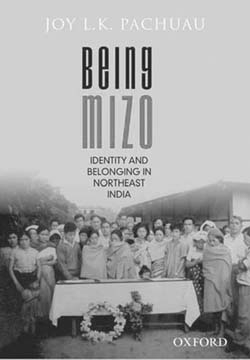
Joy L.K. Pachuau
The book under review examines the exclusion of Mizo in the national discourse of ‘diversity’ not only perpetuates their marginalization but also the creation of their identity in their own unique ways through vernacular Christianity and practices relating to death in a veng or locality.
Veena Das
This is a book about how anthropologists seek to make sense of the social worlds they choose to understand. And then how they engage with philosophy, if they do at all. Not by looking up to philosophy as providing some kind of an overarching theory about ‘life’ or to anthropology’s claim to address the particularities of everyday life. Rather, the remarkable contribution this book seeks to make lies in Veena Das’s assertion that the ‘philosophical puzzles’ that philosophers like Stanley Cavell…
Akira Shimada
2015
The site of Amaravati in the Guntur district of Andhra Pradesh has attracted a great deal of scholarly interest for over two centuries. The stupa that once stood here was among the oldest and most splendid in the subcontinent. Its structural remains and inscriptions constitute important sources for the early history of Buddhism and its exquisite limestone relief sculptures are considered masterpieces.
Santanu Das
2014–15 is the centenary of the commencement of the commitment of India’s unsung heroes to one of the world’s greatest human tragedies—the First World War. A number of books have been published and a few high profile events have been conducted at India’s national capital to mark the event, principal among them being the efforts of the British High Commission, the United Service Institution and the Indian Army.
Nandini Sundar
The book originated at a workshop in Delhi University’s Department of Sociology in 2010. Consequently it helps fill a gap in writings on internal security that are usually security related and state centric at that. The development perspective relying on human security and peace studies on conflict resolution frameworks are fast emerging as strong competitors.
justin Jones
The book under review brings together a selection of papers first presented at the conference ‘Contesting Shi’ism: Isna ‘Ashari and Ismai’li Shi’ism in South Asia’ held at Royal Holloway, University of London, in September, 2011.
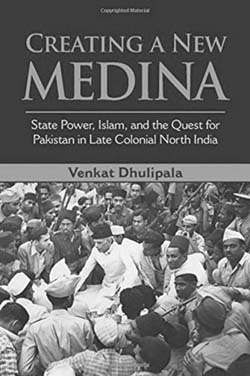
Venkat Dhulipala
2015
Venkat Dhulipala challenges what he takes to be a widespread assumption that Partition did not need to happen. It all happened so fast. Did Muslim voters who supported the League in the elections of 1945–46 really want a separate country?
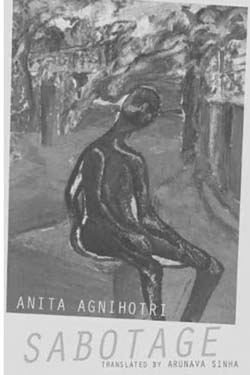
Anita Agnihotri
2015
Anita Agnihotri’s collection of short stories leaves one with a melancholic feel ing: something that occurs to every thinking individual while reading daily newspapers, but she chooses to ignore.
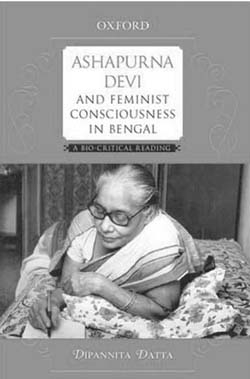
Dipannita Dutta
Dipannita Dutta’s book Ashapurna Devi and Feminist Consciousness in Bengal: A Bio-Critical Reading comes at a time when debates concerning possible trajectories of feminist politics and activism in India have critically intensified.

Yigal Bronner
The historical is not defined by the past; both the historical and the past are defined as themes of which one can speak. The historical is forever absent from its very presence. This means that it disappears behind its manifestations; its apparition is always superficial and equivocal; its origin, its principle, always elsewhere.