
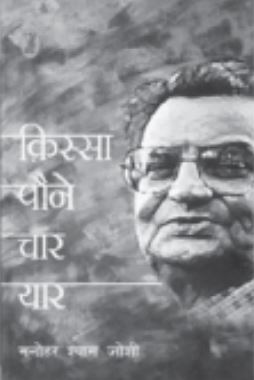
MANOHAR SHYAM JOSHI
The late Manohar Shyam Joshi (1933-2006) was an extremely talented writer who tried his journalistic hand in various directions—politics, sports, culture and films. He edited a leading Hindi weekly—Saptahik Hindustan for many years and also an English publication. At the same time, the DD serial ‘Hum Log’ penned by him was the first soap opera on Indian TV followed by ‘Buniyad’ and ‘Kakka ji Kahin’. He wrote many popular film scripts as well.
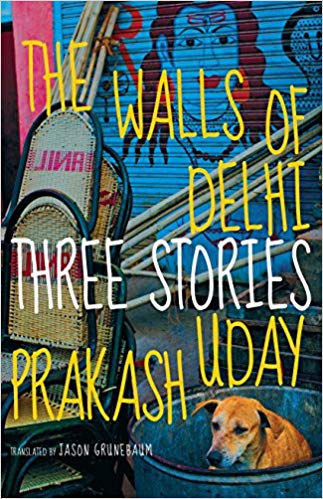
Uday Prakash
Four years ago Harsh Mander wrote a book called Looking Away. At the very beginning he quoted Martin Luther King. It’s a quotation worth remembering. King said, ‘Never, never be afraid to do what is right. Society’s punishments are small compared to the wounds we inflict on our souls when we look away.’
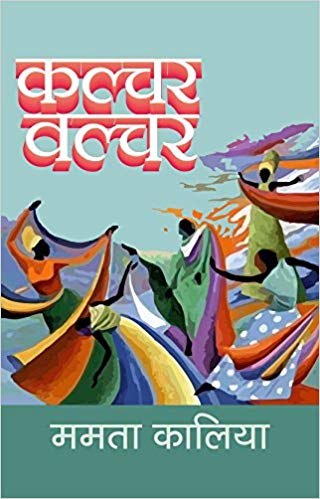
Mamta Kalia
2017
Sushma Agrawal is beautiful, charming and rich. She dresses in subtly-hued saris of unique artisanal design and is the Minister of the Sahitya Sanskriti Bhavan (The Centre for Literature and Culture) in Kolkata. She is also the villain of Mamta Kaliya’s caustic 2018 Hindi novel Culture Vulture. It was originally released serially for the Hindi journal Hans, and its wandering, episodic construction reflects those origins.
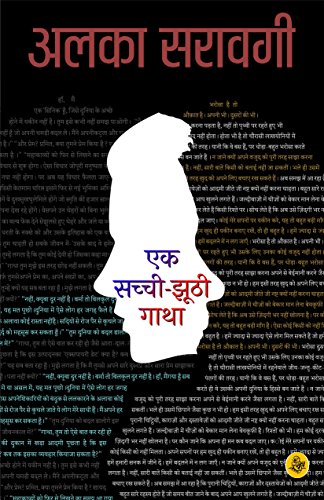
Alka Saraogi
Alka Saraogi’s latest novel is a poignant, layered and textured twenty-first century love story which examines the nature of illusion and reality—especially in the virtual world—appearances, violence, vulnerability and torment. It is the record of an interaction between a man and a woman who meet in cyberspace and the unexpected journey of discovery that Gatha, the female protagonist embarks upon.
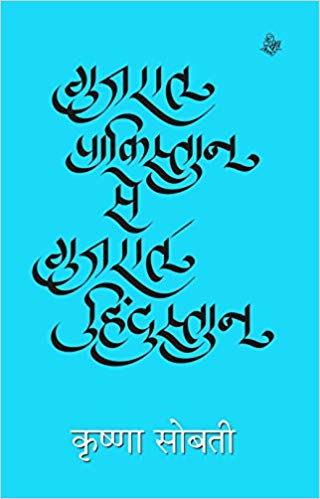
Krishna Sobti
Every once in a while, a great writer provides a glimpse into her life, and what that reveals may not be profound but its banality may have new lessons for us. As I read this book not only for the purposes of the review but also to understand what else Partition literature could possibly tell us, I have come away with a single word that will stay with me beyond the life of the book.
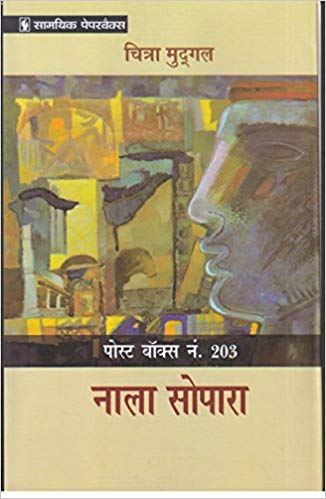
Chitra Mudgal
In Nala Sopara: Post Box No. 203, a trailblazing Hindi epistolary novel about the insensitivity of the society towards hijras (transgender), the Sahitya Akademi Award-winning writer, Chitra Mudgal, takes us into the life of a young transgender, Vinod, who challenges the notions of the homophobic society at great personal cost. An immaculate storyteller, Mudgal highlights not only the silences around the complexities of gender and sexuality by mapping out the constraints…
Phanishwar Nath Renu
Phanishwar Nath Renu (1921-1977) is among the most loved authors of contemporary Hindi literature, particularly for his brilliant first novel Maila Anchal (1954) and celebrated short stories like Tisri Kasam (The Third Vow), Raspiriya and Panchlight. Some of the short stories and Maila Anchal have been translated into English, together with Renu’s short novel Kalankmukta. His second novel Parti Parikatha has long remained in Maila Anchal’s shadow.
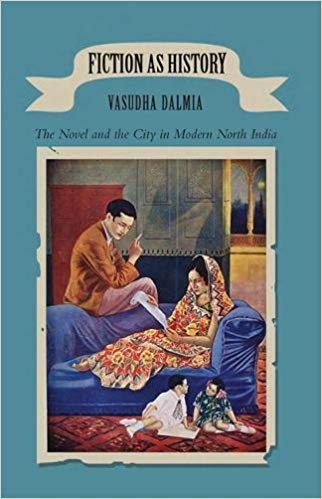
Vasudha Dalmia
Focusing on eight Hindi novels, Vasudha Dalmia’s new work traces the emergence of a modern urban culture in North India and the changing shapes of its political, aesthetic, and moral concerns. Beginning with Pariksha Guru by Lala Shrinivasdas (1882), the book engages, successively, Premchand’s Sevasadan (1918) and Karmabhumi (1932), Yashpal’s Jhuta Sach (1958, 1960), Agyeya’s Nadi ke Dweep (1948), Dharamvir Bharati’s Gunahom Ka Devata (1949)…
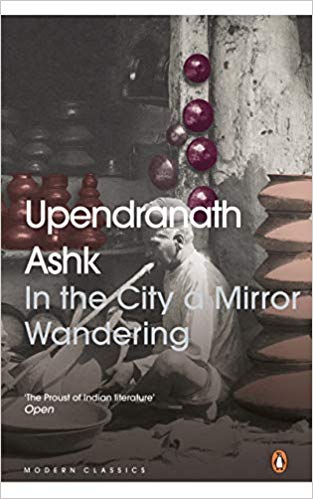
Upendranath Ashk
Perhaps it is inevitable that every generation claims newness. It is really the task of scholarship to give validation and depth to such claims in literary grouping such as the Nayi Kahani (the new story) of the nineteen fifties and sixties. The analysis would move from simple claims to a larger exploration of what the distinctive voice or quality of the work is; it would be less interested in newness (is anything ever meaningfully new or old?
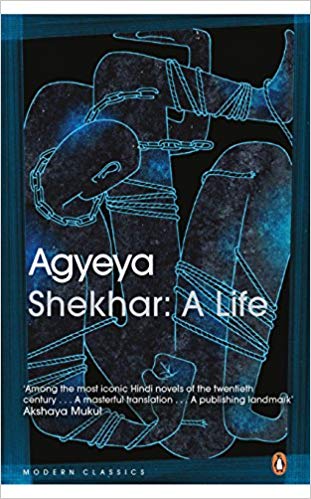
Agyeya
2018
The publication of Shekhar: A Life marks a major event in the growing body of Hindi literature available in translation in English. Not only should this be considered an important work from two of the most prominent translators of Hindi and Urdu working in English today, but it also fills a crucial gap in our understanding of Hindi modernism. Originally published in Hindi as Shekhar: Ek Jivani, the book, along with very different works such as Premchand’s Godan…
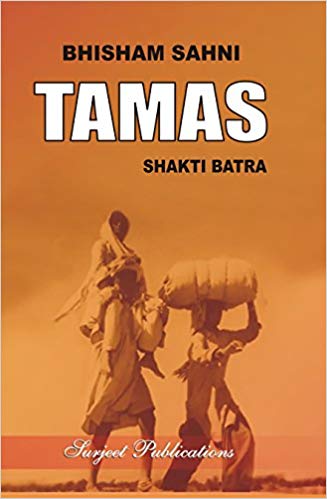
Bhisham Sahni
2018
There are at least two (likely more) common criticisms that are made of translations. The first and perennial one is that translation necessarily betrays the original, that it fails in a fated, deep way to honour the unique problem that meanings created in one language cannot cross the Lakshman Rekha into the alien and threatening universe of another. The second and perhaps equally vexing one is that when dealing with non-European languages, where more than one translation of a text is highly unlikely, a translation that makes a mistake is unforgiveable.
Mrityunjay Tripathi
All living literary traditions have not only a present and a future which are yet fully to unfold but equally so a past. A literature which does not continually interrogate, revise and reinscribe its past palimpsestically may not have much of a future to look forward to, for in literature the past never really passes away.
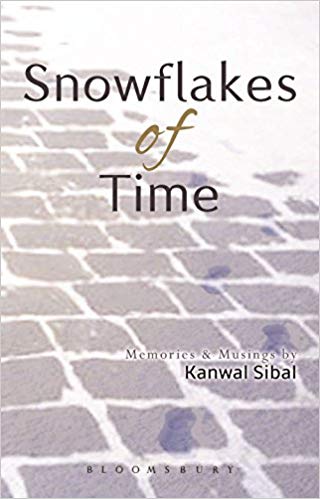
Kanwal Sibal
Snowflakes of Time is a collection of about a hundred poems divided into eight sections, presumably to separate them by themes. The author is a former Foreign Secretary of India. The compartments are not watertight. The sadness of ‘Time passed’ and ‘What might have been’ runs through a good number of poems in different sections. Also what the writer calls his communion with nature.
Andrew Schelling
Translation in poetry becomes essential not only for bringing a work to a wider audience but to begin a literary and a cultural discussion. This is where the role of a translator becomes an important one—serving as a bridge between the poet writing in his/her language and a reader who will read it in another language. It is extremely difficult to transport the cultural and the literary baggage of one language and load it onto another.
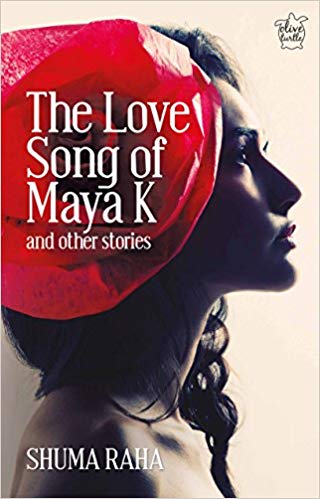
Shuma Raha
Short story writing is not everybody’s forte. The author has to do a tightrope walk while trying to say so much in so little. This genre, which is increasingly getting popular along with other extreme variants like flash fiction and micro fiction is undoubtedly a reflection of our busy times. Shuma Raha’s book makes up a fascinating and enjoyable series of 13 short stories about ordinary men and women.
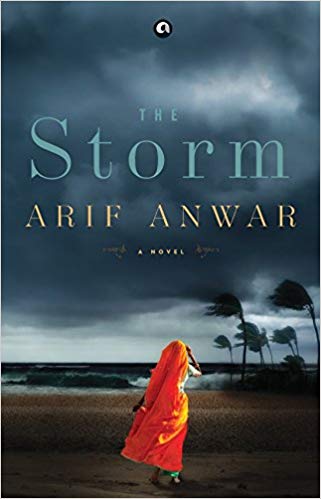
Arif Anwar
2018
‘The interior is ten paces on each side. At the far end, dimly lit by the hole-ridden roof, is a fiercely beautiful woman. Tall, with midnight skin, she wears a garland of severed heads, a skirt of limbs. Her rolling tongue reaches beyond her chin to point to the vanquished demon she tramples underfoot.
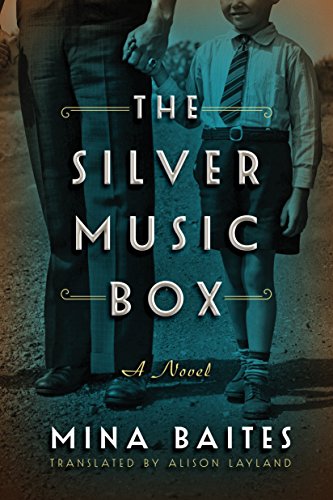
Mina Baites
For a historical novel purportedly attempting to tell an intergenerational, transnational tale of the fortunes of a German Jewish family torn apart by the two world wars and the Holocaust, The Silver Music Box by Mina Baites, it must be admitted at the outset, disappoints sorely.