
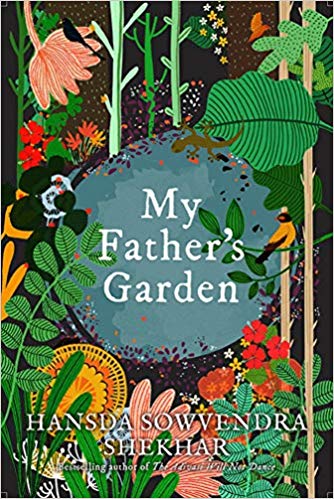
Hansda Sowvendra Shekhar
Hansda Sowvendra Shekhar’s My Father’s Garden, advertised on the jacket as the latest of ‘a major talent of Indian fiction writing at the top of his form’, is supposed to be the biography of a young doctor. It spans half his life, narrating his negotiation of ‘love and sexuality, his need for companionship, and the burden of memory and familial expectation’.
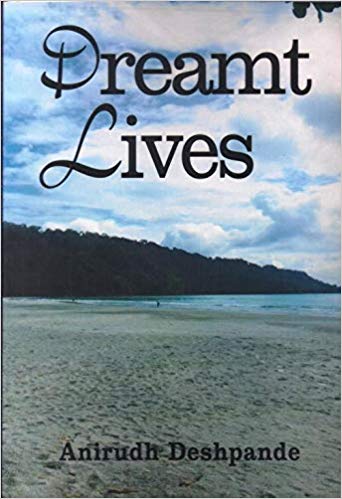
Anirudh Deshpande
2018
Dreamt Lives by Anirudh Deshpande, a historian of modern South Asian history, represents an attempt by the author to transcend his field of expertise which is based on sources, referencing and corroboration to a space quite the opposite of it: fiction. History and literature as disciplines, historically, have an uneasy relationship as under the postmodernist impulse the former was reduced and ridiculed to be fiction of the historian’s imagination…
Vasanth Kannabiran
Vasanth Kannabiran’s book offers a rich and rewarding reading experience. The writer intended each of the five pieces to be ‘shaped into music and dance’, in order to be performed as ballets in the Bharatanatyam tradition. But they also merit their own rightful place as works of literature.
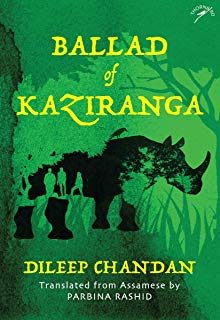
Dileep Chandan
2018
Kaziranga! The very name spells magic. Deep dark forests, filtered emerald-green sunlight, large acres of open grassland, swamps and wetland, and thousands of animals and birds coexisting in celebration of the splendid glory of nature. Spread across over 400 sq km, Kaziranga is home to several protected species of animals: among them the tiger (its largest concentration in the world is found here), the wild elephants, the water buffalo, the swamp deer, many species of birds, and most famously, two-thirds of the world’s one-horned rhino population.
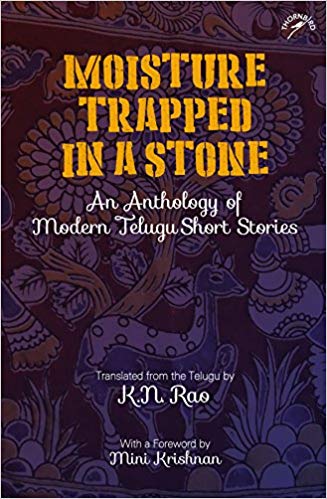
K.N. Rao
The problem with a multicultural and multilingual nation like India is that most of the time we are alien to the works published in the different bhasha literatures other than our own mother tongue. Thus the link language becomes English and the only way to savour the rich heritage of our regional fiction is through translation.
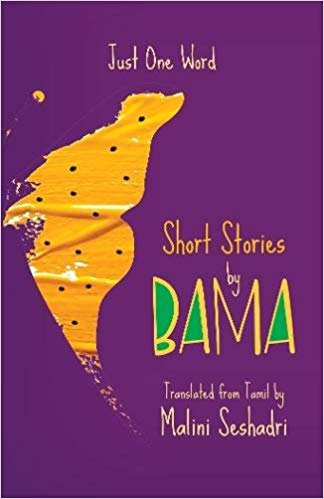
Bama
The Tamil Dalit woman writer Bama has been a phenomenal name in the contemporary Dalit literary terrain. Widely celebrated for her life-writing Karukku (which completed its 25th year of publication in December 2017), her recently published book Just One Word, a compilation of fifteen short stories translated from Tamil into English by Malini Seshadri heralds a new chapter in her literary life.
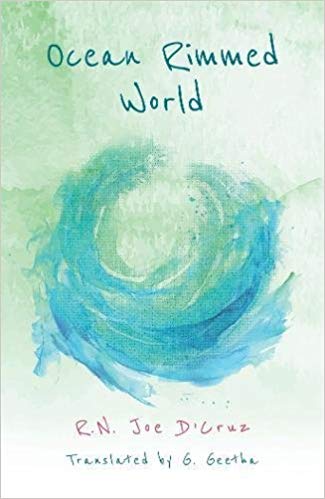
R.N. Joe D’Cruz
Ocean Rimmed World by Joe D’Cruz, ably translated by G Geetha, is the story of a way of life. True, it is an insider’s account tracing life as it was lived in a Tamil Catholic fishing community of Parathavars in Uvari, a village near Thoothukudi. But its sweep and depth is a tribute to the way people lived as communities barely a few generations ago.
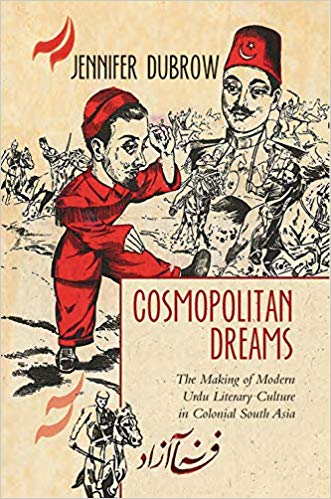
Jennifer Dubrow
The arrival of commercial print in the 19th century, across the subcontinent allowed for the emergence of the professional writer, one who could make a living from writing alone. Where professional poets and writers had earlier subsisted on patronage from kings and nobles, the 19th century created opportunities for a writer to make a living from the market.
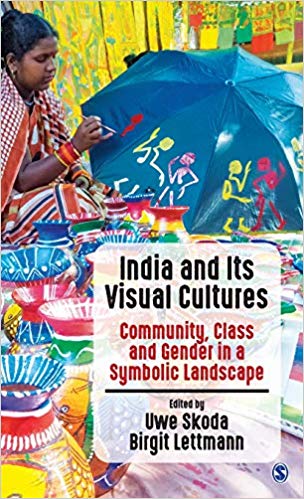
Uwe Skoda and Birgit Lettmann
This volume edited by Uwe Skoda and Birgit Lettmann is a significant contribution to understanding the visual media. It moves away from the approach taken by Gayatri Sinha in a previous book published in 2009 called Art and Visual Culture in India, 1857-2007 which primarily located visual culture within art and art history. Skoda and Lettmann’s edited volume…
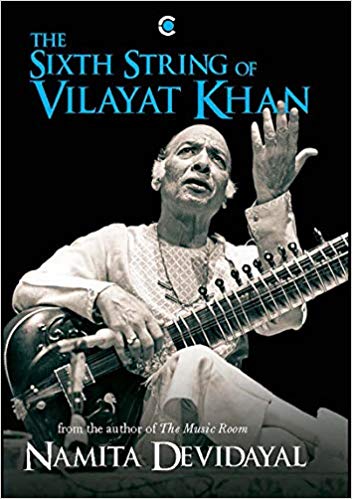
Namita Devidayal
Three great sitarists blossoming in the second half of the last century—Ravi Shankar, Vilayat Khan and Nikhil Banerjee—enriched our instrumental music tradition decisively. Their personalities, largely shaped by their background and upbringing, were very different, as was their impact on the public psyche, at national and international levels. But for his untimely death, Nikhil Banerjee would have also had a much wider audience and perhaps been as acclaimed as the other two.
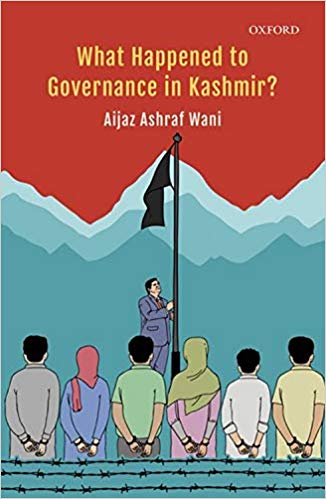
Aijaz Ashraf Wani
The Kashmir conflict, since the beginning, has posed many challenges to the Indian state and the narrative it propounds. Even though experts and academics have often tried to focus on the security dimension of the conflict, the failure to link governance with conflict has not received much attention. It is taken as a given that governance will take a lead once the security dimensions are resolved. Security gets prominence over governance then.
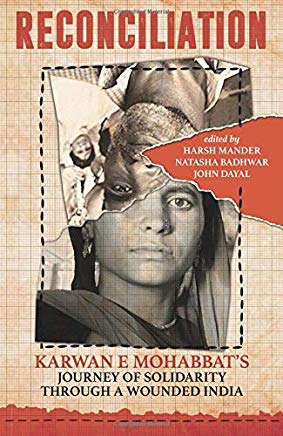
Harsh Mander
This volume is a slightly rushed attempt at collecting the findings about the lynching, hate crimes and rise of cow vigilantes that have stormed the news in India over the last few years. It details the violence that has surged against Muslims, Dalits and other lower castes. While doing so, many writers take pains to establish the even more vulnerable position of women, children and the aged belonging to these backgrounds and families.
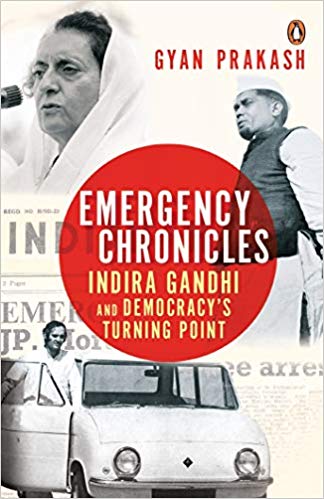
Gyan Prakash
Emergency Chronicles fills a void among the available scholarly works covering the period of what was an ‘aberration’ in Indian politics. In this riveting work of impressive archival research, Gyan Prakash lifts the curtain from the evolutionary sequencing of events leading to June 1975—the day Emergency came into force—and uncovers the everyday governing apparatus of a then proto fascist—if not a full blown fascist-government…
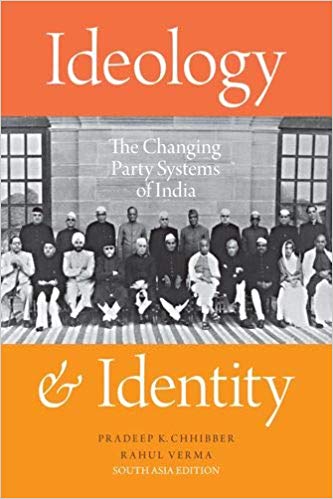
Pradeep K. Chhibber
Party politics in India has often been characterized by observers as being patronage-based, chaotic and opportunistic, driven largely by interests of office seeking politicians rather than ideology. This in turn is assumed to have led to corruption, rent-seeking and clientelistic behaviour rather than broad-based programmatic delivery of public goods. Literature also refers to Indian politicians adopting particularistic appeals based on voters’ identity such as caste…
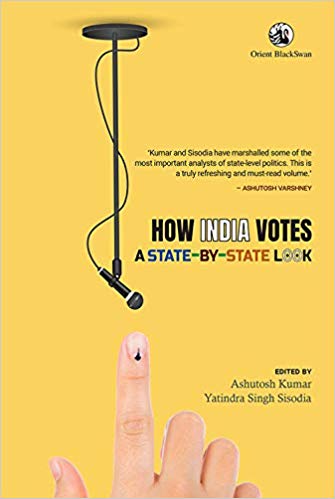
Ashutosh Kumar
The historian Ramchandra Guha had once observed that two of the things that keep India together are cricket and Bollywood. If one were to think of a third unifying element it would undoubtedly be the national election. However, despite its pan-India appeal and its consistency in attracting wide public participation, it is surprising that the national election in India has not received the kind of nuanced attention that it deserves.
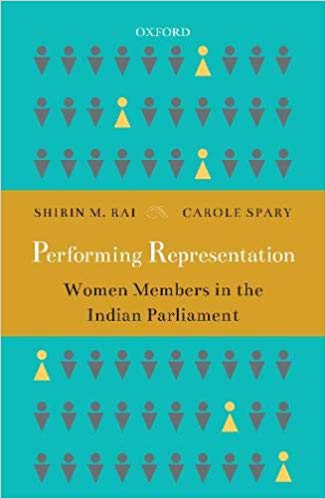
Shirin M. Rai
The book under review may appear as an ambitious project. What the authors attempt to address here is the complex puzzle of Indian democracy through their multi-modal enquiries into questions of gender and representation. True to their ambitions, these worthwhile attempts have led to a distinct contribution to the contemporary debates on gender and politics in India and elsewhere.
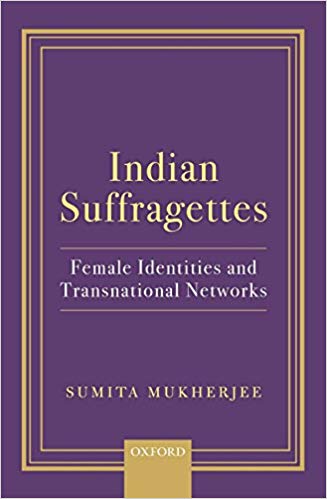
Sumita Mukherjee
The suffrage movement marks a watershed in the history of women’s movements and continues to inspire feminist contestations across the world. However, all forms of delineations and depictions on the suffrage movement, whether in academia or popular culture, exclusively focus on the role and struggles of the women in the West. In her extensively researched work, Indian Suffragettes…
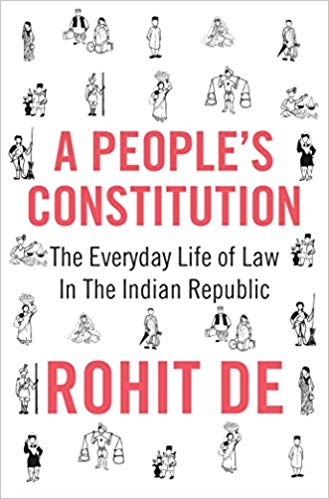
Rohit De
Way back in 1985, I got a call from an agitated lawyer friend. He wanted me to mobilize opinion against the newly passed Administrative Tribunals Act, which took away the jurisdiction of the Supreme Court and the High Courts over service disputes of public servants, and vested it in administrative tribunals. The power of constitutional courts was being handed over to statutory tribunals, which did not even need to have judicial members on the bench.
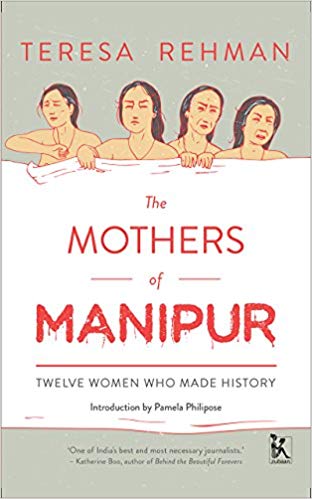
Teresa Rehman
Rehman’s book aims to document the landmark event of the Kangla protest, as well as its political and personal aftermath, through the voices of the twelve Manipuri women who took part in it. It is true that the twelve activists, otherwise known as the twelve imas (meaning ‘mothers’ in the Manipuri language), have spoken numerous times and at length to journalists, researchers and scholars about their experiences in the years following 2004.
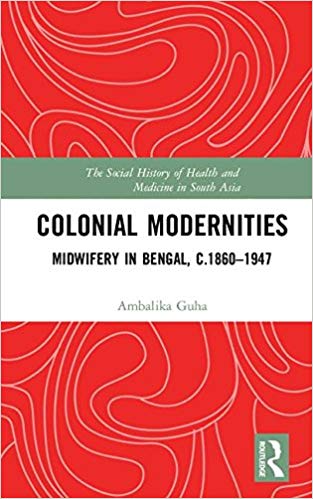
Ambalika Guha
Ambalika Guha has produced an excellent study on the powerful interplay between colonialism, nationalism, modernity, medicine and midwifery in colonial Bengal (c. 1860-1947). Unlike the dominant scholarship in the field, Guha emphasizes the roles that both male and female doctors, and not female doctors alone, played at the pedagogic and interventionist levels respectively in the development of midwifery and obstetrics in Bengal…