
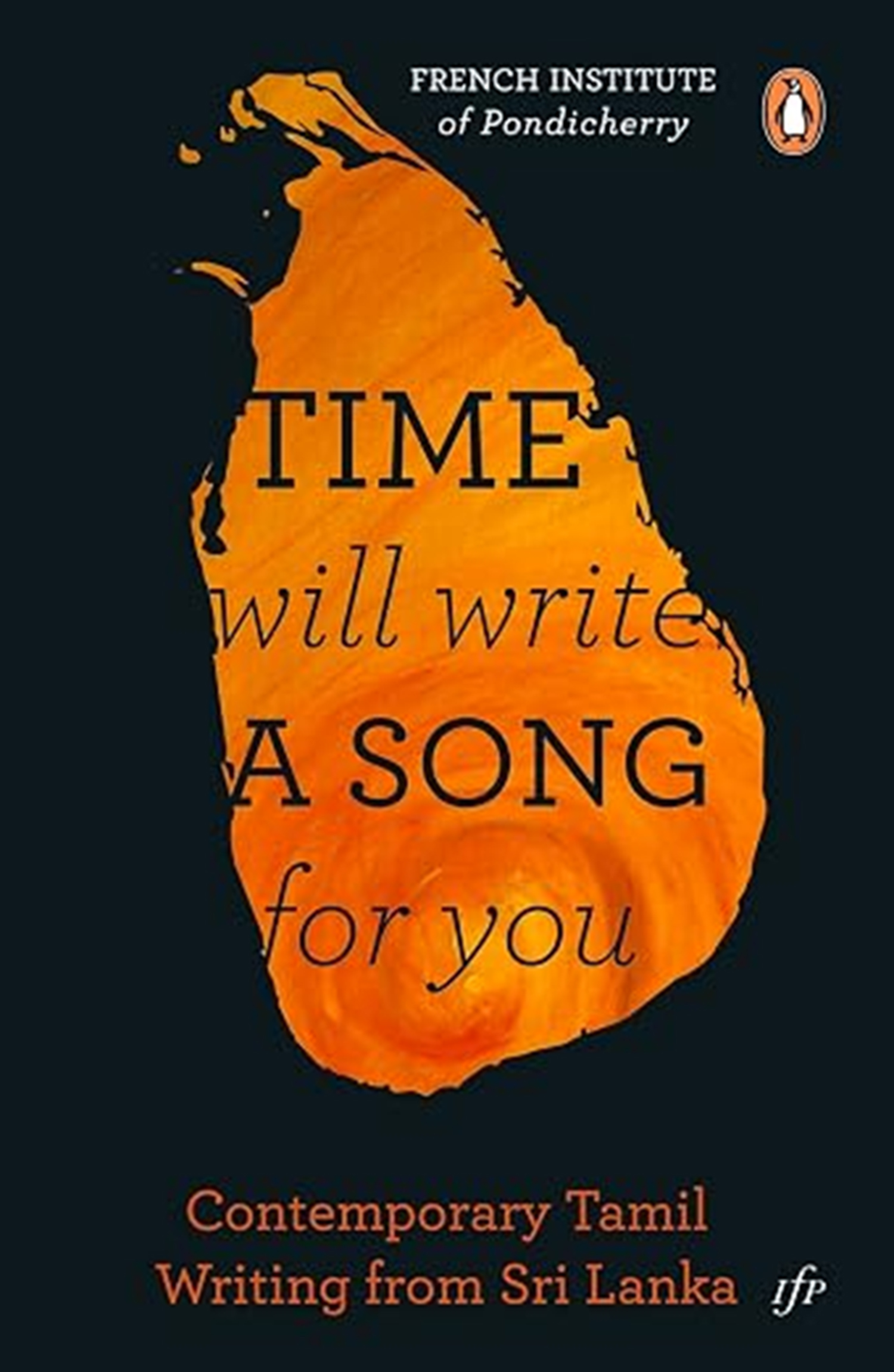
Anthologies are usually evaluated by the writers they include and the conversations they create. Time Will Write a Song for You: Contemporary Tamil Writing from Sri Lanka is not merely an assemblage of Sri Lankan writing in translation but a carefully orchestrated literary conversation in which fiction, poetry and memoir illuminate each other and allow the reader to encounter not just the history of a land and its people but also the imaginative forms through which that history lives.
The editors opine that translation itself is an act of literary criticism. The introduction negates the claim that translation merely transfers meaning from one language to another. They describe it instead as ‘an act of learning, of reading and writing’. This seemingly simplistic formulation becomes the anthology’s governing principle. Here English is not asked to replace Tamil: instead, it is asked to listen to it. The translation retains the cadence, repetitions and the emotional restraint of the original texts thereby allowing another literary tradition to remain audible beneath the surface of English.
Aptly, the anthology begins with a poem by Mahakavi, ‘The Temple Car and the Moon’, suggesting an inspired editorial choice.
Rather than beginning with political turmoil, the volume begins with a ritual. An ordinary community scene in which people gather to pull a temple chariot. The invitation, ‘let’s take hold of the rope,’ imagines for a brief moment the collective belonging of the community before it fragments into exclusion and violence. The poem never explains the social fracture that interrupts the procession. It instead offers an unforgettable image: ‘the temple car lurched forward to a halt as if it had grown roots.’ The metaphor extends beyond the poem to cerebrally pause to ponder how faith, community and history are simultaneously immobilized, not by any external force but by fractures within the social fabric itself. The anthology loudly announces from the opening pages that it trusts the image more than the argument. This trust in suggestion more than declaration runs throughout the collection.
Ranjakumar’s title story opens with a sense of urgency. The story’s achievement lies not in its action but in its rhythm. Repeated words, ‘Ready…Ready…Ready’ and interrupted thoughts recreate the body’s own apprehension of danger. Rain accompanies the narrative with uncanny persistence. If at one moment, ‘The rain was blessing them’, elsewhere ‘the sky was looking at us with thunderclaps of laughter’. Nature is represented neither as consoling nor as condemning. Instead, it witnesses. Landscapes are not sceneries but archives in which human histories are absorbed.
Equally interesting is the story’s refusal to monumentalize its characters. The young militants in the story are not made into heroic icons. They typically hesitate, tire, yearn for companionship and reluctantly continue despite the uncertainty of their futures. Their humanity remains intact, because the narrative refuses rhetorical excess. The story reminds one that courage is often indistinguishable from endurance.
In another section of the anthology, memoirs reconstitute a world that official history does not preserve. A recalled friend, a classroom, a journey along a familiar road, birds returning to trees and conversations ended abruptly by the war accrue into an emotional story that political chronology cannot record. These narratives do not compete with history but restore history to its human scale.
The poems in the anthology deepen this movement from events to remembrance. Cheran’s ‘Heroes Rest Here’ is striking in the way geography becomes memory. The memorial is not separated from ordinary life, it is embedded within fields, settlements and pathways. While the dead remain part of the landscape, the landscape meanwhile becomes the keeper of their presence. It is the poem’s restraint that gives it authority. Here, mourning is never announced, it is simply allowed to inhabit the land.
The book’s enduring success would be its insistence on the ordinary. Conflict in the land is never allowed to eclipse everyday existence. So, the monsoon, the children playing, the palmyra groves, the gossip, the familiar road and the temple festivals all make their appearance. They are not embellishments. They are a constant reminder that violence and conflict are never experienced in the abstract but within the fragile continuities of daily life. The anthology resists the framework of depicting an entire people solely through suffering.
The editors deserve credit for preserving its tonal complexity. Their selections move across generations, genres and sensibilities without imposing an ideological framework. The outcome therefore is not a volume of nationalist writing or of victimhood. It is an anthology of literary voices. This distinction matters. The volume asks to be read not because the writers witnessed history but because they transformed their experiences into art.
If I wished for anything more from the volume, it would be a fuller editorial afterword that reflects upon the principles guiding the selection of texts and the praxis of collaborative translation. Such a reflection would have enriched an already valuable volume by making visible the editorial conversations that underpin it.
Time Will Write a Song for You expands the map of South Asian literature in English without announcing its importance. It lays trust on its readers to discover connections across genres and literary types, to trust translations to preserve differences, not to exoticize them, to trust history as historiography and to trust literature to preserve the cadence of speech, the memory of rain on village roads and the lives that continue long after history has turned its page. That is the success of this anthology and the reason its songs continue to be heard.
Anupama Nayar CV is Associate Professor, Department of English and Cultural Studies, CHRIST (Deemed to be University), Central Campus, Bengaluru.