
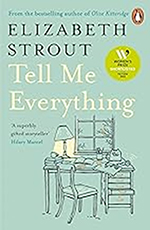
Elizabeth Strout’s Tell Me Everything is a novel about the stories we share, the ones we keep to ourselves and those that quietly shape our lives without anyone knowing. The story takes place in the small coastal town of Crosby, Maine. It brings back some of Strout’s most well-known characters, such as Lucy Barton, Olive Kitteridge, Bob Burgess and William. Readers who know Strout’s earlier books will enjoy seeing these characters again. At its core, the novel explores themes of friendship, ageing, loneliness and memory. The novel begins in the years after the COVID-19 pandemic. Life in Crosby seems ordinary but Strout slowly uncovers the emotional depth beneath daily routines. Bob Burgess is a retired lawyer who lives quietly with his wife Margaret. Lucy Barton is a writer from Strout’s earlier novels and has stayed in Maine since the time she arrived during the pandemic. The friendship that grows between Bob and Lucy is based on trust and understanding. It is built through long walks and conversations instead of dramatic moments.
One of the novel’s strengths is its structure. Instead of following a traditional plot with clear climaxes and resolutions, the story unfolds through the characters’ shared stories. Olive Kitteridge, now ninety, tells a story to Lucy Barton. What starts as a simple memory about Olive’s mother turns into a moving reflection on lost love. The story focuses on Olive’s mother, Sara, whose young romance ended because of class differences and social pressures. Years later, a discovery shows that neither lover ever truly forgot the other. The idea of ‘living with ghosts’ is also a key theme in the novel. In Strout’s work, these ghosts are memories, disappointments, missed chances and past relationships. Many characters are thinking about old loves, childhood hurts, failed marriages and moments that changed their lives. Strout suggests that everyone carries a hidden emotional history that others cannot see.
Another important storyline is the disappearance of an elderly woman named Gloria Beach. At first, this seems to add a mystery to the story. As the investigation continues, old tensions and painful memories come to light. The mystery becomes a way to explore trauma and how people create stories about each other. A major theme in the novel is ageing. Many of Strout’s characters are older. Olive Kitteridge is ninety, Bob Burgess is sixty-five, and Lucy Barton is in her sixties and becoming more aware of the changes that come with age. However, the novel does not show old age as decline but as a time for reflection and emotional clarity. Her characters keep making friends, rethinking their pasts and finding new ways to understand themselves.
One of the most interesting parts of the novel is how it explores storytelling itself. The novelist Lucy Barton has a special role in the story. People often come to her with stories they want to share. Some stories seem small, while others are deeply emotional. Through these moments, Strout asks important questions about who is remembered and whose stories are seen as important. The novel reminds us that most lives are not recorded but even ordinary lives have moments of beauty, sadness and courage that deserve to be noticed. Instead of highlighting extraordinary events, she looks closely at the small details of daily life. A talk between friends, a memory of a parent, a walk in a small town or an old newspaper clipping can all reveal deep emotional truths.
The novel also encourages readers to think about loneliness and connection in today’s world. Several characters feel isolated even when they are with family and friends. The pandemic is always in the background and it reminds us of a time when many people felt separated and unsure. In this setting, simply listening to someone becomes very important. Strout shows again and again that being heard can help people heal. Strout’s writing style is simple and understated. She does not use fancy descriptions or dramatic language and chooses instead to write clearly and directly. This simplicity lets the novel’s emotions come through naturally. Her dialogue stands out and it successfully captures how people really talk while also revealing deeper feelings.
While some readers may find the pace slow, those who are used to Strout’s style will find the experience worthwhile. The book will provide the readers with a deep and rewarding look at human experience. The mystery about Gloria Beach develops gradually, and many chapters focus on conversation and reflection. Tell Me Everything comes across as a novel about empathy. It encourages readers to notice the hidden struggles of others and to value the stories that shape each person’s life.
Parvin Sultana teaches Political Science at Pramathesh Barua College, Assam. Her research interests include gender, migration and minority rights.