
A defining characteristic of Indian writing is that its roots are deeply embedded in orality. It is a truth perhaps even more true of writing from the Northeast which is home to many tribes and ethnicities, each with their unique cultural, religious and linguistic heritage. However, the advent of colonial modernity, which brought the printing press to these parts, resulted in a gradual shift from an oral tradition of literature to one governed by print capitalism. This shift catalysed the growth of modern literature in the Northeast and the creation of written scripts of some languages, but a heavy price was paid and continues to be paid in the erasure of a vibrant oral tradition. It is a truth reflective of the condition of oral literature in the State of Arunachal Pradesh too which is home to dozens of tribes and sub-tribes with the Adi tribe constituting the largest tribal group in the State alongside others such as the Mishmi, Apatani, Nissi, Monpa, Khampti and several others.
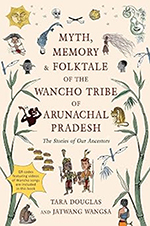
While stories continue to be passed down through speech communities and festivals in which storytelling is an integral part of the experience, one notes a growing urgency for preserving these stories in print for future generations. The book under review is an intervention in that direction. The Wancho tribe is a predominantly warrior tribe and resides in the Patkai hills but is also spread out across Assam and Nagaland. Divided into eight categories, the collection focusses on mythological stories and just-so stories, folktales, stories of migration and war, villages and relationships, doomed love stories, stories of hunting and acts of bravery, about mankind and the animal world and fables.
The stories which predate the arrival of Christianity in the region offer a glimpse into origin myths, beliefs, practices and traditions of a world where the human and the non-human coexist harmoniously, fact and fiction often collide and coalesce, and indigenous knowledge systems are still deeply revered. The theme of good and evil pitted against each other is at times surprisingly subverted in its outcome. Deceit and the practice of trickery are a running trope in these stories but the same doesn’t always beget punishment as evident in ‘The Brave Heroes of Kaimoi’. Many of these stories shed light on the origin of prevalent social hierarchies and fraught relationships between neighbouring villages such as ‘The Migration Story of Jagan Village’. But some of these stories also offer insights into cultural practices such as that of headhunting, and the prestige and honour associated with it. It is also striking to observe that women are largely absent, occupy a secondary status or remain silent participants in these stories. ‘The Story of Yeast’ reveals how women of the Wancho tribe came to be accorded the privilege of brewing wine and how men are forbidden from even touching the ‘tonkhah’ used for the fermentation process, but any kind of privilege is undercut by the revelation that women were bestowed with this privilege so that they could have some control over men at least in an inebriated state. Another migration story, ‘The Story of Our Village and the Village in Myanmar’, narrates how men from the reputed warrior Kamhua community were asked to sleep with the women of Kahdan to produce warriors as the former community was perceived as vulnerable to attacks as they lacked warriors, and thereby reaffirms a passivity traditionally associated with women.
Perhaps the value of this collection of straightforward stories does not necessarily lie in the stories positing a radical worldview, but in acquainting one with a world mostly unknown to those who reside outside of it. Many of these stories remarkably draw our attention to their orality with an element of a story within a story. The illustrations in this beautifully produced book deserve a special mention. The collection offers the reader an immersive experience through the scan codes available in the text through which one could access audio-visual recordings of songs, an initiative that came across as both uncommon and exciting. Each story is attributed to a particular storyteller and the village it originates from, and this ethical practice is magnified by Tara Douglas’s decision to accord Jatwang Wangsa the position of a co-author and her detailing of the transparent and inclusive research practices followed to empower local communities.
Shibani Phukan is Associate Professor, Department of English, ARSD College, University of Delhi, Delhi.