
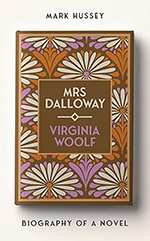
The year 2025 marks the centenary of the publication of Mrs Dalloway, the fourth of Virginia Woolf’s nine novels and her first notable success. It is a contemplative modernist novel in which remembrance of things past is as significant as what is happening in the present, and reflections and feelings are more in focus than the events which caused them. This intermeshing of the past and the present is intensified by the fact that the novel describes the passing of just one day, which culminates in a party in the evening at which long-lost friends get together and the Prime Minister drops in.
Clarissa, the eponymous Mrs Dalloway, is fifty-one years old, is long-married, and also, if one may so put it, wrong-married. About thirty years ago, she had rejected a passionate suitor named Peter Walsh, who had then gone off to India as a civil servant, and Clarissa had married instead the worthy and stolid Richard Dalloway, who is now a Conservative MP.
On the day the novel is set in June 1923, Peter Walsh, who is back from India on a short visit, comes and calls on Mrs Dalloway, and she quietly wipes a tear and thinks of saying to him, ‘Take me with you.’ This is after he has told her that he is in love with a young lady in India, a 24-year-old Anglo-Indian named Daisy Simmons, whom he wants to marry. As for Clarissa, her marriage hasn’t quite failed; it has just dwindled and been drained of all the ‘gaiety’ of her youth. ‘It was all over for her. The sheet was stretched and the bed narrow.’ She now sleeps alone in the attic, in accordance with her husband’s professed concern that she may sleep undisturbed.
What gives Mrs Dalloway its distinction, however, is not the plot but the speculative and lyrical sensibility with which the heroine Clarissa is endowed. Though a ‘tinselly’ party-giver, she is yet shown to sympathize and even identify with a shell-shocked war veteran, Septimus Warren Smith, whom she has never met. This was a daring conjunction which Woolf attempted at the climax of her fragmentary novel to tie up its various strands. She worried even after the novel was published that such sudden and one-sided identification on the part of Clarissa with Septimus, two characters with widely disparate life-stories, may not carry conviction with the reader, and for many readers it clearly did not. But then, Woolf knew that here she was pushing the limits of intuition.
To mark the centenary of this innovative novel, a book has been published which is itself innovative, being the first in a series launched by the Manchester University Press that will comprise ‘biographies’ of famous novels. As an experimental biographer herself, Virginia Woolf might have welcomed the idea. Of the three biographies she authored, one was of a dear friend and art theorist (Roger Fry), another of a fictional character who lived for three hundred years and along the way turned from being a man to becoming a woman (Orlando), and the third of a dog owned by the poet Elizabth Barrett Browning (Flush).
One notable difference between books and humans, however, is that books often have a more interesting conception and gestation than most humans. It is therefore to Mark Hussey’s credit that he devotes the first 71 of the 181 pages of his main text to recounting how Mrs Dalloway came to be conceived and written. He is fortunate, like all Woolf scholars, to have a rich archive to work with, including the various drafts of the novel carefully preserved and already edited and published, Woolf’s diaries published in six ample volumes, and her letters in six more. It is an embarrassment of riches and, writing out of a fullness of knowledge, Hussey weaves together a masterly narrative which is lucid, fluent and constantly illuminating.
It is fascinating to find, for example, that in the final draft, Woolf had written the last sentence of the novel eleven days before she wrote what is now its famous first sentence: ‘Mrs Dalloway decided that she would buy the flowers herself.’ In fact, as the manuscript of the novel edited by Helen M Wussow shows, the first draft had begun not with Mrs Dalloway but with Peter Walsh walking around London, having already met Clarissa off-stage. In the first sentence of his own book, Hussey calls Woolf ‘a messy writer’. Given the many major changes she made from the first draft to the second, Woolf seems to have been rather more a divided writer, herself somewhat bemused and uncertainly groping her way forward.
For example, in an ‘Introduction’ Woolf wrote in 1928 to a new edition of the novel, she said that in the first version of the novel, Septimus, who kills himself in the end, ‘had no existence’; instead, ‘Mrs Dalloway was originally to kill herself…’ But such is Hussey’s unswerving devotion to the canonical final version of the text that he disputes both these assertions made by Woolf herself. This is perhaps to be more royalist than the king or, in this case, the queen.
Another issue on which Hussey takes a strong stand is the persistent charge that Mrs Dalloway imitates, or even plagiarizes, James Joyce’s Ulysses, published three years previously. Hussey neatly sums up the main grounds on which this assertion is made, that both the novels ‘take place within a single day in a major city’, and that both ‘play with the notion of a double’, as in the case of Clarissa and Septimus.
He scrupulously traces the history of Woolf beginning to read Joyce’s works from 1918 onwards, and her acclaiming Joyce as the pioneer of a new mode of writing fiction in her essay ‘Modern Fiction’ (1919). He also notes that in her diary, Woolf made many ‘casually nasty’ and snobbish remarks about Joyce, about his being ‘under bred’ in more senses than one, his tendency to be performing stylistic tricks, and his proclivity to ‘indecency’.
Nevertheless, Woolf sems to have felt not only oppressed by Joyce but also pre-empted and outdone. As she said in an entry in her diary dated 26 September 1920:
I reflected how what I’m doing is being better done by Mr. Joyce. Then I began to wonder what it is that I am doing; …which means that one is lost.
Hussey only partially paraphrases this entry, omitting the latter part about Woolf’s existentialist crisis as a writer which I have restored here:
(— from a 21-page chapter on Woolf and Joyce in my Ph.D. thesis of 1975.)
Hussey defends Woolf against the charge of plagiarizing Joyce with a simple tit for tat. The fact is, Mrs Dalloway no more ‘plagiarizes’ Ulysses than Ulysses plagiarizes Homer’s Odyssey.
It may perhaps be more persuasive to argue that rather than plagiarize the single-day frame (which is no part of the Odyssey), Woolf here adopted it consciously and daringly as a challenge, to seek to show everyone that she could employ it to greater artistic effect than Joyce had been able to do in his sprawling, wandering novel. Eventually, Ulysses and Mrs Dalloway should be seen as two quite similar bottles which are filled, however, with very different liquids: full-blooded Irish whiskey in the case of Joyce and a delicate French wine in the case of Woolf with a Proustian bouquet.
The 100 years of Mrs Dalloway can be neatly divided into two more or less equal parts. From 1925 to about 1975, Woolf was regarded mainly as a frail experimentalist-modernist writer who went ‘mad’ in times of great stress and finally committed suicide. Her deeply subjective and fragmentary method, through which she sought to reveal the ‘inner life’ of her characters, was alleged to make her hard to comprehend for the common reader. In an article I published in 1970, I sought to counter this impression by titling my article ‘The “Unreadability” of Virginia Woolf’.
But with the advent of feminism in the 1970s, Woolf went through a comprehensive make-over. She was adopted as a founding figure of literary feminism, on the strength not so much of her novels as of a book of polemical literary history, A Room of One’s Own (1929). Soon, her novels too including Mrs Dalloway began to be read from a feminist view-point. Furthermore, Clarissa and indeed Woolf herself were identified as possessing lesbian proclivities and to be part of what has come to be called LGBTQIA+ .
In Hussey’s detailed chronicling of these developments, Woolf is seen to have become a ‘cult’ figure among feminist academics by the time of her birth-centenary in 1982. By 1999, in the title of Brenda Silver’s book published that year, she had become Virginia Woolf Icon. Beyond the academia, she became a major figure in popular culture with the American novelist Michael Cunningham’s The Hours (1998), which in its three distinct strands of the plot features Woolf herself, an oppressed American housewife reading Mrs Dalloway in order to liberate herself, and a New Yorker named Clarissa who is organizing a party for an old friend who is suffering from AIDS.
The novel won the Pulitzer Prize, and the film based on it (2002) was nominated for nine Oscars with the Best Actress award going to Nicole Kidman who played Woolf. This dual success seems to have done for Woolf pretty much what the film Shakespeare in Love (1998) did for Shakespeare at about the same time, after it was nominated for thirteen Oscars and won seven. Hussey wryly remarks that familiarity with the celebrated first sentence of Mrs Dalloway seems to owe more to Cunningham than to Woolf, just as the currency of the name ‘Virginia Woolf’ once owed more to the play and film Who’s Afraid of Virginia Woolf? than to Woolf herself.
As it happens, Mrs Dalloway contains a depiction of India which, though by no means large, is yet the largest in any novel of Woolf’s. Hussey is prodigiously knowledgeable about the sequels and spin-offs generated by Mrs Dalloway worldwide, but a recent novel with the Indian Daisy at its centre seems to have escaped his attention. It bears the forthright title Daisy and Woolf (2022; rpt. 2025), and is written by Michelle Cahill, herself of mixed Anglo-Indian and Goan parentage.
In it, Daisy follows Peter by boldly travelling from India to London, and is disappointed at the absence at the docks of Peter—and of any coolies to carry her bags! But all is well later, and Peter soon writes to Clarissa thanking her for facilitating Daisy’s social acceptance. ‘Presenting Daisy to Lady Bradshaw was a stroke of genius!’ Altogether, with its original conception and unflagging inventiveness, Daisy and Woolf constitutes a necessary postcolonial postscript to Woolf’s casual caricature of an India with its cholera and its unchanging natives.
Another Indian counterpart to Mrs Dalloway is Premchand’s great nationalist novel Rangabhoomi which too, coincidentally, is 100 years old this year. It has been twice translated into English, as Rangabhumi: The Arena of Life by Christopher King (2009), and The Playground: Rangabhoomi by Manju Jain (2012). In Mrs Dalloway, Lady Bruton, a political busybody, exclaims at one point: ‘Ah, the news from India!’ – without specifying what the news was. Well, few novels will give you all the news from India from those politically turbulent times as fully as Premchand’s 600-page saga.
Like Mrs Dalloway, Rangabhoomi happens to have a British civil servant in love with an Indian Christian (though not quite Anglo-Indian) young lady named Sophia—with the vital difference that she is leading him on to try and bend him to her own nationalist purpose. More significantly, it has for its hero an unmistakably Gandhi-like figure who offers nonviolent resistance to exploitation and is eventually shot dead by the British Collector. …But that is another (long) story.
Harish Trivedi taught English at University of Delhi, Delhi.