
‘…a vague promise that things might not turn out so gloomy.’
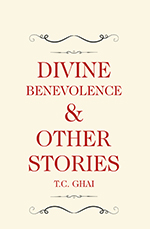
These sixteen stories about the Sisyphean challenges of the characters who are its protagonists are interlinked by a creative vision that is dystopic but never despairing. It is in the questions raised and not necessarily answered that the author finds hope for a humanity that is beleaguered beyond endurance.
The eponymous opening story, set in a mythical universe that is simultaneously very contemporary, sees a group of hopefuls venturing to the abode of the Creator of the Universe to petition for succour for their desperate countrymen. The politics of hope is explored with great originality, as is the innocence of those who embark on this hopeless quest to be heard. The interrogation of faith that clashes with reason and good sense remains a thematic staple in the story of a doctor couple who will do ‘All for a Son’ and in Panditani’s ‘Epic of Pain’, which is inextricably intertwined with the stranglehold of patriarchy. This is a trope that continues in the story titled ‘Mother’, in which the narrator cannot find a single picture of his mother smiling, even when she has allegedly died a ‘saintly death, given to very few fortunate people’. There are also subversive undercurrents of the feminine worm turning, in stories like ‘Starting Afresh’ and ‘Triumph’, in which Sarla and Meena will have their small victories in the midst of societal expectations and ideologies.
The stories oscillate between first- and third-person accounts, in language that is fluid and richly symbolic, and the tone is uniformly gentle, melancholic, and empathetic. An interesting literary device is to make the main characters in a triad of stories like ‘Simla Revisited’, ‘Children of Ganga’ and ‘The Fiend’, mute spectators who are cursed with self-awareness and introspection as they watch, with a sense of alienation and existential angst, the world changing so fast as to become unrecognizable and, in the process, unhousing them from all that gave them a sense of belonging to it. These characters form a quartet with the sculptor in the final story, ‘The State’, as he hefts a hammer in a futile but courageous attempt to undo his crime of complicity in the creation of a dictator who set out disguised as a revolutionary before his true face was revealed.
‘The Blackout’ and ‘Smell’ are both richly complex allegories and the fabular structure serves as a window into a world that is disorienting in its unpredictability and also beset by the dangers of the slippery slope of an obsessive-compulsive fantasy that very quickly transforms into megalomania.
If there is hope to be found, it is in the world of nature and its avian and reptilian inhabitants. My two favourite stories in this sage and eminently readable collection are ‘Sparrows’ and ‘Little Browny’. The former demonstrates the perseverance and practical wisdom of a sparrow couple which persists against all human and feline odds to survive and perpetuate their species as nature had hard-wired them to. The latter is a short eco-critical mother-son dialogue between two snakes who may be shunned and feared by their human antagonists, but it is not for nothing that these creatures were revered for their wisdom in wiser times of yore. It is in the ending of the latter story that we find a glimmer of the hope which I believe inspired TC Ghai to write these stories as cautionary tales: ‘The warm sunshine falling on them was soothing, reassuring and seemed to radiate a vague promise that things might not turn out so gloomy.’
Anjana Neira Dev is Professor, Department of English, Gargi College, University of Delhi, Delhi.