
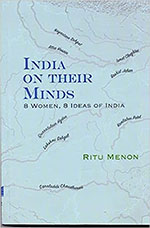
Ritu Menon
This slim volume is a sparkling crystal that could inform our celebration of the Diamond Jubilee of our nationhood.
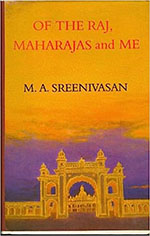
M.A. Sreenivasan
The 39 chapters of the book cover Sreenivasan’s experiences as a family man and administrator, from his selection for the Mysore Civil Service in January 1918 to his tenure as a Minister in the Princely State of Mysore in 1943, and Dewan of Gwalior in 1946.
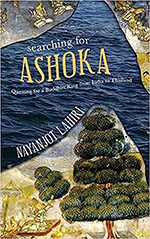
Nayanjot Lahiri
The book is a historian’s personal quest for a ruler who crafted himself in multiple ways and was in turn received and recast in more ways than he could have imagined. Thus, the book is really not about Ashoka who is no stranger to history and historians, but rather about how Ashoka comes through to us in stone and metal, text and poetry, scattered through the subcontinent and outside over centuries.
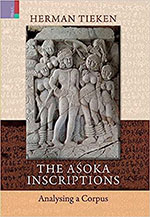
Herman Tieken
Herman Tieken’s command over the source language Prakrit and the Brahmi script is writ large in the book. His training in classical Kāvya literature led him to view the inscriptions as a literary corpus. The book in some ways offers fresh perspectives, even though one may disagree with one or two.
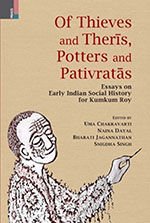
Uma Chakravarti, Naina Dayal, Bharati Jagannathan, and Snigdha Singh (Ed.)
2023
What comes out clearly is the extent of the work and influence that Kumkum Roy’s own research have had on a range of aspects of early Indian history—gender, of course, but also questioning the texts, minutely, meticulously and critically examining these texts, and then developing new ways of understanding the past.
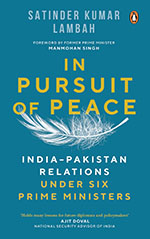
Satinder Kumar Lambah
Lambah’s book is a treasure-house of facts and insights and a must-read for anyone interested in India’s foreign and security policies and subcontinental politics
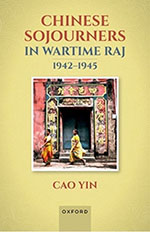
Cao Yin
This book is about the various Chinese professionals who came to India during the Second World War and resided in India during that time. This was the time when close to 100,000 Chinese nationals were in India which was the highest ever in history.
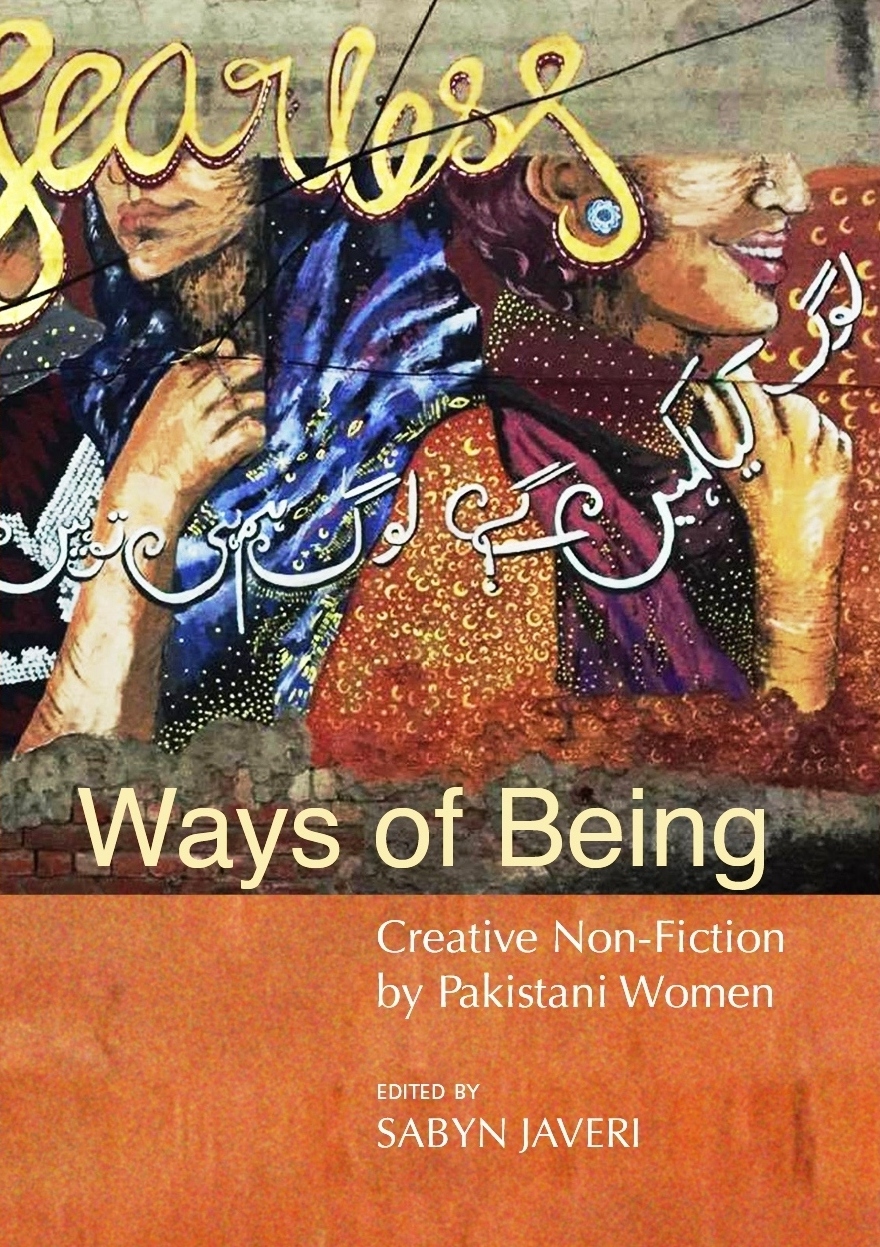
Sabyn Javeri (Ed.)
These fifteen essays by Pakistani-origin women in this collection,Ways of Being, break this mould. Ruminative, reflective, often very introspective, they are honest, thoughtful examinations of our present realities; of personal fates; of ‘Life’ in both its grand and paltry confusions.
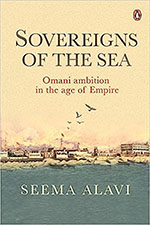
Seema Alavi
In this work, Seema Alavi addresses the ‘overwhelming silence’ and the ‘invisibility’ of Arab polities and dynasties in the historiography that reflects an ‘unabashed Eurocentrism’. The inability of ‘mainstream’ scholarship to make sense of the unique structures of state power that shaped the Ocean’s political culture has been brilliantly exposed in this work.
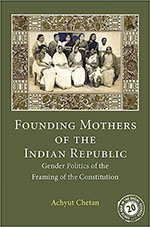
Achyut Chetan
This book details the debates on some of the key issues in the Constituent Assembly and the interventions made by the members who were women. (It repeatedly refers to them as women members, this is at odds with the current practice that eschews such ways of referring to people as lady doctors or women cricketers and so on.) Of these issues, the author attaches considerable importance to the question of separate and joint electorates.
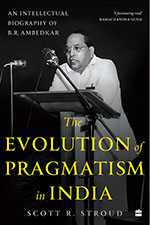
Scott R. Stroud
Scott R Stroud succeeds in arguing a Deweyan Ambedkar: Did Ambedkar have one intellectual interlocutor throughout his life? Was Ambedkar’s world mediated through Dewey? It is however a well-argued book, theoretically rigorous which systematically conceptualizes Ambedkar’s pragmatism.
Anindya Sekhar Purakayastha, Manas Dutta, and Tirthankar Ghosh
Identifying the core areas and patterns, the authors set out to unravel the contemporary context of mediatization of public life leading to the emergence of media-public or info-public. New keywords like Twitterati, WhatsApp-publics, Media public, Info public, though coming to limelight, mediatized public sphere continues to follow the ‘pre-existing grammar of political mobilization’
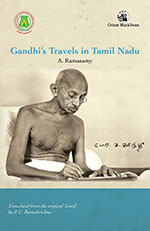
A. Ramasamy. Translated from the original Tamil by P.C. Ramakrishna
As is well known, after his return to India in 1915, Gandhi launched the noncooperation movement in the 1920s and the civil disobedience satyagraha in the 1930s. These were the decades when the loin cloth-clad Gandhi was viewed as a bit of a rustic rockstar by the people of Tamil Nadu. Wherever Gandhi travelled in the old Madras State, people would get wind of his whereabouts and proceed to mob him in hundreds or thousands.
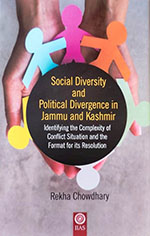
Rekha Chowdhary
The merit of the study is that it breaks the stereotype of the analysis of the State’s contemporary politics from a myopic view of religious identity.
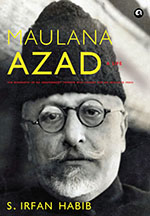
S. Irfan Habib
Despite several biographical works on Azad, a definitive biography was still awaited because the previous biographers had not explored adequately the Urdu writings of Azad and other such sources. This new biography by S Irfan Habib, a Delhi-based historian with a firm grasp on the Urdu language attempts to fill the gap by uncovering some of the enigmatic aspects of Azad’s life, thought and politics. In doing so, he has made extensive use of Azad’s works in Urdu and brought to the fore the enriching and curious facts associated with him.
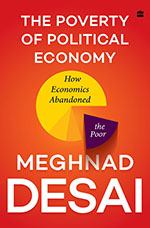
Meghnad Desai
Desai’s introspection in this book is of a deeper significance and for that reason should be of utmost importance to any thinking person within and beyond ideological boundaries. Modi’s India would have to wake up from its euphoric slumber and grapple with the truth that economics is about people and not about growth rates, though the relationship between the two is a complicated one.
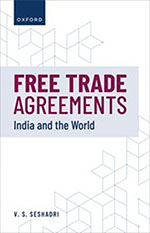
V.S. Seshadri
The book provides a commentary on the relevance of the growing numbers of free trade agreements among different countries in the global economy, with a special reference to India. FTAs have a lot of significance for India. This is not only when India participates in such arrangements with one or the other trade partners but also without direct participation.
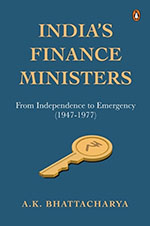
A. K. Bhattacharya
Being a highly experienced journalist who covered the Finance Ministry for close to three decades, AKB has also been able to focus on the key events of each tenure which shape our recollections and perceptions of the tenure. This releases the book from the tyranny of the ‘one-damned-thing-after-another’ school of history.
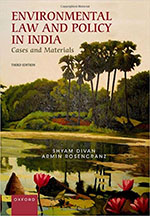
Shyam Divan and Armin Rosencranz
The book is the outcome of a singularly complicated remit, whose complexities are duly reflected in its structure. The question is, does it fulfil this remit? In my view it does so most satisfactorily. And scholars, activists, and even members of the public who seek a deeper understanding of environmental law will be greatly benefited by the way it seeks to foreground the black-letter legal narrative against larger social, economic, and political issues, particularly through extracts culled from appropriate secondary literature.
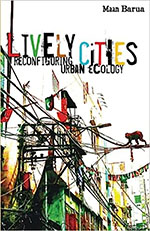
Maan Barua
In his book, Maan Barua goes beyond the traditional focus on the old and new in modern urban life, introducing a discourse that integrates ecology and the role of non-human life in shaping the political dynamics of urban development. This challenges the fundamental understanding of what constitutes the ‘urban’ and the ‘city’, transforming our understanding of urban ontology.