
Naveen Kishore
One wonders to what extent one can remain unaffected by things that threaten to rip apart one’s existence or life as we call it
Anupama Raju
2022
Cities are imbricated in the minds of the people in multiple ways woven through emotional experiences, subjectivities and various interactions. It is some specific moments of encounter that impinge on one’s mind to shape the imaginaries associated with cities.
Vivek Narayanan
2022
Vivek Narayanan’s After should be a rewarding experience for scholars and sceptics alike.
Anupama Mohan
The story takes place in 1998, in the sleepy village of Sittanavasal in Tamil Nadu, where Sriveni has led a happy and sensitive childhood with her parents and brothers, aiding her midwife grandmother, and acquiring deep knowledge about plants and herbs.
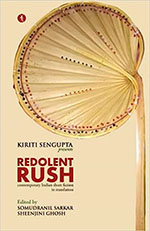
Edited by Somudranil Sarkar and Sheenjini Ghosh
Brevity is said to be the keynote of a short story, and length admittedly impacts the range of matter dealt with in a brief narrative as well as its treatment. Nevertheless, defining a short story merely in terms of its length does not take into account the flexibility of the genre or the often-profound impression made by a narrative that, though brief, encapsulates an entire experience
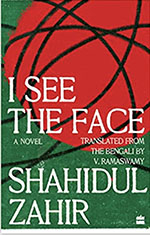
Shahidul Zahir(Translated from the original Bengali by V. Ramaswamy)
In Schrodinger’s Cat, the famous thought experiment in quantum mechanics, it is postulated that if you seal a cat in a box along with poison or something that could kill it, you won’t know whether the cat is dead or alive unless you open the box.
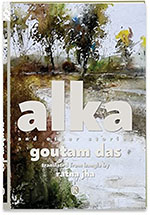
Goutam Das(Translated from the original Bengali by Ratna Jha)
The title story of the volume ‘Alka’draws on human bonds that turn out to be both heart-warming and heart-rending. It is about non-blood ties that become deep and intimate, while the closest mother-son blood relationship turns awry and unnatural without any provocation. The author does not moralize, he just presents the situation with poignant empathy.
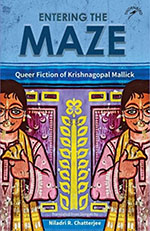
Translated from the original Bengali by Niladri R. Chatterjee
Krishnagopal Mallick (1936-2003) was born and brought up in Kolkata, and the limit of his territorial domain is essentially College Square and its surrounding area in the city. In his depictions of the mundane and the ebb and flow of daily life
Chandi Prasad Nanda, Pritish Acharya, and Shri Krishan
The genesis of the vernacular turn in Indian historical studies can be attributed to a crucial inquiry: ‘Was there history writing in India before the British colonial intervention?’ As Partha Chatterjee puts it in his Introduction to the volume History in the Vernacular
Dimitrova declares in the Introduction of the book, she understands ‘“Indian cultural identity” in a non-essentializing sense, as a pluralistic, open-ended, and dynamic concept that is inclusive of all religious, cultural, and socio-political traditions and currents in South Asia and beyond’
Aku Srivastav
Social as well as political movements have a long and sustained history in India. In post-Independence India, the decade of the 1980s saw a wave of new social movements focused on identity, culture and lifestyle instead of just political or economic issues.
C.M. Naim
I remember my father, a doctor, having stacks of jasoosi naavil (detective novels) on his bedside table. Printed on flimsy paper, often with lurid covers, they were dog eared and clearly well read.
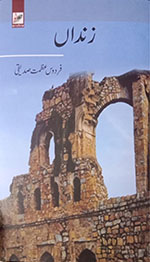
Firdous Azmat Siddiqui
2022
Firdous Azmat Siddiqui’s novel Zindaan, written in Urdu, brilliantly takes us through the gloomy days of 2020, when we were imprisoned in our own homes at once after the outbreak of the Corona virus. It explores human emotions and psychology in times of turmoil. The book highlights the helplessness of human beings before the might of a virus.
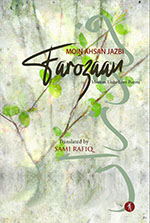
Moin Ahsan Jazbi (Translated from the original Urdu by Sami Rafiq)
The book seeks to juxtapose individual feelings of desolation and deprivation with universalizing aesthetics in an idiom shaped by a blizzard of words.
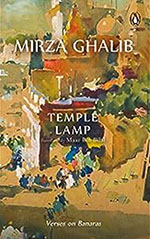
Mirza Ghalib. Translated from the original Persian by Maaz Bin Bilal
Masnavi is one of the three genres known to have been imported from Persian into the Urdu language, the other two being the Ghazal and the Rubayi.
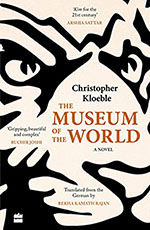
Christopher Kloeble (Translated from the original German by Rekha Kamath Rajan)
Christopher Kloeble’s novel, Das Museum Welt, translated from German to English by Rekha Kamath Rajan as The Museum of the World, is an extraordinary literary piece that takes its readers through an exhilarating journey of time and space.
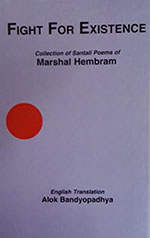
Translated from the original Santali by Alok Bandyopadhya
The book serves as a chronicle of the lives of the Santal people in the context of their precarious existence in the current setting by bearing testimony to the different setbacks, socioeconomic and political, but most importantly, cultural transformations that have occurred over the past fifty years.
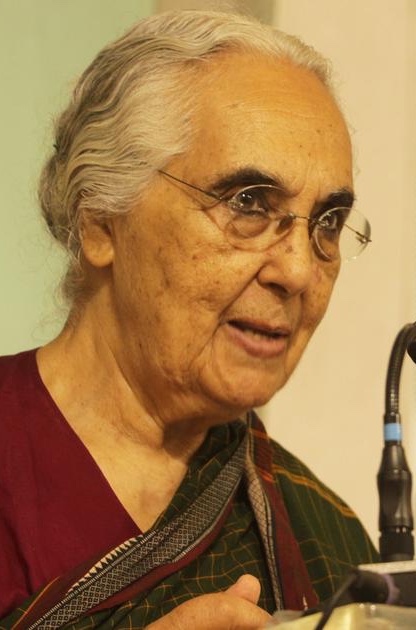
Romila Thapar
Where nationalism ceases to be the movement of citizens from across society and is reduced to one identity which is given priority, this becomes a denial of the very important component of nationalism, namely, democracy and the secular.
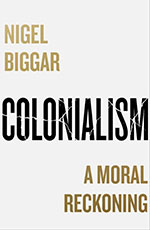
Nigel Biggar
What Biggar has done is to pick up some aspects of the history of the British Empire on which there are writings that seek to dispute a particular point in critiques of colonialism, often taking the narrowest view of a complex historical phenomenon, to build his arguments in defence of British colonialism.
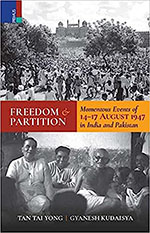
Tan Tai Yong and Gyanesh Kudaisya
The most interesting portion of the book is the ‘Epilogue’. It primarily concerns the deliberations which took place at the administrative level. It underlines the long and intense tussle which took place between Lord Mountbatten, the incumbent Viceroy, and Sir Cyril Radcliffe, the Chairman of the two boundary commissions.