

Equally significant is the attention paid to themes that blur the boundary between the international and the domestic. Issues of citizenship, migration, inequality, gender, and information are no longer confined within national borders. Books on law, human security, media, and social movements reveal how global processes are refracted through local institutions and everyday lives.

Questions of social justice that coalesce around caste, gender, class and marginalization are another thematic focus. Counting Caste, Elusive Democracy, Democracy and Impunity, A Woman’s Job, “New” Women, Why the Poor Don’t Kill Us and Boats in a Storm explore how power operates through social hierarchies and everyday governance. Finally, several essays further blur the boundary between disciplines, high politics, and daily life.
In conclusion, we should engage with the world, but smartly. Instead, we have seen a closing of the Indian mind and a lack of engagement over the last decade: We have abstained or stayed mum on every important international issue recently (the Russian invasion of Ukraine, the slaughter in Gaza, the bombing of Iran, the raid on Venezuela, etc.); we walked away from regional integration in South Asia (SAARC) and Southeast Asia (RCEP);

By Katja Gloger,
This pattern extends across security, diplomacy, and energy policy. Gloger and Mascolo demonstrate how military cooperation formats and confidence-building measures with Russia persisted long after Moscow’s authoritarian consolidation and rearmament were evident. Even more consequential was Germany’s deepening energy dependency. The expansion of Nord Stream and the systematic dismissal of Eastern European concerns revealed a strategic culture that equated economic interdependence with political moderation.
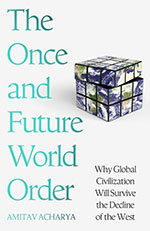
By Amitav Acharya
He suggests that with the decline of the West, other non-Western nations will be more important in the future world order, and that it will be marked by cultural and political diversity. His preferred description of the coming world order is that it will be akin to a multiplex, with multiple shows on offer, giving the audience a choice of plots, actors, directors and so on.
India built Afghanistan’s Parliament building. The author recalls Hamid Karzai calling him to a meeting to his Presidential office and telling him that his Cabinet colleagues and he felt that it would be only appropriate for India, the world’s largest democracy, to build Afghanistan’s Parliament House. India built the Zaranj-Dilaram Highway and brought electricity from across the Hindu Kush mountains to Kabul through power transmission lines.
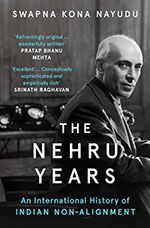
By Swapna Kona Nayudu
Nehru indeed played a dominant role in the formulation and articulation of foreign policy, although he disclaimed personal ownership of it. In his parliamentary speeches, he attributed the evolution of Indian foreign policy to a slow process preceding Independence. ‘It is a policy,’ he said, ‘inherent in the circumstances of India, inherent in the past thinking of India, inherent in the whole outlook of India, inherent in the conditioning of the Indian mind during our struggle for freedom, and inherent in the circumstances of the world today.’
Edited by Mohammad Naushad
2025
(The Vedas echoing in his blood,/ the azan illuminating his forehead/ and the cross swaying upon his breast). This veneration for Nehru’s secularism seems ironic, considering the fact that scholars like Mushirul Hasan and Ayesha Jalal have argued that Nehru’s secularism prevented him from addressing the specific insecurities and marginalization of Muslims after Partition.

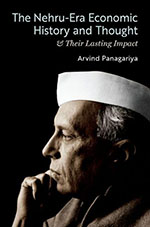
By Arvind Panagariya
At the very least, the remarkable decentralization of economic authority in China—where over 50% of government spending is controlled by local bodies with sweeping powers over land, labour, and investment—and its focused development of over 600 internationally benchmarked cities deserved mention. Further, while the book does discuss China’s success under Deng Xiaoping, it stops short of unpacking the underlying drivers. While he had started empowering local governments soon after he took over in 1978, the early results were uneven.

By Aria Fani
It was not just top-down reform or policy. Rather, the transformation took place in the lively debates and unpredictable collaborations among writers and intellectuals, the energy of voluntary reading circles, and periodicals that crisscrossed borders. These were spaces of possibility where new literary collections took shape and where different visions of the nation’s future could be imagined,

By Ashutosh Singh
Notwithstanding the Agreement, clarity on status of the territories of Hunza, Chilas, Koh Ghizar, Iskoman and Yasin to be part of Gilgit Agency continued to elude the British. They wanted to retain the frontier for maintaining direct control over all the areas. Finally, in 1941 the Government of Jammu & Kashmir referred the matter to a Court of Arbitration, to reinforce their claim over these territories. The author herein has given a very detailed account of the report prepared by Ram Chander Kak, Chief Secretary of Jammu & Kashmir, and the opinion of the Resident of Kashmir, Lt. Col S M Fraser.

Edited by Purna Bahadur Karki
Nepal witnessed long spates of Maoist insurgency, and later, there were insurmountable challenges in assimilating the insurgent constituencies in the mainstream politics. In this context, the first chapter discusses the inception of the Communist movement in Nepal—founded early in 1949 upholding socialist slogans and agendas concerning universal civil liberty. The promulgation of the Constitution was significant in reinforcing the status of Communist politics in Nepal as combatants were mainstreamed and inducted in security forces, thereby legitimizing their agenda of equality and inclusion

By Gautam Hazarika
The Second World War generated one of the largest and most diverse populations of prisoners of war (POWs) in modern history, with an estimated 35 million individuals experiencing some form of military captivity between 1939 and 1945 (Cohen 2012). Governed nominally by the 1929 Geneva Convention on the Treatment of Prisoners of War—ratified by most,…
The intention, and the effort was to highlight how India was still not ready for self-rule, given the deplorable condition of its women. This of course, offered the needed moral umbrage, where the white man was on a ‘civilizing mission’—out there to save the brown woman, from the brown man (Spivak 1983). Interestingly, the nationalist discourse too deployed the narrative of ‘Mother India’,

By Ilyas Chattha
In West Pakistan, the Bengali officers were neither declared ‘enemy’ nor POWs but were treated as ‘war necessities’ while harsher treatment was reserved for the soldiers (p. 63). Details of internees and their interaction with their fellow Punjabi course mates and friends given by Chattha reveal how affinity for fellow officers overtook the impending division of the country. Documentation of individual correspondence reveals the humane side of the relationship. Pakistan struggled to arrange the safe upkeep of the Bengali detainees to prevent them escaping

By Wasantha Karannagoda
But, to get there, the author, as the navy’s first ever chief appointed from an area command, had to do a lot to improve the navy in every sphere. He points out certain weak areas when he took over as the SLN Chief: absence of basic facilities, uniforms, accommodation, insufficient fighting capabilities, lack of leadership and confidence in the senior officers on the part of junior officers and sailors

By Kalyani Ramnath
Also notable in Ramnath’s work is an acknowledgement of the imposition of Western knowledge systems on a region that did not feature in the West’s intellectual consideration. Colonial law did not account for subcontinental practices, and by inheriting fundamental frameworks from colonialism, the new nation-state’s law alienated the people it was meant to serve. For example, people were classified as per borrowed administrative definitions like citizen, stateless, immigrant, refugee, etc., while in reality,
Internally, India’s neighbourhood policy suffers from sluggish execution, bureaucratic delays, and limited financial resources compared to China. Refugee inflows, internal security spillovers, and unfulfilled trade potential have compounded these challenges whereby India has not been able to leverage enough the people-to-people ties with countries like Nepal, Bangladesh, Sri Lanka and so on.

By Vamsi Vakulabharanam
Its greatest strength lies in its comparative and class-based approach. Vakulabharanam is successful in using comparative political economy frameworks while managing to avoid the problems associated with Methodological nationalisms. By placing class at the centre of his analysis, he effectively questions mainstream economic theories that reduce inequality to mere income or consumption gaps. The integration of global capitalist forces into national inequality trends contribute significantly to his analysis, as well as to the broader literature. In terms of structure, clear chapterization, periodization, and the use of both primary and secondary data enhance the flow of arguments as well as the credibility of the author’s findings.
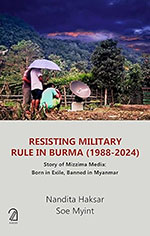
By Nandita Haksar and Soe Myint
Structurally, the book adopts an unusual and effective format. After an introductory chapter that offers a concise overview of Myanmar’s military since 1962 for the benefit of unfamiliar readers, the volume consists of fifteen chapters presented as personal narratives by five different voices. In addition to the two authors, three Mizzima associates contribute their accounts.