
By Keyu Jin
Keyu Jin attempts to dispel notions that China’s functioning resembles some form of state Capitalism. She brings out that while ‘Public Sector type of companies’ undoubtedly dominate several sectors of the economy, they are not necessarily in themselves the principal growth engines.
China’s growing assertiveness in the last two decades, its ‘wolf warrior’ diplomacy under Xi Jinping’s leadership, rapidly expanding coercive power

By Scott Ezell
‘In the dark times, will there also be singing? Yes, there will also be singing. About the dark times.’ These famous lines by Bertolt Brecht aptly fit Scott Ezell’s epic Journey to the End of the Empire: On the Road in Eastern Tibet.
By Jamyang Norbu
The book is an epic work of forty chapters each with its own quintessence. ‘The Ghost of Chamdo’, ‘March Winds’, ‘Wind and Wildfire’, ‘Memory Songs of Lhasa’, ‘Four Rivers Six Ranges’, ‘Silent Struggle’ and many more are worthy of mention.
By Madhav Das Nalapat
The central argument that Professor Madhav Das Nalapat makes in his timely book is that the new Cold War, which he terms as Cold War 2.0 is different from the earlier Cold War and that it would be a mistake to assume that the Soviet Union has been replaced with the Russian Federation.
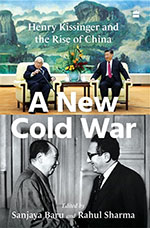
Edited by Sanjaya Baru and Rahul Sharma
As foreign policy cum security experts, academicians and politicians try to understand the current international order and what shape it may take, Sanjaya Baru and Rahul Sharma have brought together 19 essays in their first edition (2021) to coincide with the 50th anniversary of US President Nixon’s historic visit to China in 1971.
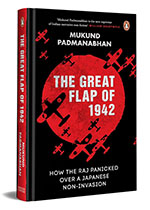
By Mukund Padmanabhan
We are living in the post-pandemic era having fresh memories of evacuation, lockdown, information, and disinformation—overall a situation of panic.
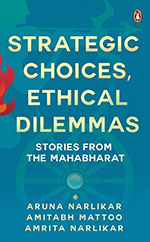
By Aruna Narlikar, Amitabh Mattoo and Amrita Narlikar
The Ramayana and the Mahabharata are not just two great epics but also great treasures of our civilizational heritage that have inspired generations over many centuries.
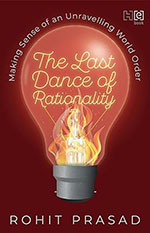
By Rohit Prasad
Prasad adopts an orthodox Eurocentric framing of the dawn of enlightenment and the coming of the age of rationality wherein he treats it as an endogenous phenomenon starting from the Renaissance down to the Industrial Revolution.
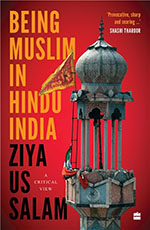
By Ziya Us Salam
The very first sentence of the ‘Preface’ in the book under review is crafted to grab readers by the scruff of their necks—‘To be a Muslim is to be an orphan’—and then keep them glued to each page.
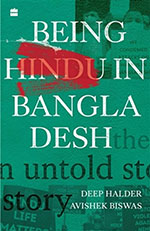
By Deep Halder and Avishek Biswas
There are several books and articles that have been published on the state of Hindu minorities in Bangladesh, the role of Hindus in the 1971 liberation war and the Vested Property Act that disposed off their property. While the status of minorities in Pakistan is accepted as fait accompli in India
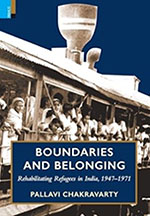
By Pallavi Chakravarty
Boundaries and Belonging: Rehabilitating Refugees in India, 1947-1971 by Pallavi Chakravarty provides a critical analysis of the Indian state’s post-Partition programmes for rehabilitating refugees.
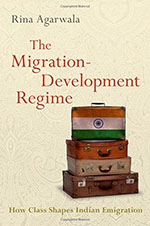
By Rina Agarwala
‘Migration-Development Regimes’ (MDR) and painstakingly traces the history of emigration in India. She thus reframes the emigration practices of sending states as a regime to help capture the sending state’s ‘ideological, economic
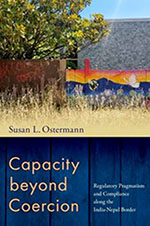
By Susan L. Ostermann
However, human beings differ in their interpretation of laws and that becomes a reason for conflict within government circles and in the society, and non-compliance by those whose interests are not tantamount with them. The other point made by the author is that there are certain bureaucrats or judges who have the legal knowledge and ensure their enforcement.
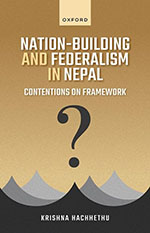
By Krishna Hachhethu
That conjunctive moment galvanized a spontaneous popular people’s uprising, Jana Andolan II (April 2006) which gave the democratic imprimatur to the demand for a systemic overhaul of the old unequal power structure. The Maoists fused class ideology with identity politics which tapped into the discontent of the institutionally excluded.
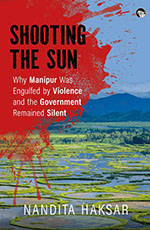
By Nandita Haksar
The stories of Manipur that this book tells are violent, cruel and infused with unadulterated savagery. The hate and rage in them is tangible and there is no way to make the stories any less brutal
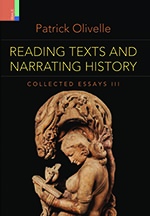
By Patrick Olivelle
Early Indian texts, especially those that are part of the vast corpus in Sanskrit, have acquired a sadly paradoxical status in recent years. On the one hand, many serious scholars tend to view them with suspicion, if not contempt.
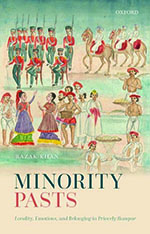
By Razak Khan
Minority Pasts investigates local history and politics of Rampur, the last Muslim-ruled Princely State in colonial United Provinces, and studies with remarkable ease and competence aspects of political, economic, socio-cultural and affective history of Rampur and the Rampuris in the South Asian subcontinent across borders in the post-1857 period.
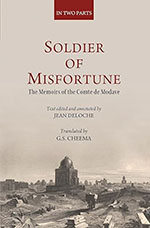
Text edited and annotated by Jean Deloche. Translated by G.S. Cheema
It is usually overlooked while talking about India of the latter half of the eighteenth century that the Mughal court continued to have some political relevance till at least the turn of the century.
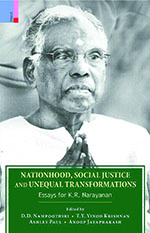
Edited by D. D. Nampoothiri, T. Y. Vinod Krishnan, Ashley Paul, Anoop Jayaprakash
This volume is a reflection upon the idea of a democratic, secular and inclusive India which KR Narayanan cherished. His rise as a Dalit boy from Travancore to India’s presidency embodied these values.