

Asok Kumar Das
Asok Kumar Das’s passion for Mughal art never fails to awe us and his ventures in this arena never ceases to enrich our understanding of Mughal art and inevitably our perception of our own history and culture.
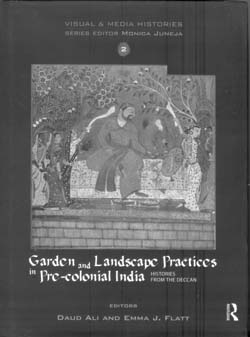
Daud Ali and Emma J. Flatt
The volume under review is a delightfully knowledgeable anthology of nine well researched articles, the fallout of a conference held at Hyderabad, marvellously printed with enchanting pictures. It takes us beyond essentialist notions of Islamic and Timurid gardens that have dominated the discussion of gardens in South Asia, and to overcome the seeming evidentiary impasse…

Sumi Krishna
The central role of women in the provision, management and safeguarding of water was recognized in 1992 itself with the adoption of the Dublin principles at the International Conference on Water and the Environment held in Dublin but the attempts at mainstreaming gender into water management initiatives have received very limited success.
Anjal Prakash, Sreoshi Singh, Chanda Gurung Goodrich and S. Janakarajan
Integrated water resource management is one of the most pressing policy issues confronting South Asian countries—not only at the regional but also at the national level. Situated in a contiguous geographical landmass but dissected by various states, the region is home to around one-fourth of the world’s population.
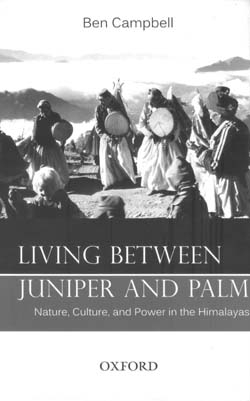
Ben Campbell
The study of the relationship between nature and culture has been given new impetus over recent decades and has opened up attractive theoretical avenues. A number of social anthropologists have published inspiring books on this theme. The excessive duality between these two domains that some researchers refer to when contemplating non-western societies has been rightly questioned.
Ravi Sundaram
The title of this volume on media studies, edited by Ravi Sundaram, a senior fellow at the Centre for the Study of Developing Societies, is a suitable one. There really are no limits to the mediatized society that each one of us is embedded, if not buried, in. At the same time, there are very severe limits to our understanding of it.
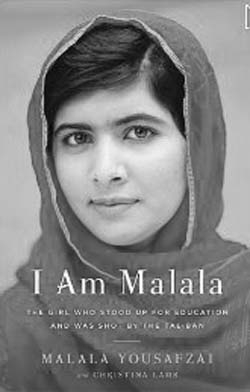
Malala Yousafzai with Christina Lamb
This book is a story of a young girl who is shot by a Taliban bullet, survives miraculously and lives to tell her tale. Malala Yousafzai is celebrated and recognized as a fearless symbol of education across the globe. Malala is an educational campaigner from the Swat valley, Pakistan. She came to public attention by writing for BBC Urdu about life under the Taliban.
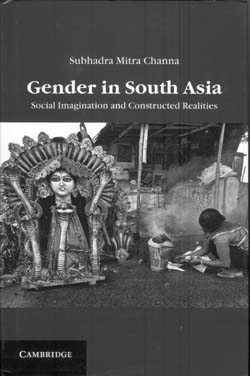
Subhadra Mitra Channa
In her book under review anthropologist Subhadra Mitra Channa provides a generalized model of the ‘Devi and the Dasi’ to understand what it means to be a woman in South Asia. For a book that has South Asia in its title, the focus is very narrowly on India. She justifies this by saying, in a footnote…
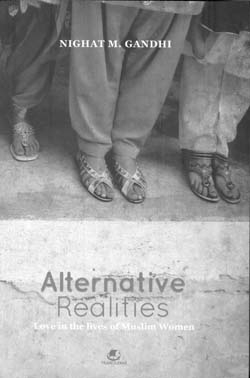
Nighat M. Gandhi
Safar was about the inner journey of the heart and mind that revealed the truth of one to oneself, and took one closer to that state known variously as enlightenment, self-realization, self-knowledge, satori, fana- …My safar to places of my past led me to intimacy with myself. Revealed who I am to me.
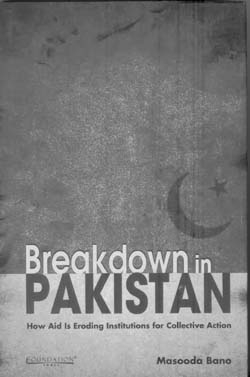
Masooda Bano
The topic of NGOs, especially those which are rights-based, in Pakistan is an intriguing and polarizing case in media discussions, always instigating hype by the critics over alleged negative roles and pushing the western agenda or by the proponents who appreciate NGOs’ capacity to challenge the authoritarian status quo.
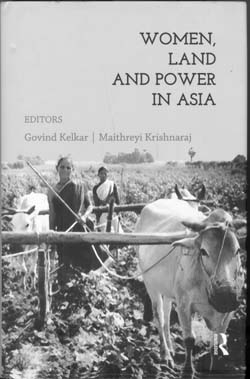
Govind Kelkar
The volume under review is remarkable for many reasons. The painstaking empirical research and the rigorous analysis of the same from a feminist perspective will make this book a very important source of reference to understand the lives, work and struggles of women in Asia.
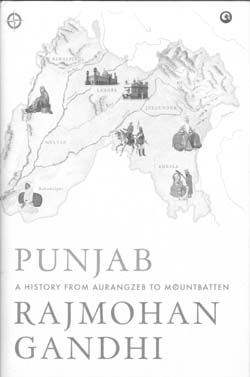
Rajmohan Gandhi
A chronological political history of Punjab—the title is self-explanatory—Rajmohan Gandhi began the journey of writing this book at the point of its denouement, Partition. It was the need to understand the painful birthing of two nations, of why the father of the Indian nation…
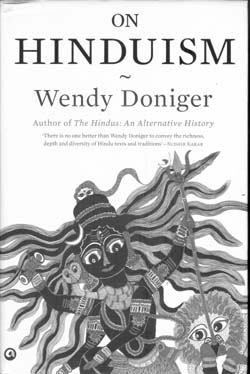
Wendy Doniger
2014
In 1976, within a year of its publication, Wendy Doniger’s Hindu Myths met with a bad press. ‘The title (of the book) is offensive’, a reviewer of Indian origin wrote, ‘to the Hindu, the stories of his sacred literature are not myths: they are as much reality and are as sacred as are the stories of the miracles of Christ or of Adam and Eve or Noah to the Christians…
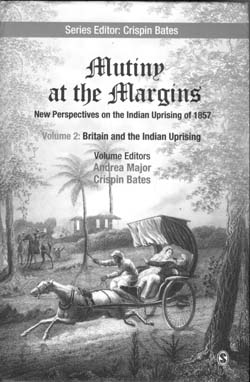
Crispin Bates
Mutiny at the Margins: New Perspectives on the Indian Uprising of 1857 is a seven-volume series that has emerged from a research project based at the University of Edinburgh involving collaborative research and international conferences beginning in the 150th year marking the revolt.
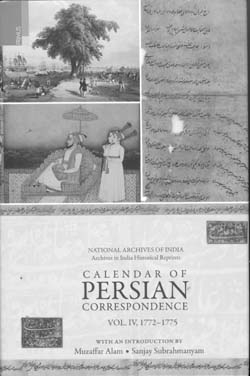
Muzaffar Alam
The Calendar of Persian Correspondence in 10 volumes was originally published by the Imperial Record Department, subsequently incorporated into the National Archives of India. These volumes span the period 1759 to 1793 providing details of the circumstances and processes by which the English East India Company consolidated…
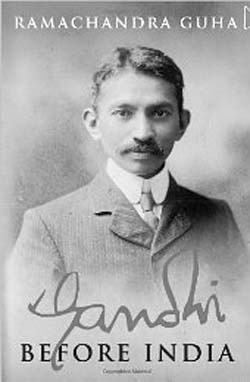
Ramchandra Gandhi
In the prologue to his account of Gandhi’s early career in England and South Africa, Ramachandra Guha declares, ‘There are some striking resemblances between the central character of this story and his counterpart in the great Indian epic, the Ramayana.
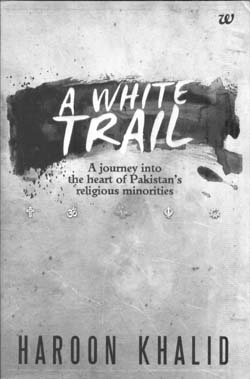
Haroon Khalid
2014
Minorities in Pakistan, published by Pakistan Publications, Karachi, was the first book I read on religious minorities in Pakistan before Bangladesh was created. The book begins with the words of Mahomed Ali Jinnah’s (spelt in a rather strange way) most significant part of the speech to the Constituent Assembly on August 11, 1947…
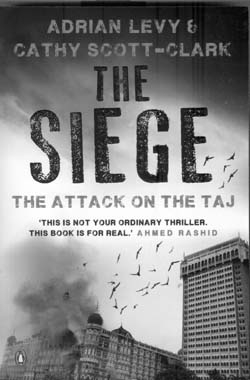
Adrian Levy and Catherine Scott-Clark
The title of the book suggests that it is only a narrative on the attack on Taj Hotel, one of the several targets during the three-day long Mumbai terrorist attacks in November 2008. And yet, The Siege tells a full story of the terrorist ‘Operation Bombay’, almost.
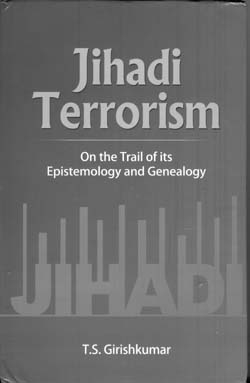
T.S. Girishkumar
Post-9/11, two words, namely Jihad and Terrorism, have acquired much of our attention. These terms unintentionally as well as intentionally are used interchangeably, often, to indicate that Islam and terrorism share an organic relationship. The book under review, on the face of it, seems to defy this generic…
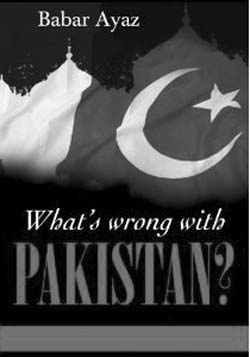
Babar Ayaz
Babar Ayaz’s book does not present an ordinary diagnostic enquiry into the health of a state called Pakistan. His is no run-of-the-mill attempt—quite a fad today—to put Pakistan in the dock. There are plenty of writers these days looking at Pakistan in an uncharitable manner.