
C.V. Ranganathan and Sanjeev Kumar
The 18th National Congress of the Com- munist Party of China (CPC), which took place on 8 to 14 November 2012, drew the attention of China scholars and foreign governments for multiple reasons. During the 18th Congress, CPC’s model of peaceful leadership transition was under test as the very first generation of leaders who came to power positions through a predetermined regulated script was set to retire after handing over the torch to the new leadership.
D. Suba Chandran
The later 2012 and early 2013 marked a major milestone in China when high level leadership changes took place in both the Communist Party of China (CPC) and the Chinese Government. The changes have enormous implications for China’s internal developments as well as foreign policy and regional security.
Kaushik Roy
Scholars studying India’s tradition of stra- tegic planning have generally focused on Kautilya’s Arthasastra (3rd century BCE) as the root text. However, another stream of research has debated whether India possesses a strategic culture at all. This perspective was propagated by George Tanham, an American defence analyst, who argues that India has always suffered, and continues to suffer, from a lack of a tradition of strategic thinking.
Aparna Basu
The last century continuing into the present one has seen the bloodiest and most destructive violence in recorded history carried into homes, habitats and whole communities, almost the wiping out of civilizations like the Mesopatamian in Iraq as chronicled in William Engdahl’s Century of War: Imperial Wars for Resources and Markets under the aegis of the Colonization and Recolonization Project.
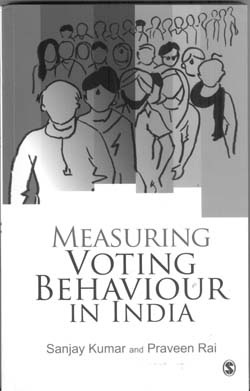
Sanjay Kumar
The book under review is an import- ant contribution to political research in India for two reasons. The first is about the structuring of the discipline of political science in Indian universities. To a large extent, the discipline of political science in India is what Yogendra Yadav mentions in his foreword to the book, ‘methodologically illiterate’ and as a result has not been able to develop a robust body of evidence based research.
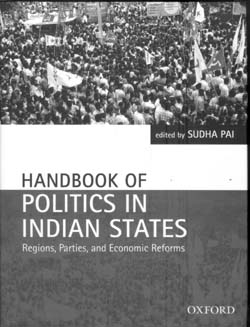
Sudha Pai
The last three decades have witnessed the onset of the processes that have resulted in a significant shift in the nature of India’s politics and economy. Among these processes, the most significant one has been the assertion of identity politics. Increasingly democratizing India has experienced a sharp rise in the conflicting claims of different ethnic categories…
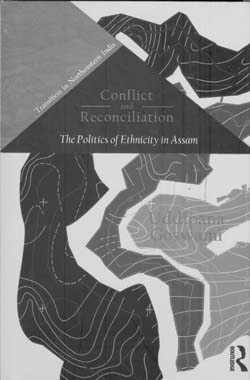
Uddipana Goswami
As a theatre of ethnic conflicts, India’s North East has generated a corpus of studies and policy prescriptions. Yet many of these, informed as they are by brief field visit/administrative posting in different parts of North East India, fail to capture the multilayered nature of conflicts among indeterminate ethnic groups in the region.
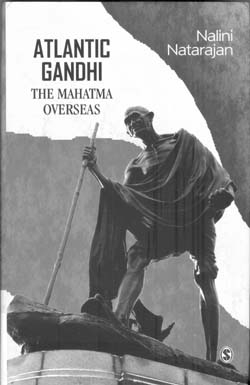
Nalini Natarajan
Surely the nature of the subject shapes the researcher? More so, if the subject is one of the most important individuals of the twentieth century, renowned for his contemplative philosophy? However, neither quiet contemplation nor honest soul-searching marks these two recent works on Gandhi, which are united, seemingly, in their hurried thoughts and haste to publish a work.
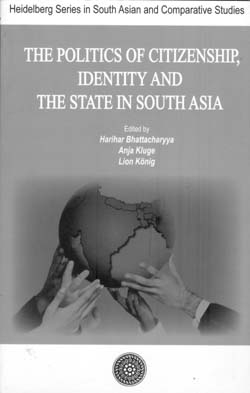
Harihar Bhattacharyya, Anja Kluge, and Lion Konig
Book reviews make a commentary on the argument of the book they seek to review. This task however becomes difficult with an edited book (in this case two) consisting of several chapters, that address themes of varying contexts. While the common theme of citizenship does unite them, citizenship studies in themselves have become vast enough to have journals, institutes, centres and courses dedicated to it.
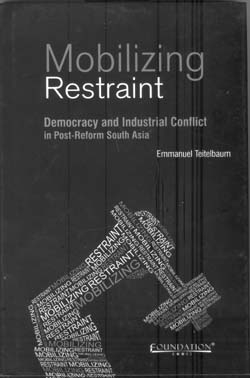
Emmanuel Teitelbaum
In the 1980s and 1990s, a series of academic studies were released that tried to explain the East Asian growth miracle in Singapore, Hong Kong, Taiwan and South Korea (Amsden, 1989, Haggard and Cheng, 1987, Haggard and Moon, 1990). The central puzzle that political economists explained through these case studies of East Asian Newly Industrialized Countries (NICs)…
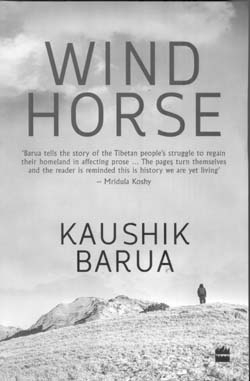
Kaushik Barua
2014
Barua’s very first novel is an intricate pattern of cultures and politics, refugees and resisters and locates South Asian politics in a wider context. A political analyst and commentator, he turns to Tibet but spreads out in other directions both space wise and at ideological levels—India, China, Nepal and the US.
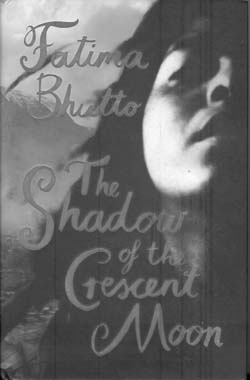
Fatima Bhutto
The wiki entry on Fatima Bhutto says, ‘she grew up effectively stateless’. In her debut novel The Shadow of the Crescent Moon, Fatima takes us to a town called Mir Ali, in North Waziristan, on the border of Pakistan and Afghanistan. The novel is about people but it is also about the place. The location so much a protagonist here.
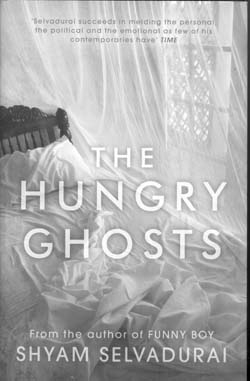
Shyam Selvadurai
It seems that it is difficult to write a south Asian novel, especially one written by an expatriate without asking the extraneous questions about exile and memory, politics and individual life histories, some implications of sexual and ideological preferences and the meaning of it all.
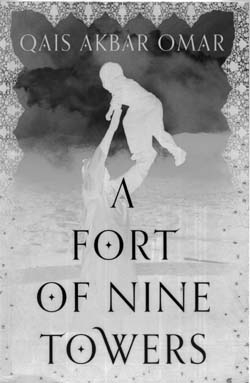
Qais Akbar Omar
A Fort of Nine Towers is the vivid recollection of a young Afghan author, Qais Akbar Omar, from the last years of the Russians in Afghanistan to the tumultuous years of factional fighting and the eventual dark and suffocating rule of the Taliban. It ends with 9/11 and the return of dance and music to the streets of Kabul.

Sharika Thiranagama
In My Mother’s House is certainly not yet another book on the civil war in Sri Lanka. The book stands out on three key grounds. One, despite being one of the victims of war and becoming a refugee at a young age, the author, Sharika Thiranagama, does not build a narrative of herself, but of others in the society that she had left more than two decades ago.
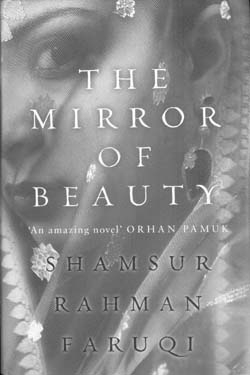
Shamsur Rahman Faruqi
When Orhan Pamuk and Mohammed Hanif, among many others, figure on the blurb of a book singing paeans to it, expectations run high and the reader feels apprehensive that she is bound to be disappointed by the actual reading of it. But this grand epic narrative lives up to every praise showered upon it and then some.
Naresh Fernandes
My first experience of Bombay was that of cognitive dissonance. This was partly due to the fact that my imagination of Bombay as a city was shaped, in substantial measure, by the newly emerging body of English literature based on the city and partly because the first place I was acquainted with, back in 2006,
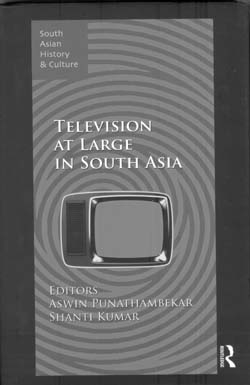
Aswin Punathambekar and Shanti Kumar
In 2008, Nalin Mehta1 wrote about satellite television being not only a marker of the progress of the idea of India, but also being a fundamental contributor to it. Earlier in 2001, Robin Jeffrey2 had written about regional language newspapers being vital hinges on which the nation as a whole was supported.
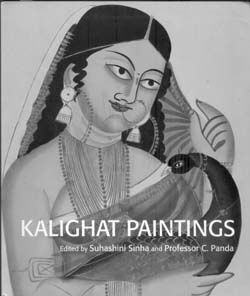
Suhasini Sinha and Professor C. Panda
Kalighat paintings…and brush drawings are monumental in their presentation on an otherwise mostly blank page. Preceding the work of Matisse, some of the brush drawings prefigure it. Out of Indian tradition and impressions of Western painting, the ‘bazaar’ painters, descendants of low-caste and hereditary craftsmen created forms as valid as, and akin to, some of the later work by leading artists in the West.
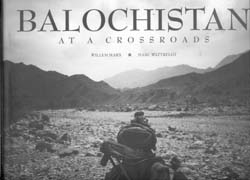
Willem Marx and Marc Wattrelot
Tantalizingly titled, this endearing coffee table volume showcases through stunning imagery—albeit in black and white—the sharply contrasting and majestic landscape of Balochistan; the book serves as a bird’s eye view on the region’s complex problems and convulsions of civil military conflict through the eyes of British reporter Willem Marx, along with his French photojournalist friend Marc Wattrelot.