
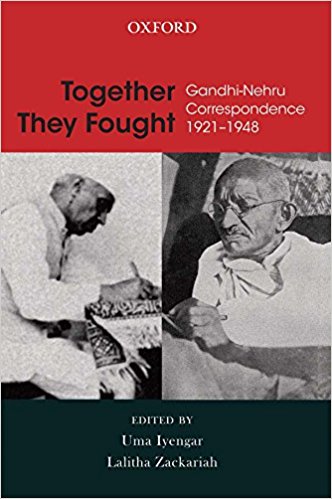
Uma Iyengar and Lalitha Zackariah
The Indian freedom movement is remarkable for its broad coalition of a variety of political opinion…

Indu Jain
When Indu Jain published her first collection of poems, titled 64 Poems, I had reviewed it in Hindi and remember to have said that she is a new poetess with promise. Her second collection is now available. I am glad that the promise is fulfilled. She has matured in her expression.Lecturer in Hindi…
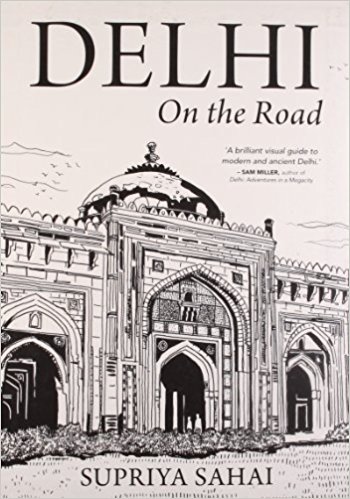
Supriya Sahai
It is notoriously easy to dislike Delhi. It is a fast, arrogant, ugly urban sprawl lacking basic infrastructure. It is populated largely by immigrants who are too busy getting ahead to notice the city or to make room for anyone. It is a city that forces its association on you and overwhelms you with a shameless brio…
Hirsh Sawhney
The city of Delhi has lived and died many times, it has reinvented itself many times over. In every age, it has had the good and the bad-the mushairas have thrived alongside prostitution rings. Those that have inherited this historical sense know that the good and the bad coexist. They take the darker side of Delhi in their stride…
Pat Barr
Kipling’s caricature of the hill-station memsahib is the one that has endured—frivolous, vain, sometimes adulterous, ‘a heartless bitch with an ever tinkling laugh’.Pat Barr has attempted to correct this image by describing the lives of a few women who came to India before the 1857 ‘mutiny’ and who were equal to their men-folk in courage…
D.K. Narayan
As the old song does not have it, old soldiers never die nor fade away, but write memoirs. But let us grant it to them, they usually make a much better job of it than old civil servants. At least General Chaudhuri does. The book is written in crisp and cultivated English, which I attribute less to Sandhurst and the lesser English school…

Ram K. Vepa
It is seldom that one finds genuine pleasure in reviewing a book, but involvement in its theme can make the exercise rewarding. Ram K. Vepa belongs to the Indian Administrative service. The blurb describes his book as one written by a ‘practising administrator for the benefit of other administrators’…
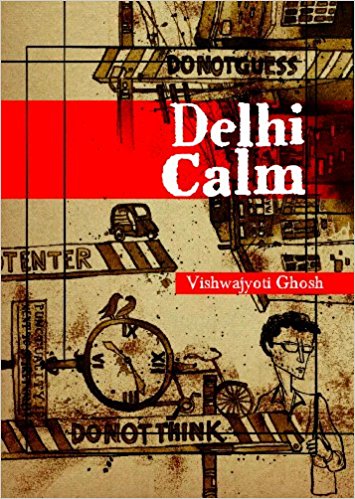
Vishwajyoti Ghosh
2012
History, notoriously, is not about the past.-Amitav Ghosh in The Man Behind the MosqueVishwajyoti’s Ghosh’s Delhi Calm reminds one of the daily calm that is being witnessed along with the daily alarm of scams, jams, inflation and general deflation of spirits. The phrase ‘India shining’ was the buzzword…
P.C. Jain
Based mainly on Sanskrit, Prakrit and Apabhramsha texts, the present work is a sequel to P.C Jain’s Labour in Ancient India (1971). Divided into six chapters, it seeks to study the social and economic condition of various categories of Indian…
H.M. Siddiqui
According to Dr. S. Gopal, Jawaharlal Nehru’s involvement with the kisan struggles in eastern U.P. in the early twenties had a greater impact on him than his ‘unformative years’ at Cambridge and in London when he was exposed to the influence of Fabianism. Another scholar, Dr. Gyanendra Pande…
S.C. Malik
Most seminars based on a broad theme shed some light and create some obscurity. This one is no exception. Planned as an open-ended discussion, it studies movements of protest and reform in India over the centuries, directed against things as disparate as ‘slavery, untouchability and colonialism’ (in the words of a participant)…
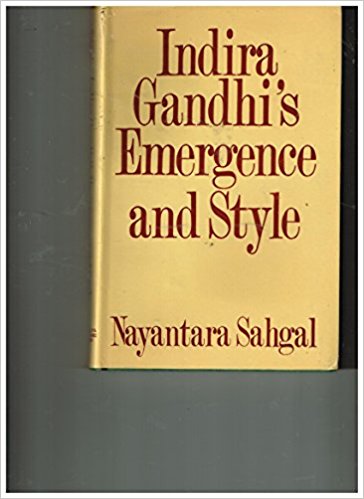
Nayantara Sahgal
As another addition to the spate of publications on Indira Gandhi and Emergency, this book does not provide any fresh insights into either the personality of the former Prime Minister or on the economic/political developments which led to centralization of the state in the form of Emergency…
Urmila Phadnis
In the last decade, studies on women have made an impact in the field of literature and social sciences. Whether to become a ‘libber’ or be known as ‘Ms’ is a topic of active discussion in women’s forums the world over. The women’s liberation movement has highlighted the so-called weaker sex’s increasing…
Brojendra Nath Banerjee
Foreign aid to India is a subject which has attracted good deal of scholarly attention. Its topicality, too, has seen many revivals, the latest occasion being Carter’s visit to India early this year. Surprisingly, the works available so far have failed to present an in-depth analysis on the subject, verging…
Meenakshi Mukerjee
1978
English has an uneasy existence in India, for we in India are not at home with it in spite of the Times Literary Supplement’s consistent advocacy of the recognition of Indian English. In India it is nobody’s language unless you would like to consider it the language of Anglo-Indians (Eurasians), but their number is small…
Indira Parthasarathy
A Tamil proverb says that a half-nosed person is the king among noseless persons, This proverb can be applied with precision in the modern Tamil literary sphere where anything vaguely resembling political writing and everything that is made to seem revolutionary is hailed. The mere mention of a worker, revolution…
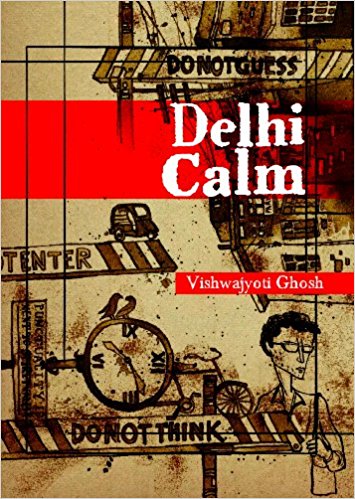
Vishwajyoti Ghosh
2017
History, notoriously, is not about the past.-Amitav Ghosh in The Man Behind the MosqueVishwajyoti’s Ghosh’s Delhi Calm reminds one of the daily calm that is being witnessed along with the daily alarm of scams, jams, inflation and general deflation of spirits. The phrase ‘India shining’ was the buzzword a few years back…
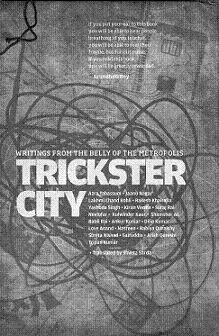
Azra Tabassum
2012
Trickster City is an extraordinary collection of stories, anecdotes, observations, biographical fragments about arrival, about belonging, about identity and about the fragility of existence. It is about a Delhi that is known and yet unfamiliar. Moving away from the easily recognizable, historically rich and elitist neighbourhoods…
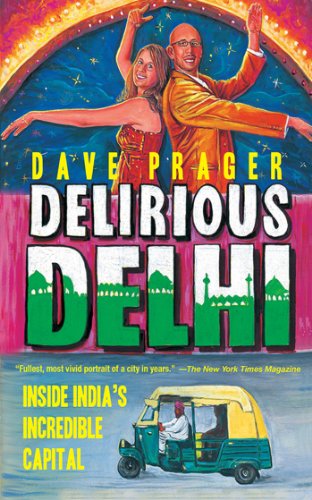
Dave Prager
‘Delhi is whatever you make of it’, muses New Yorker Dave Prager in Delirious Delhi, the Capital’s latest travelogue-cum-survival guide. ‘Every person defines Delhi for his or her self, and no two Delhi struggles are the same. At any given point, your experience will be the exact oppo-site of my experience, and we’ll both be right.’..
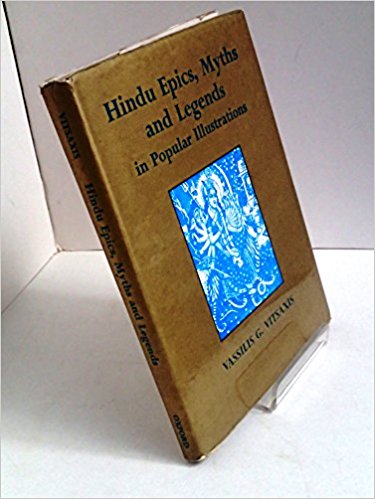
Vassilis G. Vitsaxis
Kitsch and homogenization have been two important techniques used in the reduction of the person to the mass man by the mass society of today.Kitsch means that products of mass culture in which the aesthetic and intellectual work is done for the recipient, making him a passive recipient rather than an active discoverer…