
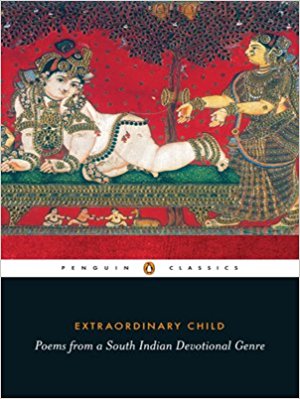
During the December 2007 music festival in Chennai, I attended a dance performance by Alarmel Valli. The programme included a short piece, based on a verse from Madurai Meenakshiammai Pillaittamil. Alarmel Valli had choreographed a single verse—out of the hundred and two which make up the entire poem—from its varugai (beckoning/arrival) section. Through her exegesis preceding the dance, the dance itself, and the singing that accompanied it, Alarmel Valli demonstrated how the poem is both a mother’s plea to a beloved, wayward child, and the plea of a devotee to the Mother, the Goddess. In those brief moments, the dancer caught the complexities of Pillaittamil: the density of allusion, the surprising tonal and emotional shifts, the depth of devotion in the exquisite last line, ‘varuga, varugave’. Paula Richman’s Extraordinary Child: Poems from a South Indian Devotional Genre (first published in 1997, and reissued by Penguin India this year) follows a methodology that can be compared to Alarmel Valli’s.
This is not an anthology of translations of entire Pillaittamil poems, nor even of entire sections; it is a book about Pillaittamil, the first in English to study it as a genre, illustrated by a careful selection and translation of individual verses from a wide range of poems.
Part 1 of Richman’s book explicates how a Pillaittamil poem should be read. Pillaittamil is a devotional genre in Tamil poetry which developed from the 12th century onwards, the most important feature of which is that the poet, in the persona of a mother,