
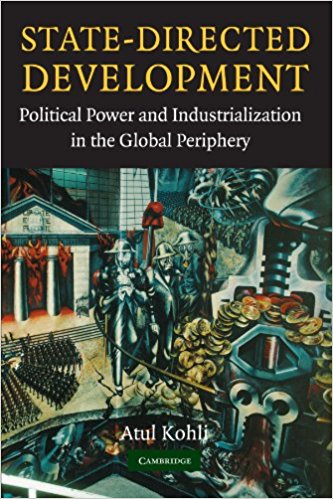
This book is to be welcomed for a number of reasons. Firstly, it brings politics back into the discussion of development issues; secondly it examines industrialization as a process that transforms society (rather than viewing it as merely a numerical growth in industrial output); thirdly, by analysing the experiences of Nigeria, India, Brazil and South Korea it addresses the problems of countries with undistinguished records, in addition to that of an East Asian Tiger. Finally, it moves away from the tiresome (if not misleading) approach of treating the growth of the information technology industry in India as an indication of the coming fulfillment of the industrialization process itself. Kohli also differentiates himself from neoliberal analysts of industrialization by bringing the historical experiences of colonialism into his discussion of the formation of the state in each of the countries he examines.
April 2006, volume 30, No 4