
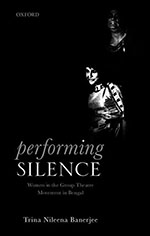
My first glimpse into the lives of women in Bengali Group Theatre was through the Seagull Theatre Quarterly Volumes 27/28 (2000). Focusing on directors and female actors in Group Theatre scenario of Kolkata, the discussions brought out a reflective recollection of many intertwined lives. The most moving aspect of women’s love for theatre, craving for self-expression and the economic need to earn were brought out in a complex narrative. It also threw open the unscarred wounds of how societal inequalities continued on the floor of theatre as well; most women had to play a ‘predefined constricted role’; very often their opinions did not matter. Despite all these hurdles women prevailed and persisted in exploring theatre as an art form. With Trina Nileena Banerjee’s full-length study meticulously analysing the lived experiences of the leading female practitioners of Bengali Group Theatres, we have, as Anuradha Kapur says, ‘a landmark book that suggests alternative ways of researching, composing and framing the material conditions of performance’.
In the beginning was Indian People’s Theatre Association and the Communist Party of India. It meant the coming together of art, politics, modes of living and building complex solidarities. Banerjee begins her study from IPTA and ends with the Emergency. The linear chronology of her chapters is a façade of ‘moving’ times. The stagnation one encounters within IPTA seems to take many different shades in the ensuing decades.
52333 272271Ive writers block that comes and goes and I need to have to find a way to get rid of my writers block. It can occasionally be so bad I can barley make sentences. Any suggestions? 472508
9056 950085I conceive this internet site has quite amazing indited content material material posts . 819114
857960 768441I enjoy the appear of your internet site. I lately built mine and I was searching for some style tips and you gave me a few. Could I ask you whether you developed the web site by youself? 979885
941154 131853Quite fascinating subject , thanks for posting . 257935