
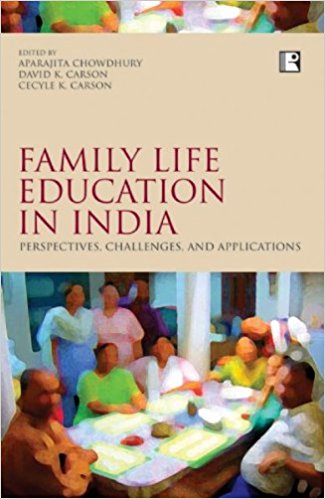
The idea of family life education (FLE) evokes many images when it comes to India. The editors of the book under review remind us that FLE is relatively a new academic discipline and there exists no research-oriented theory based book on the subject. Preliminary search reveals this is not the case. A plethora of cross-national research exists on the role of the family in creating social reproductive labour1, changing role of family in the era of globalization, gender relations and intra-household inequalities within families2, the role of son-preference in female foeticide, work-family conflicts and well-being3, sharing of work and caring responsibilities; to name a few. Existing family literature is divided between normative ideologies of preserving family values, and the individual-centered view of the autonomous household. This book clearly follows the former traditional perspective. The premise of the book appears to be that the family has always been at the foundation of Indian society. Family members are now being exposed to new ideas and are not prepared or equipped to face the challenging world of today.
November 2006, volume 30, No 11
234615 556752quite good post, i undoubtedly adore this remarkable site, carry on it 994993
684923 772163Aw, this was an exceptionally nice post. In concept I would like to location in writing such as this moreover – spending time and actual effort to create a excellent article but so what can I say I procrastinate alot through no indicates uncover a strategy to go completed. 918486