

Efforts to achieve justice and compassion for the protection and safety of animals have been ongoing. However, acts of violence towards animals continue to be rampant and prevalent. Activists, politicians, and people from all walks of life around the world have made everyday efforts to become the voice for voiceless animals and call for stricter rules and legislation.
Reading books has been an essential part of human civilization for centuries. It not only provides knowledge, it enriches the mind, sharpens the intellect, and broadens one’s horizons. Famous authors, politicians, and scientists have all emphasized the importance of reading and its positive impact on one’s life. In this essay, we will explore the reasons why reading books is important and why it cannot be substituted by the internet.
In the last two decades, Digital Empowerment Foundation (DEF) has brought out a variety of publications, including research, advocacy and impact-driven reports, books, papers, etc., related to technology and its impact on society, including misinformation, internet shutdowns, and the role of social media in people’s lives.
Kanad Sinha
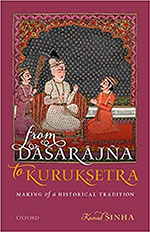
A young and yet, already an acclaimed academic, Kanad Sinha has brought out a stunning book entitled From Dasarajna to Kuruksetra. The very utterance on Kurukshetra immediately connects one to the Mahabharata. On the other hand, Dasarajna, literally the battle of ten chiefs who were defeated by another powerful chief, Sudas, on the banks of the river Parushni (modern Ravi) refers to the outstanding political event in the Rigvedic clan society. The book seeks to establish connections between these two battles fought in separate historical epochs.
Kamini Dandapani
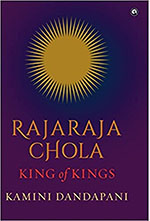
Growing interest in the history of peninsular India has sparked a series of excellent books of value to the specialist and lay reader alike. Kamini Dandapani disavows being either a historian or a writer by profession, but her Rajajraja Chola, King of Kings does long-delayed justice to a ruler who is among the greats of the world and to a dynasty that for several hundred years was the shining light of India with a legacy that stretches to this day.
Khwaja Hasan Nizami
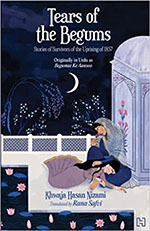
Tears of the Begums is the first-ever English translation by Rana Safvi of Begumat ke Aansoo, originally written in Urdu by Khwaja Hasan Nizami, a follower of the Sufi order Chishti-Nizamiya and a descendant of Hazrat Nizamuddin Auliya. Born almost twenty years after the revolt of 1857, Hasan Nizami’s spiritual pursuits led him to investigate the events of 1857, the encounters of the Mughal Emperor Bahadur Shah Zafar, the cruelties meted out to the royal family and the plight of royal family members, many of them women, who survived the revolt.
Mary E. John
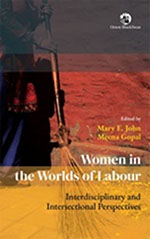
Women in the Worlds of Labour, originating in a conference on the same theme in 2014, brings wide-ranging critical and theoretical approaches into conversation with one another. While not claiming to be comprehensive, the editors lay out the analytical and historical importance of an interdisciplinary and intersectional perspective on the subject.
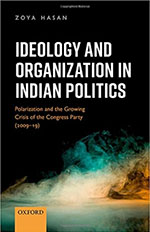
Zoya Hasan
This timely study of the Indian National Congress of yore, now widely referred to as the Congress Party, in the context of political processes in the post-sixteenth general elections in India in 2014, comes at a time when Rahul Gandhi, a scion of the Nehru-Gandhi dynasty, disparaged as ‘Pappu’ (immature and naïve) by the BJP, has recently completed the ‘Bharat Jodo Yatra’ that began on 7 September 2022 to traverse 3,570 kilometres to reach Srinagar after a 150-day journey.
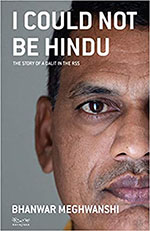
Bhanwar Meghwanshi
I Could Not Be Hindu: The Story of a Dalit in the RSS by Bhanwar Meghwanshi, an autobiographical note of his political genesis, where he shares his experiences with the RSS and the reasons he quit, is the narrative of an agonized author. Unlike other autobiographies which focus on different aspects of life, this book premises Meghwanshi’s metamorphosis of political career and varied discourses of political engagement.
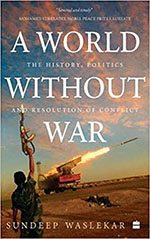
Sundeep Waslekar
Can mankind eliminate nuclear weapons and eliminate the greatest existential risks to the human species and the existence of the planet? This is one of the most intriguing concerns that plague people in modern times. Logic will disagree with such a question or even assertion, but evidence suggests that a number of key global leaders and dignitaries have shown willingness for such a vision, not immediately attainable but may be in the foreseeable future.
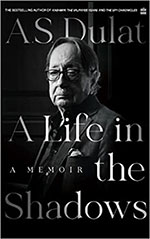
AS Dulat
AS Dulat is reported to have put out, the book under review has been written without taking clearance from current-day intelligence minders. An earlier government order had it that those serving and retired from intelligence services were required to take such clearance prior to publishing anything related to their work. Dulat, former Research and Analysis Wing (R&AW) head and Intelligence Bureau (IB) officer, has cocked a snook at the order with good reason. On the surface, there is nothing in the book that should see him fall afoul of powers-that-be.

Ulrike Herrmann
Economic growth and climate protection are mutually exclusive, which is why Capitalism has no future, argues business journalist Ulrike Herrmann in her new book. At the same time, she tries not to fundamentally badmouth capitalism.How does Capitalism work? Ulrike Herrmann has been dealing with this complex question for years. In her books, she has analysed how the capitalist system came into being, what its weaknesses are and why it is prone to crises.
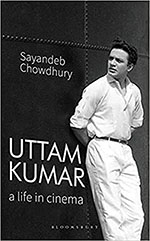
Sayandeb Chowdhury
As the title indicates, the book reviewed here is about Uttam Kumar, the legendary superstar of Bengali films. The author’s website
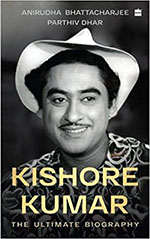
Anirudha Bhattacharjee
The only reason Kishore Kumar might not be counted among the global all-time great artists would be on account of the region of his birth. Had he been born into the Anglo-Saxon world, his incomparable talent and unique career would have placed him right at the top of the talent list, with dedicated retrospectives, books, papers, and an assured place in film studies/popular music courses.
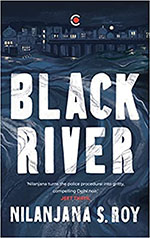
Nilanjana S. Roy
2022
Despite featuring in any number of literary works in English, Delhi never got to be immortalized in the definitive way that contemporary Bombay/Mumbai was in Suketu Mehta’s Maximum City. Black River’s title is, of course, a salute to Delhi’s river, Yamuna, one of whose names is Kalindi, quite besides the fact that pollution and effluents in the last few decades have rendered her nearly black.

Anees Salim
2022
In yet another riveting piece of literature, Anees Salim revives the theme of death as perceived by a young adult protagonist. The bellboy consistently maintains the ever-imposing doom of death by suicide and/or accident seen from a safe distance of ‘forced indifference’. During the course of the novel, we see the keen observer of deaths, Latif, turn into an amateur anthropologist who starts making mental notes of suicides in Paradise Lodge.

Terry Eagleton
Yet another book on critics and criticism by Terry Eagleton, the most celebrated among the present-day cultural and literary critics of Britain! And it is a book on the heroes of a bygone era as well. Surely another book on TS Eliot, IA Richards, William Empson, FR Leavis and Raymond Williams—may be with the exception of the last named, who is still regarded as a guru of the prevailing cultural studies approach—will likely have as few takers as, for instance, another book on the English novel from Dickens to Lawrence.

Anisur Rahman
Reporting on the stupendous footfall at Jashn-e-Rekhta recently, The New York Times reported, ‘That 300,000 people celebrated Urdu verse during a three-day festival was testament to the peculiar quality of language in India’ and the report was titled, ‘Where Romantic Poetry in a Fading Language Draws Stadium Crowds’. Even though Urdu poetry, in its entirety, is indeed not romantic, yet every time it is mentioned, it invariably invokes the idea of romance.
Premchand
Karbala: A Historical Play, was written during the second half of 1923 and published in 1924: a period of great significance in the history of India’s struggle for freedom. The writer, Munshi Premchand, also a man of significance, was a well-known Urdu and Hindi writer. Perhaps there is nary a child in India, or a man of some intellect, who has not read his Godan, the greatest Hindi novel of modern Indian literature written in 1936, and Eidgah, a well-known story published in 1933.
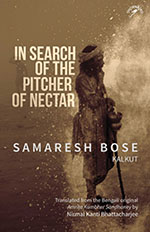
Samaresh Bose (Kalkut)
The Kumbh-mela is one of the major Hindu religious pilgrimages and festivals. It is celebrated in a cycle of approximately twelve years, to commemorate every revolution Brihaspati (Jupiter) completes, at four river-bank pilgrimage sites across India: Prayagraj or Allahabad (at the confluence of the rivers Ganges, Yamuna, and Saraswati), Haridwar (Ganges), Nashik (Godavari) and Ujjain (Shipra). The mythological story goes that after the churning of the ocean, the gods found the nectar for immortality