
At the Jaipur Literary Festival this year, there were about half a dozen panel discussions on translation and multilingual literatures,
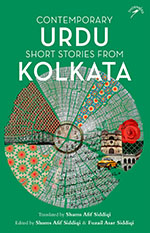
Edited by Shams Afif Siddiqi and Fuzail Asar Siddiqi Translated from the original Urdu by Shams Afif Siddiqi
After all what is the purpose of the story, if it cannot help us leave time behind?’ asks Gocharan Ray, the signalman in Siddique Alam’s story ‘The Stopped Clock’.
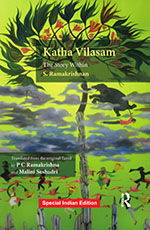
By S. Ramakrishnan. Translated from the original Tamil by PC Ramakrishna and Malini Seshadri
It was written as a year-long series in the well-known magazine, Ananda Vikatan and was well received by readers. The aim was ‘to introduce young readers to outstanding Tamil stories’ (p. ix). The collection has been translated with sensitivity by PC Ramakrishna and Malini Seshadri
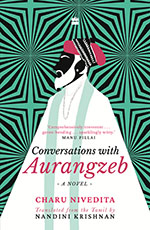
By Charu Nivedita. Translated from the original Tamil by Nandini Krishnan
The first point to note about this work, a fact that the ‘translator’ records in her Note, is that it is no straightforward translation of the original Tamil novel
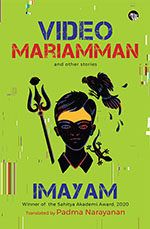
By Imayam. Translated from the original Tamil by Padma Narayanan
The harsh realities of the caste system and patriarchy are brought to light in this collection of 14 heart-breaking stories of Sahitya Akademi awarded writer Imayam (V Annamalai). They showcase his unparalleled storytelling skills, marked by a strong sense of justice.
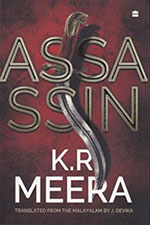
By K.R. Meera. Translated from the original Malayalam by J. Devika
2023
The English translation of renowned Malayalam author KR Meera’s Assassin narrates the ‘story’ of a middle-aged protagonist,
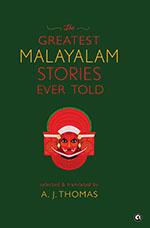
Selected and translated by A. J. Thomas
‘After the action-dominated early stories, the short story was centred around, first, the specific outward expressions of life in the social-reformist stories, then the inner life of the individual and, finally, the abstract plane of indirect experiences full of paradoxes involving a philosophical outlook.
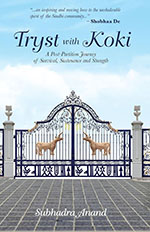
By Subhadra Anand
The title of the book is metaphorical and symbolic of the lost cultural harmony and its revival in a post-Partition milieu. Sheila,

By Jonaki Ray
2023
Firefly Memories contains poems written since 2010. It would be remiss of us to look at current Indian Poetry in English without paying attention to the publishing facilities that put out a book in print.
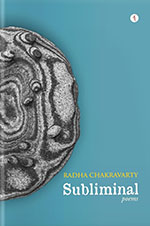
By Radha Chakravarty
A distinct symbolism underlines Radha Chakravarty’s debut collection of poems Subliminal.
The title hints at a presence which though unseen is palpable.
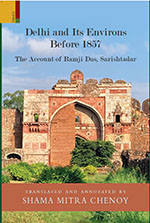
Translated and Annotated by Shama Mitra Chenoy
While Sair-ul Manazil was the first attempt to chronicle the city, its structures, its people and their culture and weaving its past with the present, Reminiscences of Imperial Delhi was a compilation of the pictures, paintings and brief texts on certain people and structures of Delhi as it was in 1844
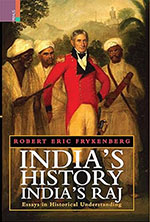
By Robert Eric Frykenberg
Each of the twenty-five chapters is an essay written by Frykenberg, one of the most important economic historians of our times, during a career spanning over six decades. Besides economic issues, the articles in the present volume also deliberate upon facets pertaining to social,
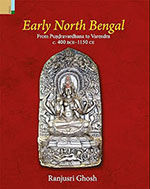
By Ranjusri Ghosh
The author informs that these sculptures are housed in different places—homes, courts, schools, private collections and police stations.
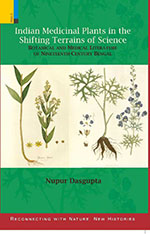
By Nupur Dasgupta
Nevertheless, as studies on British colonialism in India quintessentially sought to figure out the transition of non-European countries under colonial dominance, British engagement with plants and their medicinal value became too marginal to find mention in scholarly enquiries.
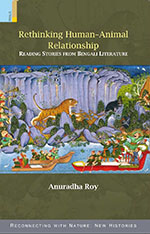
By Anuradha Roy
The work was initially undertaken as a project that was part of a research programme in Jadavpur University on the environmental history of South Asia.
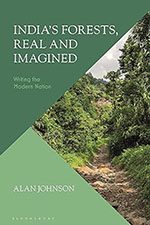
By Alan Johnson
That an academic book on literary representations of Indian forests provides a searching examination of Indian nationhood in the last 150 years makes it already a remarkable work of criticism; that its vantage—the forests of India—also yields a kaleidoscopic view of India’s diverse and ancient past of ecological engagement makes Alan Johnson’s India’s Forests an invaluable work of literary and environmentalist historiography. In an excellent, wide-ranging introduction
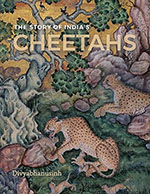
By Divyabhanusinh
The Story of India’s Cheetahs by Divyabhanusinh Chavda has been written with the intent to arouse interest in the animal and to create an awareness about the Cheetah reintroduction programme.
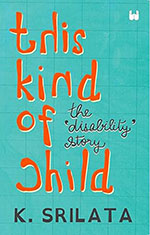
By K. Srilata
Disability is born out of interactions of these impairments of mind and body with the external settings comprising the physical features present in the environment and the human components coupled with attitudes and perspectives.

Edited by Usha Raman and Sumana Kasturi
The way he was described by the media defined the way all young offenders came to be caricatured in the society at large, which led to a further outrage against juvenile justice law in the country,
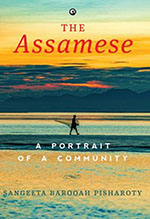
By Sangeeta Barooah Pisharoty
This is a pioneering effort to present the myriad important facets of the Assamese community in English. The primary objective is to fill the knowledge gaps about the community, especially among the younger members and the fast-increasing diaspora, and equally importantly, to reach out to the non-Assamese in India and the English-speaking world.