
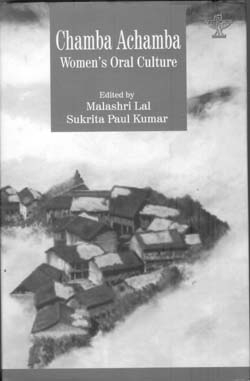
Malashri Lal
Chamba Achamba seeks to record and narrate in detail the unique and rich cultural traditions associated with the beautiful area of Himachal Pradesh which has always been synonymous with natural splendour, music, festivals and legends that fascinate.
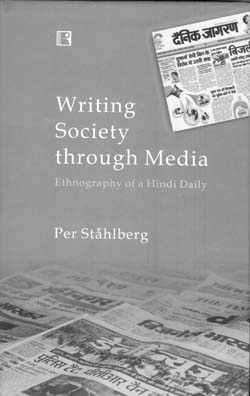
Per Stahlberg
I picked up Per Stahlberg’s book, or rather, his doctoral thesis, Writing Society through Media: Ethnography of a Hindi Daily with a lot of interest. A keen look into what makes Hindi journalism tick, especially seen through the lens of a journalist working in the Hindi heartland) is a fascinating topic. I used to work in a newspaper myself, have travelled in Uttar Pradesh…
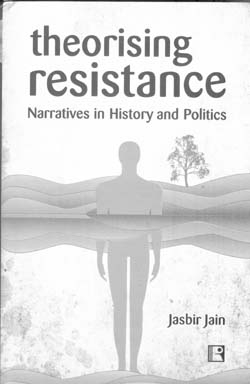
Jasbir Jain
The book under review takes the difficult path of exploring resistance in literature. Resistance stands against conformism. Resistance is disapproval of conformism. It attempts to discontinue ‘obviousness’ and ventures into the oblivion terrain that has been branded as ‘abnormal’. Therefore, ‘theoretical intervention’ on resistance must be applauded.
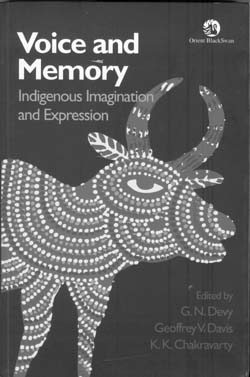
G.N. Devy
This edited volume of essays is a critical enquiry into the polyphonic cultures and literatures of indigenous people across the world and is a companion volume to Indigeneity: Culture and Representation (2009). These two collections of select essays were compiled after the ‘Chotro’ conference that was organized in Delhi. ‘Chotro’ means a ‘place where villagers gather’…
Avadhesh Kumar Singh
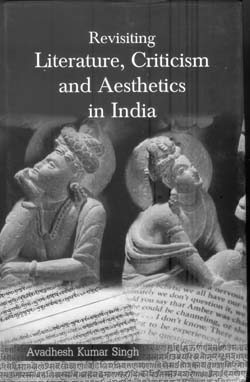
Revisiting Literature, Criticism and Aesthet- ics in India is an ambitious and valiant attempt at doing and being several different things. It brings together sixteen of the veteran author’s essays on themes like ‘Word and Beyond: Questions of Meaning and Interpretation’, ‘Theory of Creative Process in Narratives about the Ramayana and the Mahabharata’…
Nilima Sinha
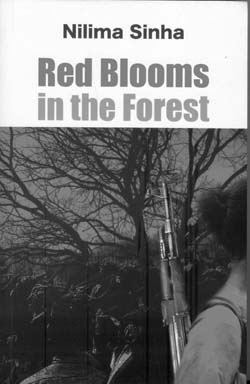
This book belongs to the genre of Hajar Churashir Maa by Mahashweta Devi and Uttaradhikar-Kalabela-Kalapurush—trilogy by Samaresh Majumdar, treating the difficult theme of the Naxalite movement. But while those relate to the movement among educated and urban youth (sparked off in 1967 at the village of Naxalbari in West Bengal), Nilima Sinha’s novel refers to the more recent insurgence in Jharkhand as seen by a local girl.
Sabeena Gadihoke
When, almost fifty years after the first daguerreotype arrived in Europe, George Eastman invented the small ‘brownie’ camera, he brought photography into homes worldwide. Indian photographic aficionados were not far behind their western counterparts, though initially photography was an elite preoccupation. Soon, Kodak advertisements that used women as models were validating a slowly growing tradition of the woman with a camera.

Shilpi Goswami and Deepak Bharathan
The three books reviewed largely deal with the representation of history—partly (as in the first book) or exclusively (as in the other two books) through the medium of historical architecture.
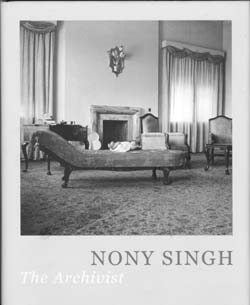
The first book is essentially a catalogue of an exhibition centred around an album of photographs of the Sri Aurobindo Ashram at Pondicherry, taken in 1950 by Henri Cartier-Bresson.
Qazi Abdul Ghaffar
2014
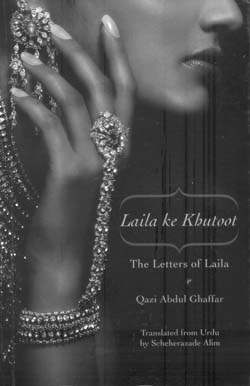
Laila ke khutoot, literally meaning ‘Let- ters of Laila’, is the story of a prostitute, her perspectives on men and the idea of conjugal love revealed through the letters she wrote to one of her lovers. In the latter part of the book ‘Majnun ki diary’ Qazi Abdul Ghaffar, the author tries to portray the confusion, cynicism and alienation of so called educated young men who had gone astray in pursuit of their unbridled sensuality.
Nida Kirmani
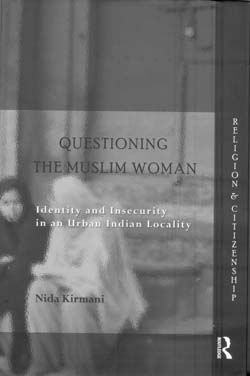
Questioning the Muslim Woman by Nida Kirmani is a remarkable piece of work in which she tries to deconstruct the category ‘Muslim women’ through the narrative approach. The study was conducted in a Muslim majority urban locality (Zakir Nagar) of the capital city of India. Though the category of Muslim women or issue of Muslim women has always been a debated subject…
Behnam Sadeghi
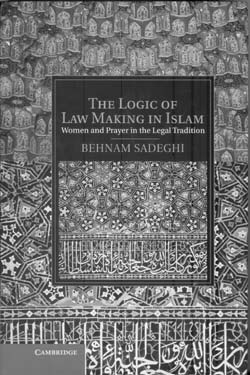
In many general and not particularly well- informed opinions on Islam there is an instinctive tendency to view it as hopelessly out of date and fossilized. Such opinions are often the product of hastily formulated media reportage. It is here that scholarship of the kind contained in Behnam Sadeghi’s book the Logic of Law Making in Islam: Women and Prayer in the Legal Tradition…
Ruth Vanita
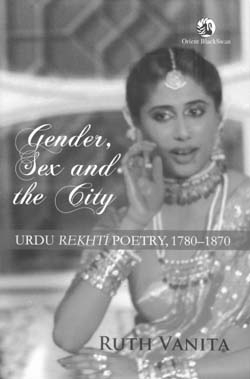
This book draws one into the world of rekhti (Urdu) poetry in the late 18th and 19th centuries and brings to attention the ground issues of gender and sexuality in those times. The colonial dismissal of diverse sexuality present in the societyhad led to the creation of a homogenized ‘mainstream’ that pushed many other realities into the margins.
Nirmala Lakshman
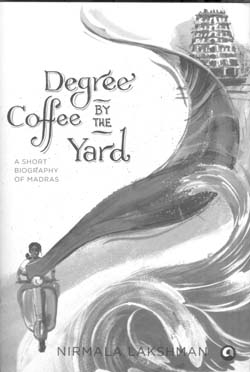
There is a reason why this book is called Degree Coffee by the Yard. With an interesting word play on ‘yard’, it automatically evokes one of the many sensibilities that create and sustain Chennai: the action of cooling a ‘tumbler’ of coffee by pouring it from a height into another tumbler, seamlessly measuring out a yard of distance with the hot, flowing liquid between the two containers.
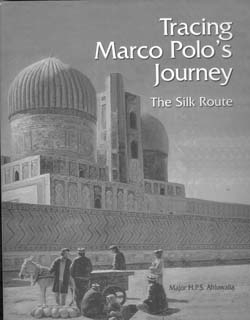
Major H.P.S. Ahluwalia
Lhasa,Tashkent, Gobi, Xian, Samarkand, Syr-Darya, Kashgar, Heaven Lake, Taklaman, Bukhara. Names that instantly evoke visions of adventure, mystery, antiquity, remoteness, bygone civilizations and trail blazing rulers and travellers. Tracing Marco Polo’s Journey : The Silk Route, is a record of the historic expedition undertaken by Major H.P.S. Ahluwalia and his team in the summer of 1994.
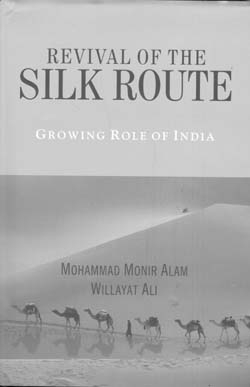
Mohammad Monir Alam and Willayat Ali
Ferdinand von Richthofen’s catchy meta- phor for an ancient trade route crisscrossing Asia and Europe symbolizing mystery and exotic splendour, the Silk Route seems to have returned to political consciousness today. Historically, this trade route facilitated not only movement of goods, but also linked various civilizations: transmitting cultures, traditions, beliefs, religions, languages and technologies.
Jasjit Singh
A powerful voice on national security fell silent on 4 Aug 2013 when Air Cmde. (Retd.) Jasjit Singh, recipient of Padma Bhushan for a lifetime’s contribution to national security passed away. Many have mourned his loss at a time when India stares at an unpredictable world fraught with new faultlines and challenges. But, Singh was used to having the ‘last word’.
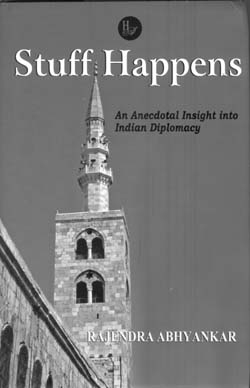
Rajendra Abhyankar
A diplomat writes more than anyone in any other profession, apart from journalists, novelists and the like whose very calling is to write. It is not, as far as a diplomat is concerned; his calling is to represent his country abroad, persuading, negotiating, and, as Ernest Satow put it in his Guide to Diplomatic Practice, the application of intelligence and tact to the conduct of relations between nations.
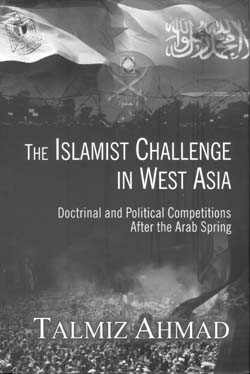
Talmiz Ahmad
The rise of political Islam has been the prominent development in the aftermath of the popular protest movements against long-entrenched regimes in West Asia and North Africa (WANA). The book under review captures the complexities of these fast-paced events admirably. It places in context the historical and ideological roots of political Islam and helps the reader understand the challenges that its rise has encumbered.
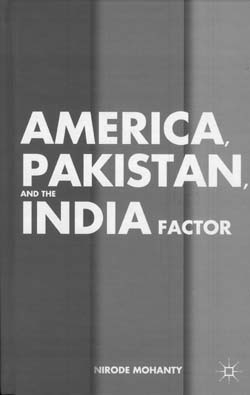
Nirode Mohanty
Nirode Mohanty’s book forms part of many current writings on the American-Pakistani relationship, a relationship which is under critical scrutiny as the United States begins to draw down from Afghanistan, calling in question its post-withdrawal relationship. It needs to be underscored that the entire contour of the relationship over the last six decades has been highly transactional in nature marked by divergent strategic interests.
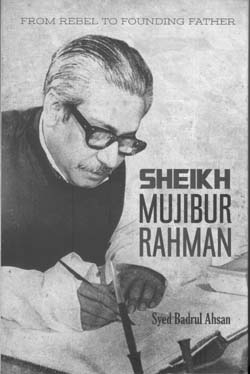
Syed Badrul Ahsan
This book is a biography of Bangabandhu Shiekh Mujibur Rahman, his early life as a politician and the events post Partition that shaped his outlook and approach to politics. Written by Badrul Ahsan, current Executive Editor of the Daily Star newspaper this book depicts the life of Mujib and his brutal assassination that closed an important chapter of Bangladesh’s political history.