

Bepin Behari
The advent of the Janata Party was not foreseen when Bepin Behari published his book, but the Party’s emphasis since it came to power on what can be identified as a Gandhian approach to the problem of rural poverty in India makes the book topical. He quotes Gandhi: ‘I would favour the use…
Uma Vasudev
Excesses of the Emergency is a much¬ battered cliche, but a post-Emergency excess—in both senses of the word—for which no Shah Commission is possible is the flood of books on it. These have come in all shapes and sizes and they do not please, as Keats said poetry should, ‘by a fine excess’…
K.P.S. Menon
Oscar Wilde said of Hall Caine that the latter always wrote at the top of his voice. This is a charge which can never be made against K.P.S. Menon. He does not create any problems of decibel tolerance to his readers. His own style of writing is perfectly modulated, controlled and decorous…
Benoy Ghosh
No city in India commands a greater mystique than Calcutta. No city except Varanasi has so doggedly clung to its ‘character’ as has the city of Calcutta. It fascinates as well as horrifies visitors from abroad; it inspires hatred as well as love. Till today it is man’s most unplanned metropolis; it has more people…
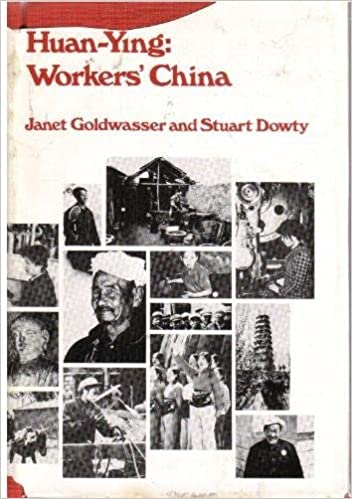
Janet Goldwasser and Stuart Dowty
Even though there has been a slight slump in the flow of American visitors to China in recent months, the travel accounts of the period of the ‘China Rush’ from 1971 till 1973 continue to pour out. One type of account coming from the American radicals of the anti-war campaigns seems to show their radical utopia emerging in China…
Ursula Hicks
A relatively late arrival in the sphere of applied economics, the new branch of urban economics has grown at a phenomenal rate—at least in terms of the volume of literature. But unfortunately not many among the growing number of new volumes on urban economics have much to say…
Dr. Shivarama Karanth
Books on the fine arts are few in Kannada, and most of these offer a few general remarks on the growth of these arts in India—such as that the arts have been wedded to religion in this country for centuries—and then proceed to introduce the different schools of a particular art. Dr. Karanth’s…
Charles Fabri
Hungarian by birth, Charles Louis Fabri (18991968) became in later life as much an Indian as an Indologist. He was a member of Aurel Stein’s archaeological expedition into the heartland of Asia in the thirties, taught at Santiniketan, was curator of the Lahore Museum, and spent the last two decades of his life in Delhi…
Aruna Sitesh
Doctoral dissertations, especially in our time, have a strange habit of finding their way into print. Most of these do not seem to have serious academic value; many of them are not read anyway and are really the products of extra-academic compulsions (one of which is the famous, no longer transatlantic ‘publish or perish’)…
Richard Adams
1976
Richard Adams writes a memorable story of redemption through suffering, in his intensely moving Shardik. Readers who are acquainted with Watership Down will find Richard Adam’s second book quite unlike his first in theme and content. Yet equally arresting. The style of writing, the scale…
Tara Ali Baig
This book should dispel the apprehension—which is there in the minds of many in the country—that the message of the International Women’s Year and the revival of the movement for development of women, might disrupt our way of life. It reveals the basic fact that even English educated upper middle class urban women…
Andre Gunder Frank
Andre Gunder Frank’s book which was written at the very beginning of the ascent of the ‘Dependence theory’ is a difficult book to read and to review. It does not make for easy reading partly because the draft which was prepared in 1963, was published almost without change after a lapse of several years…
Urmila Phadnis
In any study of developing societies and particularly when efforts are made to analyse the process of transition from traditional patterns to those of modernity, it is inevitable to blur the line between different institutional structures—both traditional and secular. It is very difficult to separate religion from politics…
Yaacov Ro’i
1974
For outright complexity and inconstancy, the politics and rivalries of the Middle East have few equals. They affect extra-regional and global developments. The diplomatic conse-quences of post-1945 decolonization in the Arab world, the deepening involvement of the superpowers in the area and in the succession…
Bernard Potter
The book under review is intended to be ‘a general descriptive and explanatory history of British colonialism since the middle of the nineteenth century’. The study is not based on any original research, being an attempt to synthesize all existing historical material of which, in purely quantitative terms…
K.S. Duggal
Edgar Allan Poe declared that the definitive characteristic of the short story was its unity of effect and said that the short story writer, ‘if wise, has not fashioned his thoughts to accommodate his incidents, but having conceived, with deliberate care a certain unique or single effect…
Herbert Feldman
It is noble to think of utopia and nobler still to believe that it can be realized. The authors of the above works have chalked out—with conviction and imagination that at times verges on fancy—the future world orders which would permit the realization of four central…
Anand Chakravarti
Contradiction and Change by Anand Chakravarti is the outcome of intensive field work in Devisar, a multi-caste village in Rajasthan. The book is of interest to the serious student of sociology. This is not a light book to be pursued by those who are interested in getting a glimpse of the process of the changing patterns of Indian society…
India a General Survey
It is good to see that at long last imaginative books are being written on otherwise dull subjects. As the name suggests, Kuriyan’s book is indeed a very good general survey of India. The purpose of this little book is to provide, in a consolidated manner, a comprehensive picture of India…
Orient Longman
Autobiographies by Indians have one unique quality—their pedestrianism. An exception was Jawaharlal Nehru’s Autobiography and now we have another, Chari’s.Starting from his schooldays in Secunderabad to the peak of his career as a senior advocate in the Supreme Court he describes his life in a racy style…