
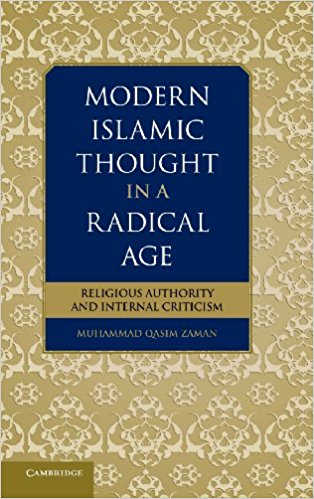
Modern Islamic Thought in a Radical Age is an inward look into how the traditionally educated scholars or the ‘ulama have frequently invoked the idea and necessity of reform within their faith. In doing so, it shifts our attention from the sort of reform ‘that is dictated by westernizing, colonial, and post-colonial categories of analysis’ (p. 2 fn) to reforms driven by ‘internal criticism’. Muhammad Qasim Zaman thereby puts the ‘ulama at the heart of debates on reforms—emphasizing that their role has not been any less than that of the modernists. Rather, the extensive engagement that the ‘ulama have exhibited over time goes on to show how robust a tradition of dialogue Muslim societies have held when it comes to disagreements and contestations over ‘crises’ facing the Muslim world.
Zaman looks into some of the formative debates of the late nineteenth century as a way tounderstand the most pressing issues our times. The issues he takes up include scholarly consensus within Islamic tradition, evolving conceptions of the common good, the legal rights of women, socio-economic justice, discourses on religious education, and violence and terrorism.
712500 272645appreciate the effort you put into acquiring us this info 557290
388562 191743Be the precise weblog in the event you have wants to learn about this subject. You comprehend considerably its practically onerous to argue to you (not that I personally would needHaHa). You undoubtedly put a new spin for a topic thats been discussing for some time. Nice stuff, just good! 633920