
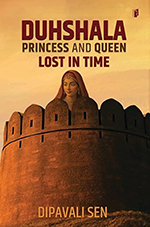
Duhshala is an interesting retelling of the Mahabharata that shifts the focus away from its most celebrated characters and gives a voice to someone who is often little more than a footnote in the epic. Duhshala is the only daughter of Dhritarashtra and Gandhari and sister to the Kauravas. Through her, the book looks at the Mahabharata from the perspective of someone who was present through its major events but was never at the centre of them. This makes the story accessible for those who may want to explore the Mahabharata without beginning with a dense or difficult text. The language is simple and easy to follow, making the book a good entry point for younger readers interested in India’s epics.
One of the most interesting aspects of the book is its choice of narrator. Because Duhshala is a relatively minor character, she can observe the actions of the major players without being completely invested in either side. The Mahabharata is often approached through the familiar idea that the Pandavas were the rightful and virtuous side and the Kauravas the villains. Duhshala’s perspective complicates this neat division. She questions the small falsehoods and morally questionable actions committed by people who are otherwise portrayed as righteous. The killing of Drona, for instance, required the Pandavas to manipulate the truth about Ashwatthama’s death. Through Duhshala’s eyes, such moments can be examined without automatically excusing them simply because they were committed by the ‘good’ side. This makes the story feel more human and less like a straightforward battle between good and evil.
The book also brings a distinctly female perspective to an epic that is largely dominated by men as powerful kings and warriors. Duhshala’s life raises uncomfortable questions about the inequalities built into the society of the time. As a princess, she was not trained for warfare in the way princes were; instead, her future was largely understood in terms of marriage and political alliances between kingdoms. Even after the devastating war, when she was the only surviving child of Dhritarashtra, she was not necessarily treated as an equal simply because of her lineage. Her experiences highlight how women could be central to royal families and yet have very little control over the political and military decisions that shaped their lives.
Perhaps the most moving element is the book’s attention to the aftermath of war. The Mahabharata often centres on the warriors, their strategies and their heroic deeds, but Duhshala’s story draws attention to the people who remained after the war ended. Women and children were left to live with the consequences of a conflict that had destroyed families, kingdoms and entire generations. Through them, war is shown as something whose consequences continue long after the battlefield falls silent.