
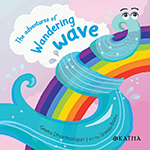
What comes to mind when you hear the word ‘wave’? The image of the ocean or the sea inevitably comes to mind, along with thoughts of the shoreline and water. However, the concept of a ‘wandering wave’ sparks curiosity. While asking where waves come from or where they go leads to a search for facts, asking what a wave is searching for turns the focus inward toward oneself. We may search for anything, and while that search might eventually conclude, it can also continue endlessly. Searching is a voyage in itself, one that takes you to many places.
While the purpose of a journey is often to reach a destination, the journey itself can also be the purpose. When we search for something, we encounter many other things before finding our intended goal. These are things we weren’t actively looking for, yet they help guide us toward our goal. Reading Geeta Dharmarajan’s book Sair Par Ghumakkad Lahar in Hindi and The Adventures of Wandering Wave in English, offers you a journey across the ocean. A wave itself is the protagonist of this story; it is searching for its friend, Beula. To reach Beula, the wave must travel from the ocean to the mountains, traverse dark paths, and pass through various realms of imagination. Along the way, the wave encounters a pink serpent, Iffy! the Yak, an eagle, and several other characters. In a sense, this voyage, which is driven by friendships, introduces you to a unique adventure.
The book is published by Katha as part of its ‘Ocean Literacy’ series. This collection is centred around themes of friendship and the act of searching. A significant element of this story (and of this series) is how it fosters and encourages imagination. The very idea of a wave travelling up a mountain is truly amazing. The power of imagination allows us to transcend the real world; it does not bind us to scientific reality. The book also offers the reader a chance to play with words. As you read, you enjoy words like Gadgadao (rumble), Hadbadao (clatter/rush), Ludki (rolled), Phudki (hopped/bounced) and others. Essentially, the book lets you sway and flow along with the wave through a variety of words. The illustrations by Sreeja Basu take you on a visual voyage alongside the text.
The quest upon which the wave embarked ultimately leads it to its friend, Beula. Their reunion turns into a moment of joy, offering the reader the satisfaction of a successful discovery.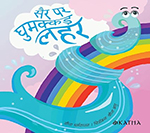 Originally written in English, it has been translated into Hindi by Piyush Dwivedi. This storybook makes one want to explore other titles in the series as well.